



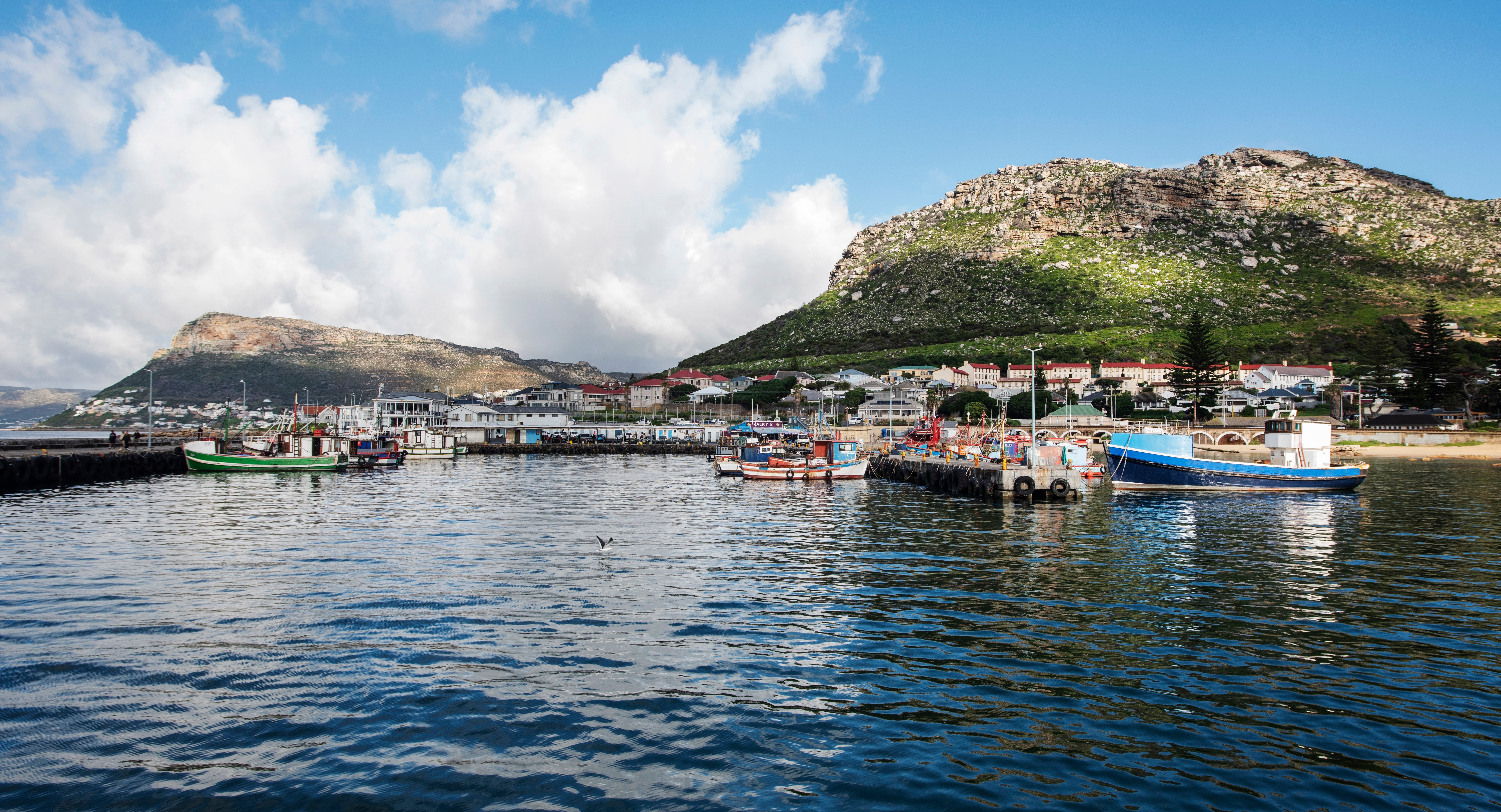
 Kalk Bay harbour, Cape Town. (Photo: Gallo Images / Brenton Geach)
/file/attachments/2989/label-Op-Ed_407469.jpg)
As we mark our 32nd Freedom Day there’s no country in the world I’d rather live in than South Africa. We are at peace (sort of), our democracy holds (mostly), our climate is changing (but still beautiful). There is much that has not been done, and should have been; much that is wrong, that should be righted. But, we are a society marked by progress on many fronts, that ought only to get better – if we commit to doing what the Constitution instructs us.
I came to South Africa permanently in 1989, a young man with dreams of revolution and freedom. Below is my A-Z of why, 37 years later, I still love South Africa, spliced with articles I’ve written over the years that consummated, time and again, our relationship!
/file/attachments/orphans/ED_604005_551723.jpg "Residents, political parties and activists picket outside the Roodepoort Magistrates’ Court for justice for Reabetswe on 14 April 2026. The group demonstrated against the bail application of Tshepo Ntsimane, who is accused of raping a child. (Photo: Gallo Images / Sharon Seretlo)")
A: The activists. South Africa has a vibrant and imaginative civil society, organising, inventing, protesting on countless issues. We have shown time and again that activism is authentic and up to the challenge of advancing the dream of dignity, equality and freedom. Led by heroic organisations like the Amadiba Crisis Committee and Abahlali baseMjondolo, protest has kept hope alive.
And let’s not forget Acha!
B: Braais, boerwors, the Bokke and bunny chows speak for themselves. But we are also the third-most bio- and geographically diverse country in the world. The Cape Floral Kingdom, in the Cape Peninsula, contains almost 10,000 plant species, 70% of them endemic.
/file/attachments/orphans/000040301_378131.jpg "Photo: Gallo Images / Theuns Botha<br>")
C: The Comrades Marathon (I’ve done it 20 times), the Constitution (I’ve used it to save lives) and the Cradle of Humankind, the world’s origin story wrapped up in Joburg’s skirt.
/file/attachments/orphans/TL_2408364_870237.jpg "Gerda Steyn wins the 2025 Comrades Marathon, finishing outside People’s Park in Durban on 8 June 2025. (Photo: Darren Stewart / Gallo Images)")
/file/dailymaverick/wp-content/uploads/2025/06/TL_2408413.jpg "Edward Mothibi during the 2025 Comrades Marathon. (Photo: Darren Stewart / Gallo Images)")
D: We dance! When we protest, when we celebrate, when we mourn.
E: The late Es’kia Mphahlele, author of Down Second Avenue. I was fortunate to have the old man as one of my teachers in the African literature department at Wits University in the early 1990s, alongside other greats: Njabulo Ndebele, Bheki Peterson and Isabel Hofmeyr.
/file/attachments/orphans/000039526_920130.jpg "Professor Es’kia Mphahlele. (Photo: Gallo Images / Elske Kritzinger)")
F: The still free media, those who fought and died for it, and the living legends of a free media who can still be found in what remains of our newsrooms; or, like Leonie Joubert, out on a 21st century equivalent of Sol Plaatje’s rural rides on his bicycle documenting the effects of the 1913 Land Act in the Orange Free State. Except this time Leonie and Mouse are documenting the effects of climate change. The media as we know it may be dying out, but the spirit of journalism is not. We have investigative journalists second to none.
G: The many Gods South Africans worship in peace, often on the same street. And Gauteng and Gatvol
H: The hadeda, the human rights that are the cornerstone of our Constitution, and the struggle for health and access to treatment for HIV that saved millions of lives.
/file/dailymaverick/wp-content/uploads/2025/03/HIV_vaccine.jpg "HIV vaccine. (Photo: Gerd Altmann / Pixabay)")
I: Injisuthi, a tucked-away nook in the central Drakensberg, unchanging in all the 30 plus years I’ve been going there. And Ingrid de Kok, whose eight volumes of poetry grapple with the imperfect soul of our nation, and who I have the privilege to know. Our imagination.
/file/attachments/orphans/de-kok-ingrid_608818.jpg "Ingrid de Kok.
<br>(Photo: University of Cape Town / Wikipedia)")
(Photo: University of Cape Town / Wikipedia)
J: Our independent judiciary and the privilege I’ve had to work with greats such as Arthur Chaskalson, George Bizos, Yvonne Mokgoro, Dikgang Moseneke, Edwin Cameron, Kate O’Regan, Albie Sachs – global pioneers. Not to mention the ever-suprising-ever-surviving city of Joburg, jacarandas and the late Johnny Clegg, whose life and large love of people I briefly intersected with.
K: Kalk Bay, that little harbour on the shoreline of False Bay, is a place I love. It’s a moody village, combining swell of sea with shadow of mountain. A spirit of human toil rises above it like a sea mist; fishing boats loll in in its harbour when they are not at work. I wrote a long poem about it, Dawn at Kalk Bay, my pretender’s equivalent of Wordsworth’s Prelude.
L: Lovedale College, a mission college established in 1848 at Alice in the Eastern Cape. I love it more for what it was, what it created (several generations of African leaders and literature), than what it is now, a dilapidated shadow in demand of restoration and recognition. I wrote my MA about it and AC Jordan’s Ingqumbo Yeminyanya, one of the great novels that its alumni spawned.
M: Madiba, obviously. The Market Theatre, turning 50 years old on 19 June 2026; my improbable friend Maishe Maponya; and the freedom I have found on my mountain bike in trails around Johannesburg and on beautiful multi-day rides across the beloved country.
/file/attachments/orphans/kevin-on-Madiba_407732.jpg "Nelson Mandela chats with Britain’s Prime Minister Gordon Brown during a meeting at his hotel in central London on 24 June 2008. (Photo: Reuters / Dylan Martinez)")
/file/attachments/orphans/0000194143_416940.jpg "The Market Theatre in 2013. (Photo: Gallo Images / Foto24 / Lucky Maibi)")
N: North Beach in Durban. A friend calls it “the most democratic public space in South Africa”. Wake up early, find your way onto the promenade and feel the power and the glory of our diversity.
O: The Otter Trail, just one of many stunning hikes that are maintained across our land, and one of the most beautiful. Hence the long waiting list.
P: The parkrun, a global phenomenon started by a South African, that now takes place at 8am every Saturday at more than 230 parks in communities across South Africa and is inspired by the leadership of another great legend, Bruce Fordyce. I have 182 parkruns to my name and hope for many more. Add to that pap. And the power the Constitution bestows on ordinary people to protest, petition and picket to help change our country for the better.
Q: Queer activism, led by people like Phumi Mtetwa, Zackie Achmat, Edwin Cameron and Bev Ditsie, that gave us the equality clause in the Constitution, preventing unfair discrimination on 11 grounds including sexual orientation and gender. The quaint towns of the Karoo. The poetry in place and people’s names like Qunu, QwaQwa and Qondisa.
/file/dailymaverick/wp-content/uploads/2025/05/ED_416416-2.jpg "The Johannesburg Pride Parade on 29 October 2022. (Photo: Gallo Images / Rapport / Elizabeth Sejake)")
U: The great uKhahlamba-Drakensberg Mountain range, a World Heritage Site where we go to wrestle with our spirits, test our bodies on mother earth and feel overwhelmed by the grandeur of nature. Although Donald Trump may try with his bunker bombs in Iran, it’s hard even for humans to break mountains.
R: Robben Island as a mark of human resilience. In 2019 I spent two days there during a training of young activists organised by the Ahmed Kathrada Foundation. Walking around the grounds of the prison at dusk and sleeping over in what was once the “Commissioner’s” House is a moment engraved in my soul. I ran round the island’s circumference at dawn, dive-bombed by angry seagulls, a freedom never allowed to the island’s long-term, involuntary residents.
/file/attachments/orphans/ED_390553_463440.jpg "Robben Island in Table Bay on 20 July 2022. (Photo; Gallo Images / Misha Jordaan)")
It’s also for rugby, (broken) robots and the legacy of racism we are still working to overcome.
S: Soweto, a name I was first inspired by as a teenager nearly 50 years ago when young people rose up against apartheid and Bantu education. Now, a place I’ve come to know for its joy as much as its sorrows.
T: The toyi-toyi, the Treatment Action Campaign, the Two Oceans Marathon and 12 official languages.
V: Sorry, I don’t love Vanderbijlpark, Vosloorus or the Vaal Triangle. But they all remind me that even ostensibly barren geographical areas yield joy and resistance. Although it’s been marginalised and deindustrialised in the new South Africa, the revolt in the Vaal Triangle in the 1980s was part of the fury that gave birth to our democracy. It also melded unique activists like the late Simon Nkoli, whose life story inspired a magnificent opera.
/file/dailymaverick/wp-content/uploads/2025/10/MC-LifeOfSimon_2.jpg "Simon Nkoli, a gay anti-apartheid activist who was imprisoned following the Delmas Treason Trial. (Photo: GALA Archives)")
W: Our great writers – a lineage that stretches back less than 200 years – and whistleblowers on corruption, a more recent pedigree of freedom fighter.
X: The X on a ballot that so many people fought and died for. The clicks in our languages, isiXhosa especially.
Y: You, the people, who endure, don’t give up on the dream, keep on pulling us back from the brink and are the key to our success as a nation that is founded on the wellbeing and common wealth of all.
Z: Z is in .za, AZania and the Zulu people, one of the great nations that went through the wringer of colonialism and survived to be melded into polyglot South Africa.
I’m sure you can find your own A to Z. These are mine – 26 good reasons to rededicate ourselves on Freedom Day 2026 to those freedoms that don’t yet exist for everyone, but which will set all our people free and realise the potential in each of us.
Mark Heywood is a social justice activist and writer. You can find more of his writing at The Justice and Activism Hub and www.markheywood.com