




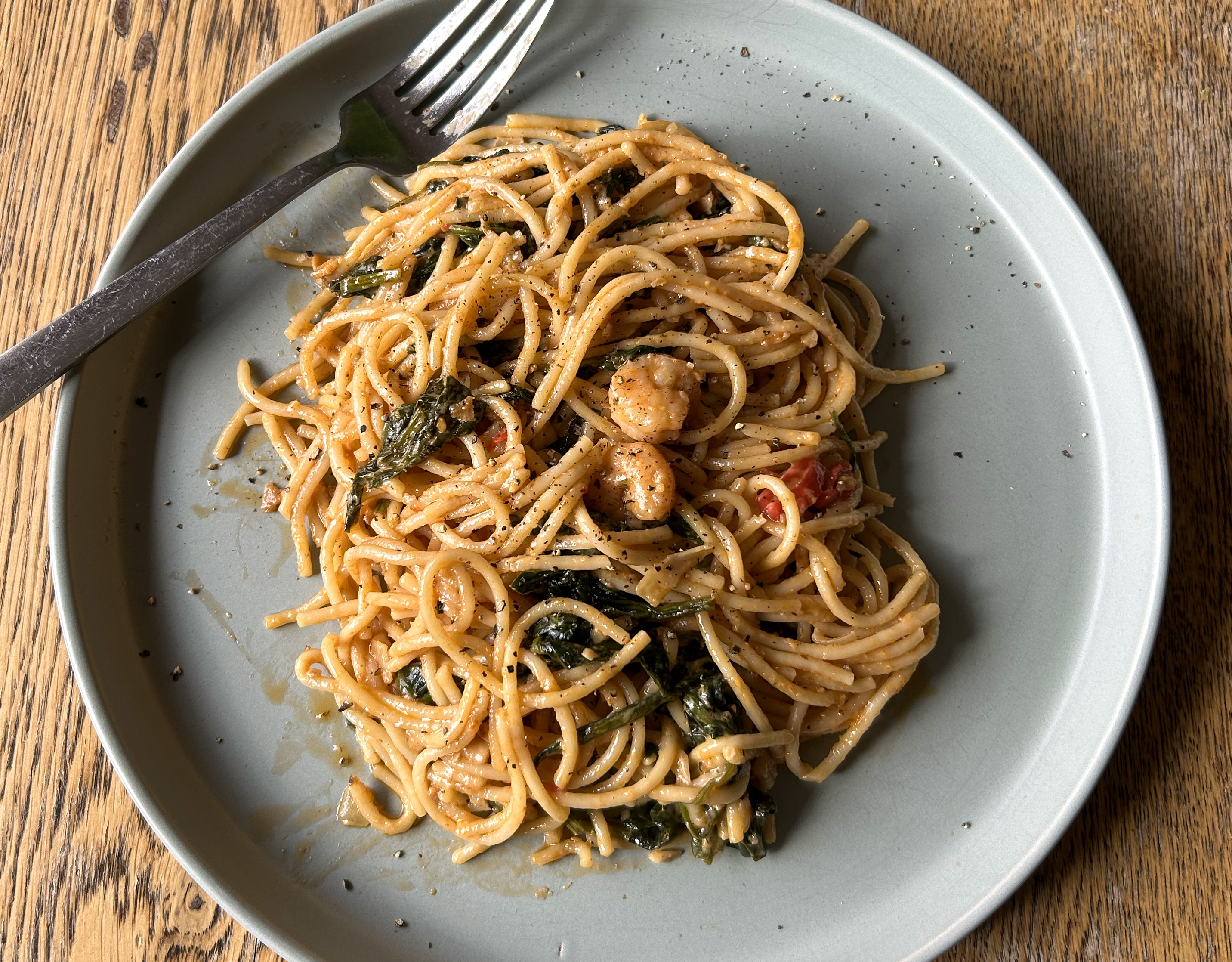
 Ray’s make-a-plan seafood pasta. It beats the budget and feeds the soul. (Photo: Ray Mahlaka)
Have you noticed how expensive seafood pasta is at restaurants? A few days ago I was craving a creamy seafood pasta dish. Naturally, I looked up restaurants where I could satisfy my craving.
I don’t know about you, but I usually plan my restaurant visits. Before going, I like to check the menu online to see what they offer, and, most importantly, to check the prices so I can plan my budget. I did just that, browsing menus for restaurants in Johannesburg.
One restaurant charged R345 for a creamy linguine with zesty lemon, garlic, tomato and a touch of chili prawns.
Another asked R359 for a seafood linguine with prawns, mussels and linefish in white wine, garlic, chili, olive oil, red onion and fresh herbs.
But the final straw was seeing “SQ” listed as the price for linguine with napoletana sauce, chilli, prawns, fresh mussels, calamari, garlic and parsley butter.
If you don’t know, on restaurant menus “SQ” stands for “subject to quotation”. This means the price isn’t fixed but depends on factors like the day’s market price, portion size or seasonal availability and is only provided upon inquiry. It’s usually used for high-value items – that is, you can expect to pay a lot more.
I have deep respect for restaurateurs. The restaurant business is tough and costly. Running a restaurant is no easy feat, with costs including leasing the space, buying equipment, paying front and back-of-house staff, utilities, insurance and many other expenses behind the scenes. Chefs also deserve fair pay, especially when they take pride in their work and, in the case of pasta, put time, precision and love into making it from scratch rather than using dried pasta.
A good restaurant might be making only 6% profit after overheads — and should count themselves lucky. I sympathise because, in South Africa, dining out is still a privilege for many, especially with the ongoing cost-of-living crisis. For many households, eating out is an occasional treat.
Restaurants have to balance fair pricing with maintaining quality and good service to keep customers happy while covering rising costs and staying financially viable.
That said, I decided against spending nearly R400 or more on seafood pasta at a restaurant. Besides, there was no guarantee that the seafood would be fresh.
Living in Johannesburg, it’s hard to get fresh seafood; it’s often frozen for weeks. Being far from coastal towns usually means limited access to fresh seafood, which typically must be transported long distances or kept frozen to maintain quality. This can lead to higher prices and sometimes compromised freshness compared with coastal areas.
To satisfy my craving, I rolled up my sleeves and made the seafood pasta myself.
While it was a bit labour-intensive, the reward was worth it. I sourced a frozen seafood mix (a selection of squid, mussels, monkfish, crab-flavoured fish sticks and shrimp), which was the priciest ingredient at about R99.99. The other ingredients (a tub of fresh cream, vegetable stock, spaghetti, tomato paste, onions, crushed garlic and baby spinach) were all below R100.
The result? A creamy, delicious seafood pasta that not only satisfied my craving but cost a fraction of what I would have paid at a restaurant. Plus, there’s a special joy in knowing exactly what went into the dish.
For anyone struggling with high restaurant prices, making seafood pasta at home can be a great alternative. It does require time and effort, yes, but it also offers a sense of accomplishment and a more personalised dining experience. Who knows, it might just become your new favourite weekend project!
Ray’s budget-friendly seafood pasta
/file/dailymaverick/wp-content/uploads/2025/08/ray-seafoodpasta3.jpg "Ray’s budget-beating seafood pasta. (Photo: Ray Mahlaka)")
Ingredients
1 ½ cup frozen seafood mix (squid, mussels, monkfish, crab-flavoured fish sticks, shrimp)
1 cup frozen prawns
Spaghetti
1 cup fresh cream
1 vegetable stock pot
2 Tbsp tomato paste
1 onion, finely chopped
3 Tbsp crushed garlic
2 cups baby spinach
½ cup white wine
1 tsp salt
1 tsp black pepper
1 tsp dried mixed herbs
Olive oil or vegetable oil
Method
Cook the seafood: Heat oil in a large pan over medium heat. Add prawns and cook for 2 to 3 minutes until pink. Remove and set aside. Add frozen seafood mix to the pan and cook for 5 to 6 minutes until cooked through. Remove and set aside.
Make the sauce: Add tablespoon oil to the pan. Sauté onion until soft and translucent (3 to 4 minutes). Add crushed garlic and dried herbs and cook for 1 minute until fragrant.
Pour in the white wine and simmer for 2 to 3 minutes until reduced by half. Stir in the tomato paste until well combined. Add the vegetable stock (made by dissolving the stock pot in about ¾ cup water) and fresh cream. Simmer gently for 5 minutes until the sauce thickens slightly.
Combine: Return cooked prawns and seafood mix to the sauce. Season with salt and pepper to taste. Add baby spinach and cook until just wilted (1 to 2 minutes).
Cook the pasta: Meanwhile, cook spaghetti in boiling salted water until al dente. Drain, reserving ½ cup pasta water.
Add cooked spaghetti to the sauce and seafood mixture. Toss to coat well. Use reserved pasta water to loosen the sauce if needed. Plate the creamy seafood pasta and enjoy! DM