



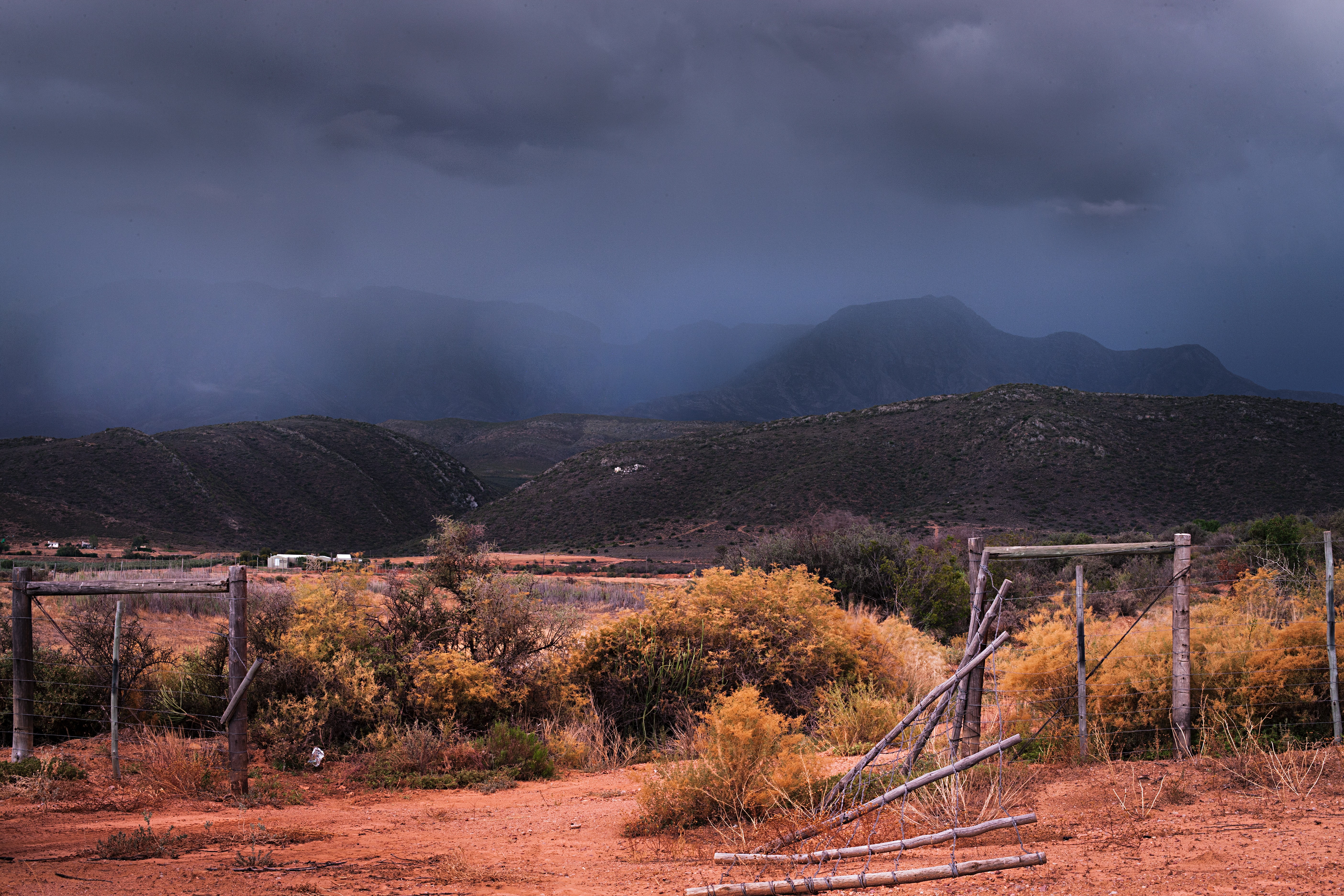
 Karoo summer rain. (Photo: Jayden Collier on Unsplash)

We have nothing to complain about when the clouds gather, the lightning flashes, and the thunder rumbles right above our Karoo house. This part of the Karoo had been through six years of drought until the summer rains finally returned three years ago, and the extraordinary amount of rain that has come to the plains of the Eastern Cape Midlands throughout January is as welcome as a long-lost friend reappearing after years in the wilderness.
Sometimes the rain brings its own problems. We converted a big garage into a studio flat during lockdown, and have been taking guests for some months, not knowing that a problem was hiding out of sight. A French couple from the alpine city of Grenoble was due to arrive one day. Four nights earlier, it had chucked down and in the morning when I opened the flat’s door the entire room was under water seven centimetres deep. After much investigation, our builder concluded that water had built up in the corner of a neighbour’s property. The escape space between them and our immediate neighbour had been bricked up. So the water sat, and sat, and seeped down and down, under the neighbour’s garage and up from the flat’s foundations. Fixing it was as simple and quick as breaking through the bricked-up wall so that the dammed water could escape. Luckily, there was time for the flat to be aired and dry out, and the lovely French guests visited and left leaving a glowing note about the accommodation.
There’s something about Karoo rain that is particularly special. The earth splatters with muddy droplets at first, the water turning to vapour immediately and creating a visible mist hovering above the ground. But it soon ceases evaporating as the water builds up until there’s enough for it to start slowly seeping into the summer-parched earth. And that is when the magic begins to happen. When that rain comes in a succession of days, and especially when it pours at a moderate pace throughout the night as it did a few days ago, that is when you know it is doing the work all the farmers need it to do. Their dams fill up, farmers and farmworkers sigh happy sighs, and the eating and drinking that follows is vigorous and well-earned.
The past three days before last weekend had been awash with rain pouring down at a rate that had torrents rushing into our small dam pool at the back of the house, coming off the roofs above and down the drain pipes into the pool. Then it overflowed and found a path through the garden and into the street. On Sunday afternoon it soon became clear that I would not be using the potjie that day. So the stew I had in mind would be just a little more traditional than planned.
I had had thrift in mind when spying sliced beef shin at my butchery a few days earlier. January affects most of our pockets and it’s a month for going slowly and cutting back after the December excess of eating too much and spending too much.
Beef shin is one of the cheaper cuts of beef yet, like brisket and short rib, it is packed with deep flavour. It’s tough, being a well-used muscle (that’s how relative tenderness or toughness in meat works, it’s about how much it is used), though it is a heartier cut than its younger cousin, veal shin, which is famous for its use in the classic Italian stew, osso buco.
Sunday was going to be potjie day, or at least the afternoon was, and I was planning to transfer the idea of a grown-up osso buco to the potjie. Grown-up because this is beef shin, not veal. But I would finish it in the traditional way, sprinkling it with gremolata, that similarly classic Italian concoction that finishes off osso buco once it is ready to serve.
So the Dutch oven it would be, a coincidental illustration of the old adage, ‘n boer maak ‘n plan. Or, in this case, a townie makes a plan and gets the Dutch oven out because rain stopped the potjie play. This column pairs with this recipe. DM/TGIFood