




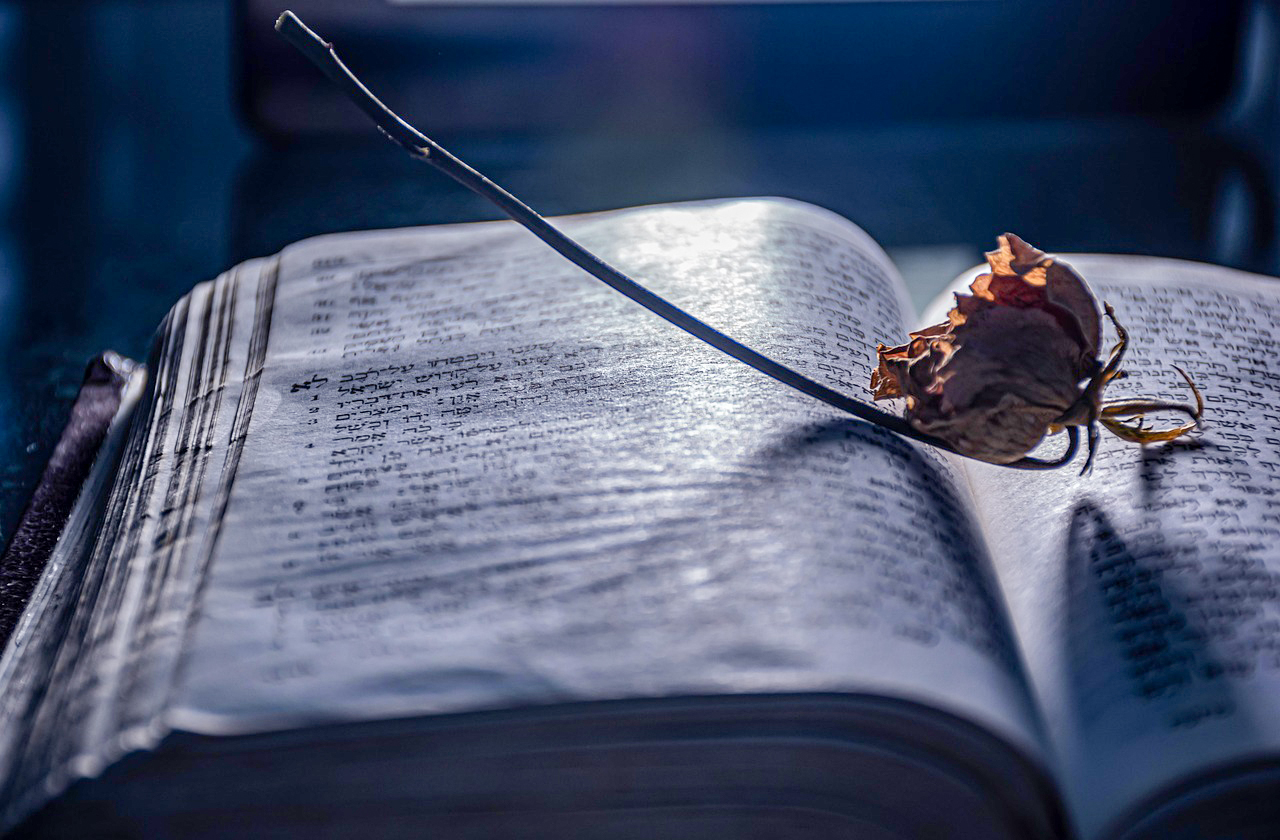
 (Image by Ri Butov from Pixabay)
 Yes, international politics drive me to despair, the flesh is sad, alas, as the French poet Stéphane Mallarmé declared, and I’ve read all the books. God might be dead, as Nietzsche stated, and I’m not feeling so well myself, as Woody Allen added.
But oh, I smelled the first truffle of the season at a local Périgord market.
It remains a memorable moment, no matter how long I’ve been living in a region where the smelly Tuber melanosporum grows. Odours are notoriously difficult to describe, as any writer or wine drinker knows, so we usually fall back on other well-known smells when we try to describe an unknown aroma. Hence the wine snob’s vocabulary of red fruit and hay, chalk and chocolate, which can sound rather amusing to the uninitiated.
Personally I’ve never smelled damp wood, pencil or gunsmoke in a glass of wine, for which I suppose I should be thankful, but then again, I always prefer drinking wine to sniffing wine. Just as I prefer tasting truffles to sniffing them. But since the Tuber melanosporum is still one of the most expensive foods on Earth, with prices ranging between €1,000 and €2,000 per kilo, I’m often forced to sniff rather than taste.
Fortunately you don’t need to buy a kilo; a few grams are sufficient to transform an ordinary omelette or plate of pasta into a gourmet sensation. Last Sunday we bought a tiny knob at the market and made the creamiest, most flavourful scrambled eggs you can imagine. Well, you’ll have to use your imagination, because I can’t even begin to describe the smell.
According to the encyclopaedic 1001 Foods You Must Try Before You Die, edited by Frances Case and an enduring source of delight to me, scientists have identified more than 100 aroma components in the black Périgord truffle, ranging from nutty and grassy to sulphurous with hints of vanilla, rose petal and bergamot. Now take that and sniff it.
/file/attachments/2986/big-dodzy-DrCnJ9QHk1M-unsplash_394919_648ffaa903a5597e23b113d45b33c4c8.jpg "(Photo: Big Dodzy on Unsplash)")
Our olfactory sense is probably the most powerful trigger of memories. A beautiful boy who was the obscure object of my adolescent desire during a long-ago seaside holiday used to wear Jade East cologne. For decades afterwards the slightest whiff of Jade East was enough to transport me back, not only to the time and the place but into my own teenage body, feeling all the mixed emotions of puppy love from the inside. Thank heavens today I know hardly anyone who still buys this old-fashioned scent, because it would be exhausting to experience all these confusing feelings again and again at my age.
Creative writing students are often reminded to bring their sense of smell to their work, to describe not only with their eyes and ears, but with all five senses. Which brings me to smells in books. Not the smell of books – that particular pleasure probably deserves a post of its own – but to smells in books. Trying to describe the indescribable, in other words. Looking for the scents of life. And because I can’t resist a bit of wordplay, as you must have noticed, I’m drawn to Jane Austen’s Scents and Sensibility. Or Julian Barnes’s The Scents of an Ending or…
No, seriously, two titles immediately spring to mind. The Scent of a Woman by Giovanni Arpino – which, by the way, was initially titled The Darkness and the Honey (Il Buio e il Miele in the original Italian) when it was published in 1969. Only after two acclaimed movies were based on the book, with the great Vittorio Gassman in the Italian film and Al Pacino shining in the Hollywood version, the still relatively unknown novel was renamed after the movies. It feels somewhat unfair, like a father being named after his child, but perhaps that’s just the writer in me empathising with Arpino.
However, the gold standard for olfactory fiction – if the phrase even exists? – must be the German author Patrick Süskind’s historical fantasy novel, Perfume. It made an indelible impression on me when I read it almost four decades ago, these “reeking pages”, as one reviewer called it, a Gothic story about an unloved orphan in 18th-century France who has the finest nose in Paris and no personal odour. He gets lured into the perfume industry, of course, and becomes obsessed with the unique and unsurpassed odour of a certain young girl, a scent he would like to distill into a perfume, but for that purpose quite a few young women would have to die. After all, the subtitle of the novel is The Story of a Murderer.
The book was translated into dozens of languages and sold millions of copies worldwide, inevitably also becoming a movie with Hollywood stars like Ben Whishaw and Dustin Hoffman. A lush visual feast, the film nevertheless didn’t reap the same rave reviews as the novel, perhaps simply because smell is impossible to capture on film. In Süskind’s vivid prose the reader still manages to “smell” many of the odours described, precisely because of the evocative power of odours, whereas in the movie the viewer gains sight and sound, but loses smell.
Smell must surely be a frustration for movie makers — even more than for fiction writers — as I speculated in one of my novels (Still Breathing/ Laaste kans) where a young movie-making character dreams about catching odours with his camera:
Imagine if you could actually smell the kitchen while you were watching the movie.
Behind the meat aromas, which he could swear would make even his vegan friends drool, there are other more subtle smells, garlic and ginger and (…) ripe figs, the earthy aroma of raw beetroot, the sweetness of watermelon and spanspek.
With a nose as sensitive as his he should maybe have become a winemaker rather than a filmmaker. That’s what his dad always says. Probably only because his dad prefers drinking wine to watching movies.
And now, thanks to a black Périgord truffle, I want to read Perfume again. It was also the grunge musician Kurt Cobain’s favourite book — and he knew a thing or two about indescribable smells, as you can gather from the title of one of Nirvana’s greatest hits, Smells Like Teen Spirit. Just imagine, if Perfume’s twisted protagonist, Grenouille, could have distilled teen spirit!
Taste of the week
/file/attachments/2986/winter-truffle-203032_1280_505080_c681bca84ff87f9c6fd1350141a0ac4e.jpg "(Photo: WikiImages from Pixabay)")
That little truffle we bought at the market, what else? Shaved into slivers and mixed with six eggs from a local farmer, it was the pièce de résistance of a delicious dish of scrambled eggs. Utter luxury and pure simplicity combined.
Sight of the week
/file/attachments/2986/marita-roses_627590_ba66fa05ecf1e26255eff18ff0d98c13.jpg "(Photo: Marita van der Vyver)")
The last roses of the year thrill me as much as the first truffles of the year. In December, when most roses are long gone, the survivors seem like grace notes. On our Sunday walk through the market village I spotted a profusion of pink rose petals against ancient stones. I sniffed them, of course, and wondered once again about Shakespeare’s famous words. Would a rose really smell as sweet if it was called something else? If it was called a truffle, for instance? A truffle by any other name? DM
Republished from Marita van der Vyver’s Substack