



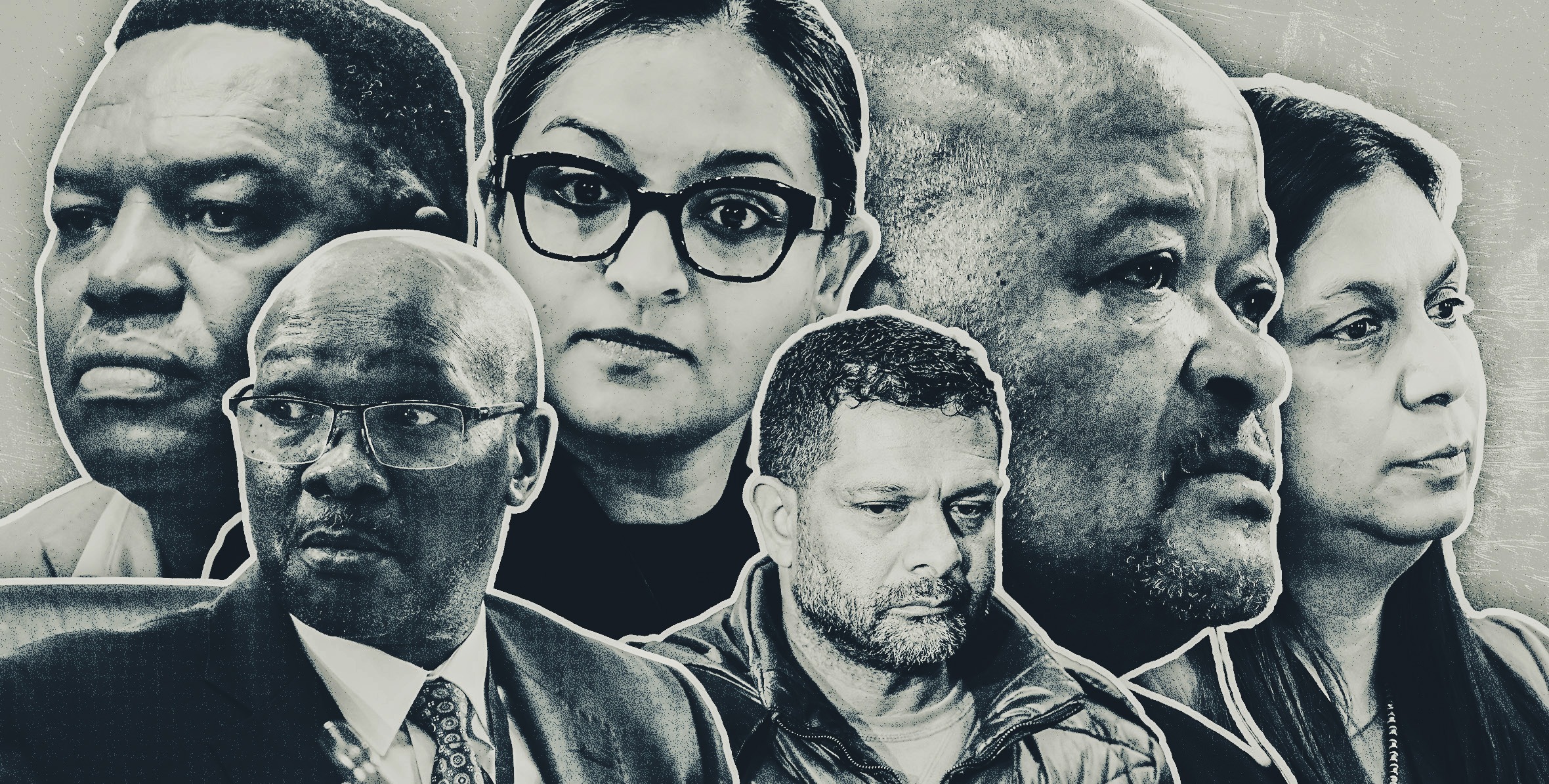
 Illustrative image: Fannie Masemola. (Photo: Gallo Images / Frennie Shivambu) | General Dumisani Khumalo. (Photo: Gallo Images) | Advocate Drushantha Ramsamy (Photo: Gallo Images / Frennie Shivambu) | Feroz Khan. (Photo: Gallo Images / OJ Koloti) | Senzo Mchunu. (Photo: Gallo Images / Frennie Shivambu) | Advocate Andrea Johnson. (Photo: Gallo Images/Frennie Shivambu)
Since the Madlanga Commission turned its focus to Idac in early July 2026, witness after witness has identified Johnson, Khan and Perumal as central figures in directing, expanding and prosecuting some of the country’s most politically sensitive corruption investigations involving senior SAPS and Crime Intelligence officials.
The fallout has been significant. Following weeks of damaging testimony, President Cyril Ramaphosa agreed to Johnson vacating her position as Idac head with immediate effect, and waived her three-month notice period.
Justice Minister Mmamoloko Kubayi subsequently suspended Perumal and two senior Idac investigators, Brian Padayachee and Suneel Bellochun, after allegations before the commission that investigators manipulated cases, fabricated witness statements and abused their investigative powers.
Khan had already been suspended following his arrest in May 2026 alongside Gauteng Hawks head Major General Ebrahim Kadwa on charges relating to the alleged unlawful possession of, and dealing in, precious metals. That criminal case is separate from the matters under examination by the Madlanga Commission.

After the latest arrests, the SAPS issued a statement on Sunday saying: “The suspects were arrested following investigations into allegations of illicit precious metals transactions, corruption and related offences”
Expansion of the Adams investigation
National Coloured Congress leader and MP Fadiel Adams’ complaint is the genesis of what became one of the Madlanga Commission’s most contentious inquiries. A central question is how a complaint about the appointment of Major General Nosipho Madondo to Crime Intelligence evolved into a sweeping investigation involving some of the country’s most senior police officials.

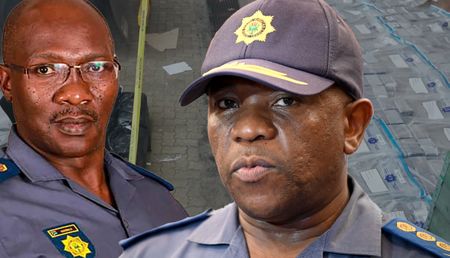
Adams alleged that Lieutenant General Dumisani Khumalo and other senior officers facilitated Madondo’s transfer to Crime Intelligence despite her allegedly lacking the required Top Secret security clearance. The complaint also prompted inquiries into properties allegedly bought with covert Crime Intelligence funds and possible links to the Medicare24 contract.
That complaint ultimately set in motion a chain of events culminating in the June 2025 arrests of Khumalo and six other Crime Intelligence officers. Yet the commission has repeatedly questioned whether the investigation that followed remained faithful to Adams’s original allegations or expanded far beyond them.
The arrests came just weeks before KwaZulu-Natal Police Commissioner Lieutenant General Nhlanhla Mkhwanazi’s explosive July 2025 briefing alleging criminal infiltration of the security cluster.
Much of the commission’s scrutiny centred on Adams’ supplementary affidavit and whether it justified the widening investigation. Commissioner advocate Sandile Khumalo SC pointed to Idac requests for records relating to former Crime Intelligence head Peter Jacobs, performance assessments of senior SAPS officers, lifestyle and travel information concerning suspended National Police Commissioner General Fannie Masemola, and documents relating to the Political Killings Task Team (PKTT).
“This is something else altogether,” Khumalo remarked, suggesting the investigation had evolved into a broad inquiry into Crime Intelligence and the PKTT rather than remaining focused on Adams’ complaint.
Evidence leader advocate Mahlape Sello SC sharpened the issue further. She pointed out that neither Adams’ original complaint nor his disputed supplementary affidavit referred to the PKTT. If that was so, Sello asked, on what legal basis had Johnson authorised compulsory process requiring the production of PKTT records?
The NPA has since provisionally withdrawn the fraud and corruption charges against Khumalo and his co-accused arising from the alleged irregular appointment, following mounting questions over the evidential basis of the prosecution.
How investigation reached the National Police Commissioner
One of the Madlanga Commission’s central questions is how National Police Commissioner Masemola became embroiled in an Idac investigation when his name did not feature in Adams’ original complaint.
Evidence before the commission showed that Idac sought information relating to Masemola’s financial affairs, overseas travel and other matters, while compulsory summonses extended to records concerning Crime Intelligence, the Political Killings Task Team (PKTT) and senior SAPS management.
State advocate Ramsamy’s evidence on Thursday, 30 July, added another dimension. She testified that what became known internally as “Project Diversion” evolved into an investigation directed at both Masemola and Khumalo and that Johnson and chief investigator Perumal orchestrated a calculated plan to target and remove Khumalo and Masemola. The why, motive and who is allegedly behind this remains an elusive question.
Those allegations are disputed and remain to be determined by the commission. However, they have sharpened one of the inquiry’s most significant unanswered questions: if such a strategy existed, what was the motive, who stood to benefit, and who, if anyone, was driving it from behind the scenes?
Masemola was later charged alongside 12 SAPS officials in the Medicare24 corruption case, although he faces only four counts of allegedly contravening the Public Finance Management Act.

Justice Mbuyiseli Madlanga questioned whether joining Masemola to the same indictment as the other accused was legally appropriate, remarking that it appeared “calculated to taint and embarrass” the national commissioner.
The project is driving this hunt to arrest Khumalo and other senior Crime Intelligence officers. Those charges centred on allegations that Brigadier Dineo Mokwele, a former BMW mechatronics engineer, had been unlawfully appointed to head Crime Intelligence’s Technical Support Services and had been placed there to facilitate the capture of the division.
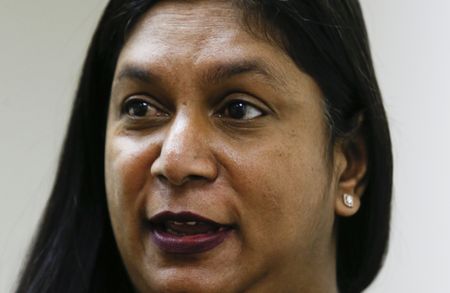
Perhaps the most troubling evidence heard by the Madlanga Commission concerns testimony by Ramsamy on Wednesday, 5 August, about what he described as an attempt to place Masemola in legal jeopardy.
The consequences were significant. By the time criminal investigations had gathered pace, Masemola’s name had become associated with investigations involving alleged underworld figure Vusimuzi “Cat” Matlala.
Johnson disputes aspects of that evidence, and the commission has made no findings. However, the testimony has sharpened a broader question: was Idac simply following the evidence, or had the investigation evolved into a strategy directed at particular senior SAPS officials?
Johnson and Khan’s unusually close working relationship
Few aspects of the evidence have attracted as much scrutiny as the relationship between Johnson and suspended crime intelligence boss Major General Feroz Khan. Commissioners repeatedly questioned whether it blurred the line between investigator and prosecutor and influenced key investigative decisions.
The relationship first came under scrutiny over a 2018 assault complaint by Brigadier Lenora Phetlhe, when the commission heard allegations that Johnson, then at the National Prosecuting Authority, allegedly forwarded the confidential docket to Khan, the accused in the matter, before investigators had completed their work, potentially allowing him to tailor his response before investigators had completed their work.
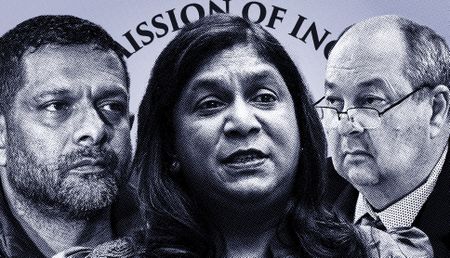
It resurfaced in evidence on the 2021 Aeroton cocaine seizure, where evidence leader advocate Sello, SC, highlighted a WhatsApp message in which Khan told Johnson that 552kg of cocaine had been seized, despite evidence before the commission placing the haul at 541kg.
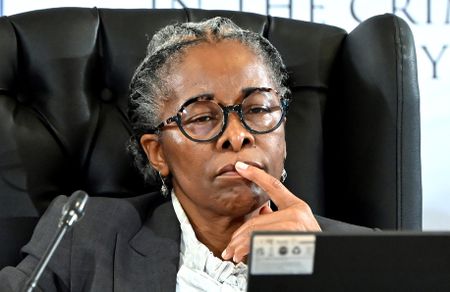
Khan also featured in the investigation of Major-General Philani Lushaba. Ramsamy testified that Johnson instructed investigators to subpoena Lushaba’s vehicle-tracking records and consult Khan, while senior prosecutor advocate Peter Serunye questioned whether the case fell within Idac’s corruption mandate, describing Lushaba as “a victim who had been drugged and robbed”.
According to the State’s allegations, a sex worker allegedly took Lushaba’s SAPS-issued laptop, cellphone and official firearm after visiting his home. Instead of reporting those circumstances, Lushaba allegedly opened a false housebreaking and robbery case, claiming the items had been stolen during a burglary. Idac investigated him and eventually charged him, alleging offences including defeating the administration of justice and other corruption-related offences.
Raphesu raised similar concerns, testifying that he was instructed to obtain subpoenas for Lushaba’s bank records despite finding nothing in the docket to justify such an intrusive step.
The commission also examined WhatsApp messages exchanged between Johnson and Khan over several years. The messages, including greetings such as “you gorgeous”, references to missing one another, dinner plans and invitations to Khan’s home, prompted commissioners to question whether their relationship exceeded normal professional boundaries.
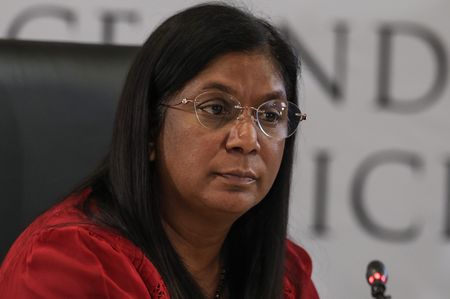
The issue before the Madlanga Commission is not whether Johnson and Khan had a personal relationship. Rather, it is whether that relationship compromised, or created the appearance of compromising, independence expected of senior officials entrusted with investigating and prosecuting corruption.
Perumal under the spotlight
Chief investigator Perumal has emerged as one of the Madlanga Commission’s most scrutinised figures, with key questions centring on whether he drove the expansion of the Crime Intelligence investigation beyond Adams’ original complaint.
Both Ramsamy and Raphesu testified that they attended a meeting with Adams on 6 January 2025 where four affidavits were commissioned, but were unaware of a further supplementary affidavit that later surfaced. Raphesu said it was not commissioned in his presence and significantly broadened the investigation.
Commissioners questioned Perumal’s role in expanding the probe, with Commissioner advocate Sandile Khumalo SC referring to a possible “hidden hand” behind the widening investigation and evidence leader advocate Mahlape Sello, SC, questioning the legal basis for investigative steps not contained in Adams’ complaint.
Ramsamy also implicated Perumal in “Project Diversion”, alleging the investigation expanded rapidly and increasingly targeted senior SAPS officials.
The commission has yet to make findings, but Perumal’s conduct has become central to determining whether Idac’s investigations remained evidence-led or exceeded their original mandate. DM
Comments
Scroll down to load comments...