



/file/dailymaverick/wp-content/uploads/2025/09/label-Opinion.jpg)
South Africa’s economic debate in recent years has been dominated by a single, understandable concern: stability. After years of fiscal slippage, rising debt, energy insecurity and weak growth, restoring macroeconomic credibility became the overriding priority. Inflation has moderated, fiscal consolidation has resumed, and the language of discipline has returned to the centre of policy discourse.
This progress matters. Stability is a public good, and without it development is impossible. But for millions of South Africans, the promise of stability has yet to translate into better jobs, rising incomes or reliable public services.
Growth remains stubbornly low, unemployment is unacceptably high, and inequality is deeply entrenched. The uncomfortable truth is that macroeconomic stability, while necessary, is not sufficient. Without a fundamental shift in how development planning is conceived and executed, SA risks locking itself into a cycle of low growth and low expectations.
SA’s development challenge in 2026 is therefore not whether stability has been restored, but whether it is being converted into sustainable and inclusive growth.
SA’s challenge is not a lack of plans or policies. SA has some of the most comprehensive policy frameworks in the developing world, including the National Development Plan, sector master plans, and medium-term strategies.
Internationally, SA has committed itself to both the Sustainable Development Goals (SDGs) and the African Union’s Agenda 2063. The problem lies elsewhere: in the gap between policy ambition and implementation, between fiscal decisions and developmental outcomes, and between national commitments and lived reality.
Heart of the challenge
At the heart of this challenge is how development planning is understood. Too often, planning is treated as a technocratic exercise – producing documents, targets and reports – rather than as an execution architecture that aligns priorities, resources and accountability. As a result, well articulated strategies are routinely underfunded, fragmented across institutions, or delayed in implementation.
This disconnect is particularly evident in SA’s engagement with global and continental frameworks. The SDGs and Agenda 2063 are frequently approached as reporting obligations rather than as strategic tools to shape domestic policy choices, investment decisions and institutional behaviour.
While the country has demonstrated a strong commitment to reporting, international and continental engagements, the SDGs and Agenda 2063 are still largely viewed as external reporting obligations rather than as internal decision-making tools.
This is a missed opportunity. Both frameworks were designed to sharpen national planning, not sit alongside it. Agenda 2063, in particular, speaks directly to Africa’s structural transformation challenge: industrialisation, regional integration, infrastructure development and inclusive growth.
Its First and Second Ten-Year Implementation plans emphasise productive capacity, value addition, employment creation and developmental state capability – precisely the areas where SA’s growth model continues to falter. Properly used, they provide an integrated framework that links economic growth, social inclusion and environmental sustainability – precisely the balance SA continues to struggle to achieve.
The current moment presents both risk and opportunity. On the risk side, fiscal pressures remain acute. Debt servicing costs crowd out social and capital spending, and revenue-raising options are politically constrained.
On the opportunity side, there is renewed momentum around structural reform in energy, logistics and infrastructure, alongside growing recognition that the private sector must play a far larger role in driving investment and job creation.
Maximum developmental impact
The question is whether SA can move beyond managing constraints to strategically deploying its limited resources for maximum developmental impact.
This requires a second-generation approach to development planning – one that integrates fiscal realism with strategic public investment and private sector participation, while embedding inclusion at the centre of growth strategy.
First, planning must be reframed as an execution system rather than a policy wish list. This means aligning the National Development Plan, sector strategies, and medium-term budgets within a single, coherent framework that is anchored in measurable outcomes. Too often, budgets are prepared separately from planning priorities, resulting in well-articulated strategies that are underfunded, fragmented or delayed.
An execution-oriented planning system would explicitly link funding allocations to a small set of shared impact indicators – such as employment creation, access to basic services, and infrastructure reliability – cutting across departments and spheres of government. In this context, SDG and Agenda 2063 indicators can serve as powerful performance metrics, helping policymakers track whether spending decisions are actually improving people’s lives.
Second, South Africa must rethink the role of public investment under fiscal constraint. The debate is frequently framed as a binary choice between fiscal consolidation and developmental spending. This is a false choice. The real issue is not how much the state spends, but how effectively it uses public resources to crowd in private investment and unlock growth.
Well-designed public investment – particularly in energy, transport, water and digital infrastructure – has a multiplier effect that far exceeds its initial cost. However, this requires stronger project preparation, credible pipelines, and institutional capacity to structure partnerships that protect public value while appropriately sharing risk.
Public-private partnerships, when transparently governed and competitively procured, are not a retreat from the developmental state; they are a pragmatic extension of it.
Third, inclusive growth must be treated as an economic imperative, not a social afterthought. SA’s growth path has historically failed to absorb labour at scale, leaving millions excluded from productive economic activity. Any credible development strategy must therefore prioritise sectors with high employment potential, such as agribusiness, logistics, renewable energy and labour-intensive services.
This also demands better alignment between skills development, spatial planning and industrial policy. Investments in infrastructure and industry must be matched by targeted skills pipelines and local economic development strategies that ensure communities benefit directly from growth. Inclusion cannot be retrofitted; it must be designed into the system.
The greater risk
Critics may argue that such an approach underestimates political and institutional constraints. Indeed, reforms carry risks, and poorly managed transitions can deepen inequality or social tension. But the greater risk lies in inertia. Persistently low growth is itself a profound social and political threat, eroding trust in institutions and narrowing the space for reform over time.
Others may dismiss the SDGs and Agenda 2063 as aspirational or disconnected from domestic realities. This critique holds only if the frameworks are treated as symbolic commitments rather than as operational tools.
When integrated into national planning and budgeting processes, they can help policymakers prioritise trade-offs, measure progress, and ensure that short-term decisions do not undermine long-term development.
SA’s development challenge in 2026 is therefore not a lack of ideas, but a need for strategic coherence. The country must move from a mindset of stability management to one of sustainable growth leadership – where fiscal discipline supports, rather than substitutes for, developmental ambition.
The choice facing policymakers is stark. Stability without growth will entrench unemployment and inequality, breeding frustration and disengagement. Growth without inclusion will deepen social divides and undermine cohesion. Only an integrated approach – rooted in execution-focused planning, smart public investment, and inclusive growth, aligned with the NDP, Agenda 2063 and the SDGs – offers a credible path forward.
The tools exist. The frameworks are in place. What is required now is the political and institutional will to use them differently – not to produce more plans, but to make existing ones work for the millions of South Africans still waiting for development to be felt, not promised. DM
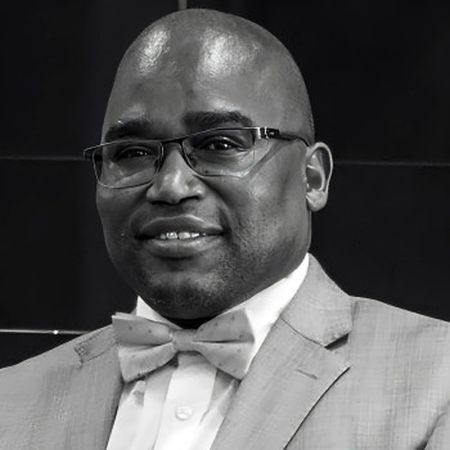
Dr Lusanda Batala is a development economist. He currently serves as Acting Chief Sector Expert at the National Planning Commission Secretariat within South Africa’s Department of Planning, Monitoring and Evaluation. He writes in his personal capacity.