



/file/dailymaverick/wp-content/uploads/2025/09/label-Opinion.jpg)
We were pinned down. The heavy fire from the Russian-made DShK “Dushka” (“Sweetie”), machine guns tore through the dried stalks of the poppy plants that loomed above us as the US Marines crouched down and looked for the attackers. They couldn’t find them.
We were in the first hours of Operation Branding Iron, a two-week incursion into the Taliban controlled area of Keshmesh Khan in Helmand province in Afghanistan, which I was filming for National Geographic.
Our company had been outflanked by the Taliban. We had landed a couple of kilometres away in the darkness of the early hours of the morning, and had walked through the night until we had reached this poppy field just after the sun had come up and the Taliban had activated the ambush they had planned for us.
As the machine guns opened fire, I threw myself on to the dry dusty ground of the Dasht-e Margo, the Desert of Death, my heart pounding, but time strangely slowed as the truth of our helplessness under the enemy fire was ripped open in my mind.
I remember falling into a heightened awareness of the smallest things as I scrambled to the ground: the smell of the dust, the shimmering beauty of the morning sunlight, the hard pointedness of the poppy stalks that slightly scratched my forearm.
In the midst of my acute distress, I was conscious of the irony of this golden hour just past dawn being filled with such terrifying danger. I didn’t want to lift my head to see what was happening. I just kept thinking: “What the fuck am I doing here?”
But survival meant that I had to respond to the danger. I fought to keep my wits about me. The machine-gun and AK-47 fire shuddered all around us. Crouching to my left was a Marine, an immigrant from Liberia, who had chosen to serve in the military, whom I’ll call Smith, and beyond him, a British corporal who had been seconded to our company as an observer. I lifted my head slightly to see what was happening and where my most immediate danger might lie.
The Marines were shouting for the machine gunner to come up and return fire at the Dishka. He was shouting back in a high-pitched voice: “Where? Where?” And amidst the hammering sound of the Russian machine gun, he was not getting a clear answer from his Marine comrades.
No one seemed to know where exactly the deadly fire was coming from. For some long moments there was confusion and suppressed panic, controlled by training and discipline. For most of the men, this was their first experience of combat, but the superb training and centuries-old traditions of the Marine Corps held them firm, even if they were frightened and uncertain within their deepest minds.
It was the British corporal who, in this case, was calmest. I didn’t know much about him. He had been seconded to us for reasons he wouldn’t talk about, and he certainly had significant previous combat experience in Afghanistan.
A timely intervention
“It’s coming from over there,” he shouted, pointing through the brownish blur of the poppy stalks. Around us, the men fell silent, not sure who would, or should, act on this relative outsider’s confident shout.
“Listen to the Royal Marine!” Smith yelled out from where he was crouching next to me. He wasn’t, in fact, a Royal Marine, although the connections between the US Marines and their British counterparts go back centuries, to shortly before the Revolution. He was an army non-commissioned officer, or NCO.
It was the intervention the Marines needed. One of the platoon sergeants called through on the radio. The position of the attackers went up the chain of command, and a tank was brought in. The heavy .50 calibre machine gun on the turret opened up on the Taliban position.
It was a bunker that had been constructed during the Soviet occupation in the 1980s to ambush young soldiers from Tashkent or Minsk, and was now being used to attempt to kill boys from Philadelphia and the Colorado mountains. It wasn’t easily breached, and the .50 calibre wasn’t enough to dislodge our attackers.
The captain ordered the main gun to fire. A thundering explosion erupted; smoke and desert dust filled the air.
Silence fell. The bunker had been destroyed, and the firing stopped. I was conscious once again of the golden sunlight.
No one said anything, but the Marines near us looked at the British corporal carefully. Their battlefield silence and male reserve carried the true weight of their respect.
We walked on, patrolling the edges of the poppy fields, each one transformed now into patches of hidden danger. “Be careful of IEDs [improvised explosive devices],” Smith turned and said to me as I struggled with my heavy backpack and small camera.
The team assigned to the BDA, Battle Damage Assessment, found blood thickly smeared on the torn-up remains of the bunker. The bodies, or the wounded — we couldn’t be sure — had been removed.
That was the first battle on the first morning of Operation Branding Iron — a US operation, indeed, but one in which a British soldier and an African immigrant had played a crucial role. That comradeship was something we shared in the fragile consciousness of having survived battle without having to explain it. That was how America was then.
That evening, when we took shelter in a mud-walled compound a few kilometres on from the battle, a lieutenant told me: “We were pinned down. There was nothing we could do. It was probably the scariest moment of my life.”
Vive la France!
Days later, we were hunkered down in another compound in the cool desert night, and the company commander, Captain Ben, told me a story of an earlier operation he had been on. His unit had been trapped by the Taliban in a precarious position in eastern Afghanistan and had to call in air support. A French Mirage fighter jet had appeared on the skyline and used its missiles to take out the Taliban positions.
The Mirage and its missiles saved those Marines, and Captain Ben contacted the pilot on the radio: “Vive la France!” was all he said. Seconds later, the Mirage did a barrel roll over the Marine positions and disappeared into the vastness of the blue sky above the rescued men.
There is a solidarity that emerges from the terror and the necessary murder of combat. A feeling of empathy and respect for the shared feeling of having undergone, and survived, the most primal truth of our nature, our inescapable capacity for cruelty and violence. A solidarity of having emerged alive, but with your natural inborn compassion challenged by this truth, your mind and hopes damaged, but seldom destroyed. A solidarity having discovered an understanding of the need for healing to somehow balance having lived this dark truth within us.
Almost all the Marines I filmed with told me they respected the Afghans who had fought equally bravely against them. It was a war, and they had been fighting them, but in their deepest hearts they knew the fear those Afghan men had felt when, say, that French Mirage appeared on the horizon. And they knew the courage the Afghans had found within themselves to withstand the brutality of that sophisticated, explosive killing technology. They were enemies because of politics and forces beyond their control, but most of them understood the deep human frailty and the inner strength to live beyond it that war exposes in us.
To have said, as Trump did, that Nato allies “stood a little back” in Afghanistan, beggars belief.
The shared inner knowledge and respect for the terrors of war and the charity of the self-knowledge of darkness that transcends it is what soldiers, and even former enemies, who have fought in wars throughout history share, and it is something of humanity that the draft-dodging Trump will never comprehend. DM
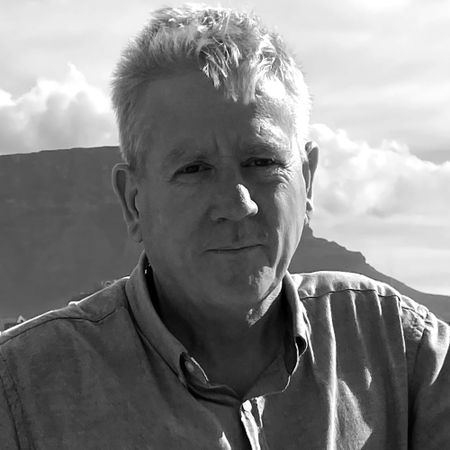
Hamilton Wende is a South African writer and journalist who has worked on television projects and films for National Geographic, CNN, BBC, ZDF & ARD, among others. He has published nine books based on his travels as a war correspondent in Africa and the Middle East, and two children’s books. His latest thriller, Red Air, reflects his experiences with the US Marines in Afghanistan.