



/file/dailymaverick/wp-content/uploads/2025/09/label-Opinion.jpg)
On 19 December, 40 years ago, our sister Jacqueline Quin and her husband Leon Meyer - along with Joseph Mayoli, Nomkhosi Mini, Lulamile Dantile, Stanley Mathee and three Basotho - were shot dead in Maseru by South African security forces.
It isn’t easy to find the words, but we are as enraged and disturbed as we were 40 years ago when our sister’s life was taken at the hands of the apartheid regime’s hit squad in 1985.
Jacqui and Joe, as he was known in the underground movement, were shot dead in their home by Joe Coetzer and Anton Adamson of the South African Security Police led by Eugene de Kock from the Vlakplaas assassination squad. Two of hundreds murdered by this unit.
/file/attachments/orphans/Jacqui-Leon-and-Phoenix-August-1985_433239.jpg "An old photograph of Jacqui, Leon and Phoenix Quin, August 1985. (Photo: Supplied)")
Jacqui and Joe were given a high-profile state funeral in Maseru and buried at the local Heroes’ Acre, along with the other four South Africans killed in the raid on 31 January 1985. Three weeks later the government of Lesotho was overthrown in a coup assisted by the South African regime, and all South African refugees, including all ANC members, were expelled from the country.
Jacqui, proficient in several African languages, was a highly regarded, enlightened and courageous school teacher in one of the poorest countries in Africa. Joe was a political commissar in uMkhonto weSizwe, who fled East London at the end of 1979 to go into exile and undergo military training with MK, along with fellow activist Clifford Brown after his release from detention.
A mere four years later, Nelson Mandela was released after 27 years of imprisonment and shortly visited Heroes’ Acre in the Maseru cemetery. Since the graves had no headstones, metal name plates were hastily and incorrectly erected on the graves of these murder victims. Soon after the first democratic elections the Truth and Reconciliation Commission (TRC) was established and nine policemen applied for amnesty for the raid. The policemen who applied for amnesty for the murder of Jacqui and Nomkhosi were refused amnesty because they had not been identified as political targets.
No prosecution of these self-confessed killers took place because the offence took place in another country and other possible charges of conspiracy to murder lapsed due to the passage of time. Both men who attacked Joe (Leon) and Jacqui’s house have since died. Their leader, De Kock, was released from prison but remains in the protection of the state.
/file/attachments/orphans/IMG_0895_482319.jpg "Newspaper cuttings of the Quin family burial. (Photo: Supplied)")
/file/attachments/orphans/IMG_0897_818680.jpg "Newspaper cuttings of the Quin family. (Photo: Supplied)")
The TRC, noble in intent, provided some answers, but refusal of amnesty for the murderers had no consequences for the killers. Unlike their daughter, still breast-fed and unable to walk or talk at the time of this barbarous act, carrying the consequences of life without both her parents.
Following the TRC, some families started exhuming the remains of their relatives from graves outside the country to bring them home. This was often carried out in a haphazard manner for the sake of political expediency, by unskilled undertakers ignoring basic forensic procedures. So the remains of Jacqui were inadvertently taken to the Eastern Cape and buried as Nomkhosi Mini. Joe was taken to Soweto and buried as Lulamile Dantile. Now, 40 years after the murder of the six South Africans, only the fate of Jacqui and Joe is known. While all their families wait for the injustice and indignity to be sorted out, their bones have been languishing in a state facility for years.
So, at the very least, I want people to remember the value and life of Jacqui and all the others who stood up for justice. Particularly for those who, like her, missed even the slightest fruits of regime change. Of “freedom”. A nevertheless critical step towards that ever-elusive destination.
The other important part of this story is that South Africa, with the rest of the world as a result, did, and continues to, inch forward towards “better”... because there are people like her who stood up against the apartheid state. Through all the inevitable sideways and backwards slipping and sliding. As Jane’s classes with students have soberly considered over the years: where would our lives be now if no one had fought against apartheid?
Remembering and honouring our dead who did fight for all our sakes helps remind us and strengthen our resolve to keep up the good fight for better. Beloved people died for it. DM
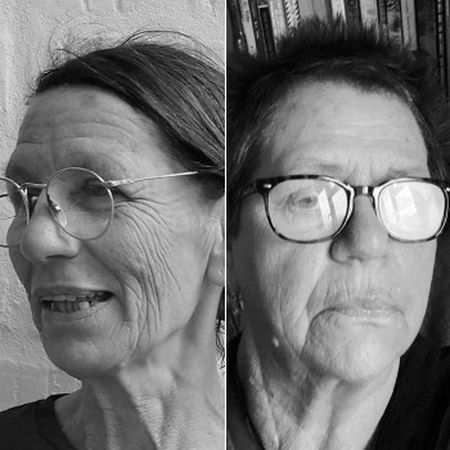
Jane Quin is a mother, grandmother and activist educator. Her work is rooted in feminism, Freirean literacy and trade unions. She was 25 years old in 1985 when her sister Jacqui was killed.
Margot Quin is the eldest of the Quin siblings, born 18 months before Jackie. She is an artist and writer, and raised three children while studying and working at magazine cooperative Molo Songololo. She has worked in a number of sewing cooperatives and co-ran a small children’s art school. Currently, Margot works as a tenant representative for Stroud council in England.