



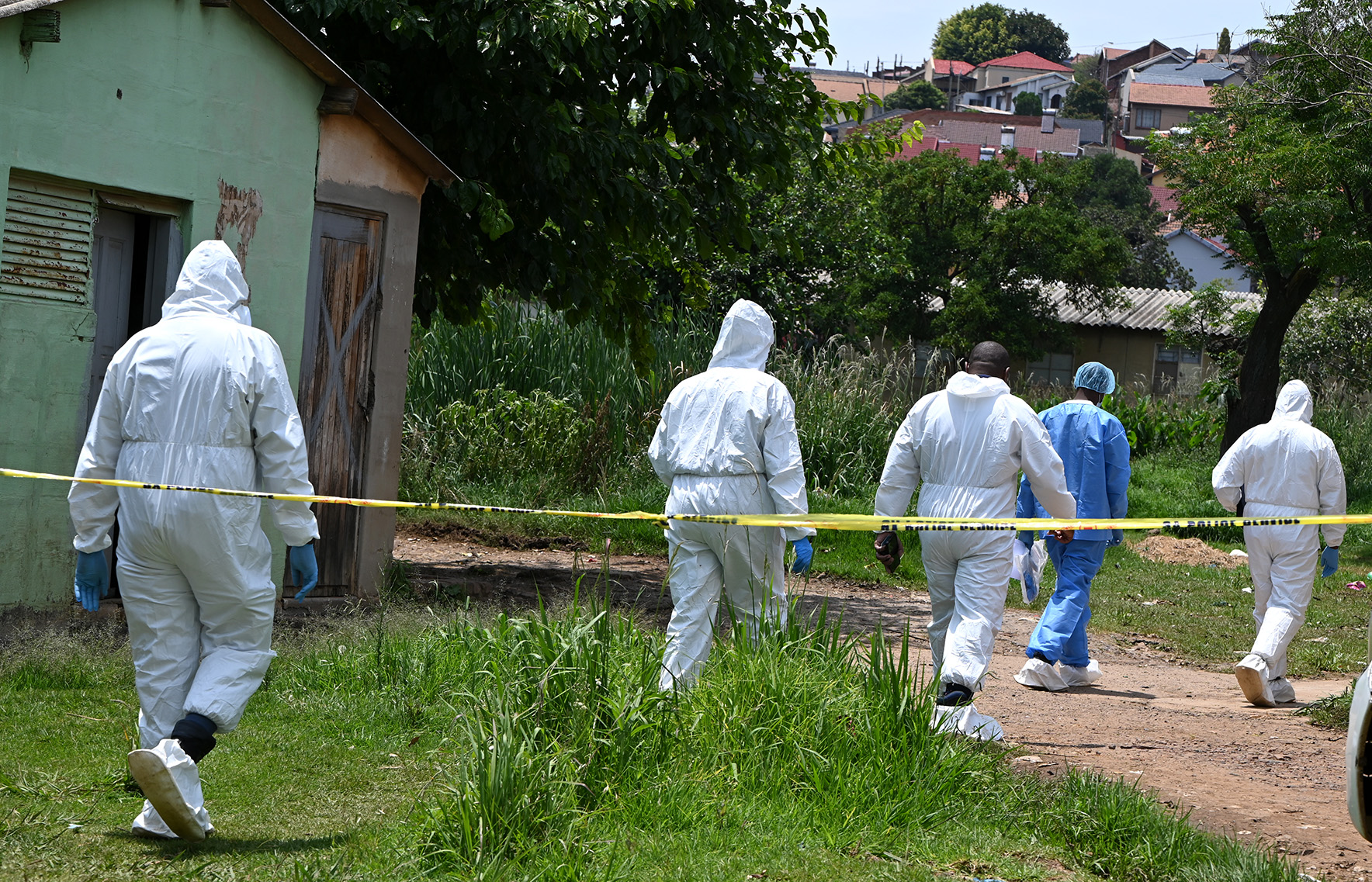
 A police forensic team examines the scene at Saulsville Hostel in Atteridgeville, Pretoria, on 6 December 2025 after a tavern shooting killed at least 12 people. (Photo: Gallo Images / Frennie Shivambu)
Yet another mass killing has taken place at a liquor outlet in South Africa, this time at a shebeen inside a hostel in Saulsville, Tshwane.
/file/attachments/orphans/ED_590013_906157.jpg "A police forensic team examines the Saulsville Hostel crime scene. (Photo: Gallo Images / Frennie Shivambu)")
The event highlights multiple challenges. These include the continued existence of poorly managed hostels well into the post-apartheid era; the ongoing use of firearms for criminal and “dispute-resolution” purposes; extended operating hours and the presence of minors; and the lack of effective steps to eliminate unlicensed liquor outlets.
That the place was unlicensed is not the key issue, however. Similar events take place frequently at licensed outlets, too.
/file/dailymaverick/wp-content/uploads/2025/11/ED_579179.jpg "National Police Commissioner Fannie Masemola. (Photo: Gallo Images / Brenton Geach)")
A visit to the premises by National Police Commissioner Fannie Masemola and condemnation of the incident by President Cyril Ramaphosa both serve as a reminder of two critical issues:
- South Africa does not have a national solution to what many see as a national problem.
- Liquor policy and legislation sit within the government’s economic cluster rather than the social cluster, meaning alcohol harm reduction is subordinate to economic development priorities.
These challenges were highlighted by Working for an Alcohol-Safer South Africa (Wassa) during our recent Summit on Substance Use and Illicit Trafficking, hosted by the Central Drug Authority.
/file/attachments/orphans/ED_590034_476033.jpg "Police direct onlookers away from the Saulsville Hostel crime scene on 6 December 2025. (Photo: Gallo Images / Frennie Shivambu)")
The authority, which advises the Minister of Social Development, is responsible for drafting and monitoring the National Drug Master Plan, while the Department of Social Development produces the country’s policy on the prevention and treatment of substance-use disorders.
Because alcohol is classified as a drug, albeit a legal one, both the drug master plan and the substance-use policy include recommendations to reduce the harms caused by alcohol. But neither the drug authority nor the Department of Social Development has the authority to implement their own recommendations, since national liquor policy falls under the Department of Trade, Industry and Competition (DTIC), while provincial liquor policy sits with economic development departments (except in the Western Cape, where it is located in the Department of Community Safety).
Complicating this further is the Constitution’s allocation of exclusive responsibility for retail liquor licensing to provinces.
Limited authority
As a result, the national government has limited authority over where, when and how alcohol is sold and consumed. There is also confusion about the extent of police authority over licensed outlets. The only clear consensus is that the police are expected to close down unlicensed shebeens – something they have repeatedly failed to do, as the Saulsville killings illustrate.
Little has been done to reduce alcohol-related harm since 2017, even though the Covid-19 pandemic made plain the risks associated with weak regulation of alcohol sales and consumption.
The DTIC’s Liquor Amendment Bill of 2016 proposed several measures to strengthen harm-reduction efforts. Nine years later, nothing suggests it will become law. The EFF introduced a separate Bill to regulate the sale of alcohol earlier this year.
Wassa argues, however, that even if the 2016 Bill were enacted, little would change. It would not address the two fundamental obstacles to creating a safer alcohol environment: the constitutional allocation of retail licensing powers to provinces and the location of liquor policy within the economic rather than social cluster.
At the summit, Wassa therefore proposed that the Central Drug Authority include the following resolution in its final report:
The summit agrees that “alcohol harm is a national problem that requires a national solution” and supports the call, first, for amendments to Schedule 5 of the Constitution to make liquor policy and legislation – including retail licensing – a national competence administered by provinces and/or local government, and second, for responsibility for liquor policy to be moved from the economic cluster to the social cluster.
Wassa encourages the Central Drug Authority to adopt this resolution. Even if it does not, we will continue to lobby, with civil society support, for the proposed changes – the first requiring action from Parliament and the second from the President. It remains true that it is the height of folly to hope for new results while continuing to pursue old strategies. DM
Maurice Smithers is an office bearer at Working for an Alcohol-Safer South Africa.