



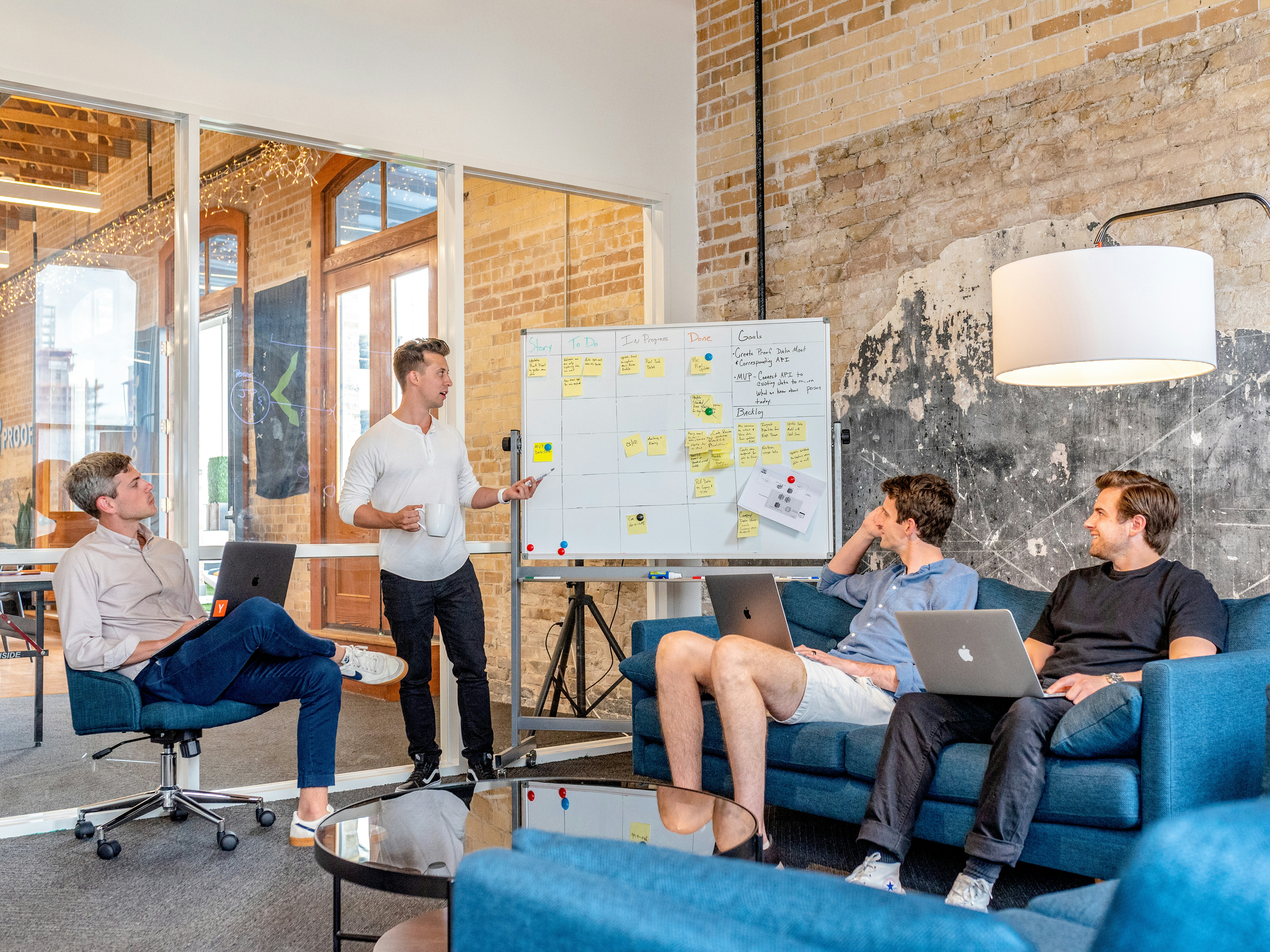
 Drawing inspiration from the G20, South Africa's leaders should actively reclaim relational power in everyday interactions to foster brighter, more engaged environments. (Photo: Austin Distel / Unsplash)
In a recent LinkedIn post on South Africa’s hosting of the G20, Dr Nik Eberl, chief executive of the SA Champions Network, reflected on the many international delegates who had expressed deep appreciation for our country’s hospitality, the warmth of our people and our welcoming nature.
It filled me with tremendous pride when I read these delegate’s comments. They were speaking of something deep and profound. They were all saying that yes, they felt welcomed, but they also felt deeply seen; treated like they mattered whether well known or not. They felt a sense of belonging.
As South Africans, we have a unique ability to unite when the stakes are high. We seem to inherently know that when we are in relationship with others we can do anything we set our minds to, and that this connection is so much more than what is spoken. It is about how we connect and show care; a smile, a greeting, a finding out how you and your family are. This stuff really matters to human beings.
But why do we seem to lose our way between G20s and World Cups? In my work I encounter countless spaces, especially in organisations, where people are desperately searching for the connection and belonging that we lavish on outsiders when the need arises. I see it in high levels of disengagement, addiction, debt, loneliness, bullying and the poor mental and physical health of many.
Why does our intrinsic spirit of ubuntu seem to dissipate in the spaces where it is needed the most — between us? We are so exceptional at seeing one another, uniting for the big moments, spreading warmth and welcome to all who visit us. What do we allow to come between us as South Africans — and especially as leaders — and how do we reclaim this superpower in all the spaces we find ourselves in?
In attempting to answer this, I share a recent experience of belonging that I had. As an industrial psychologist, I know that a large part of my work is continuing to put myself into spaces that will challenge my ways of being and leading in the world.
As such, I recently found myself in a community-building workshop space with a group of extraordinary leaders from business and civil society. They are quietly doing incredible work in our country, often with the chips stacked against them, but with a strong sense of purpose and a vision of co-creating a better future for our country.
The little details matter
I entered the workshop space not knowing others, but for the first time in such a space, I immediately felt that I did not need to perform or share what I know. It was a space in which people were interested in me for who I was, rather than my background or my qualifications, where being there and showing up (complete with a horrible dose of the flu and a body full of antibiotics), was enough. From the moment I entered, music was playing, I saw my name on a flipchart, I was welcomed into a seated circle and handed a workbook with a personalised, hand-painted cover page with my name. Everything about that welcome showed care and concern. All the little details mattered.
We have probably all experienced something like this, the friend who remembers to check in on you and your family, the leader who acknowledges the good work you did in front of the team, or the parent who takes the time to listen to their child’s day. All of it is small, but so powerful.
What I learnt is this: as leaders we must consciously and intentionally create spaces of care and belonging. It’s shaped by how we structure conversations, the questions we ask and how we listen. These practices allow everyone to own their space, deepen their thinking and reflect on how they are contributing to the environment around them. In this workshop, there was no model, no four-step framework, no jargon.
It was simply the same relational power that was at play at the G20, enacted in real time, creating space for people to show up fully in all their humanity, with their unique abilities and their agency.
Was there a team pep talk before this workshop?
Was there one before the G20?
I doubt it. It is just how we are as South Africans when we remember who we are and move into the fullness of our humanity.
In organisational environments that are often performative, this simplicity can feel uncomfortable. It can even overwhelm leaders who fear that “connection” sounds too soft or too immeasurable. I often hear leaders ask,: “Do you mean all I need to do is know my people and show care?”
Yes. And also — it’s the hardest work of all. So we diminish it by calling it “soft skills”.
A sense of worth and belonging
We urgently need to create structures and cultures that cause people to be seen, heard and valued. Not for what they do, but for who they are. This is not just good for people. It is good for business, as people who feel a sense of worth and belonging bring their A-game to work, as everyone from drivers to sherpas did for the G20.
Many organisations use terms like “psychological safety”, “active listening” and “empathetic leadership”. But the foundation beneath all of these is the same: connection and belonging. The more we simplify and practise being deeply human, the more we enable people to bring their best selves to work.
So, to all the leaders out there, be inspired as I was by the G20 and what is possible. Think about the spaces you find yourself in and ask yourself how you can reclaim relational power in small ways: greeting people, being curious about their lives, getting to know your team better, allowing others to own their space and have their voices heard and valued.
And know that when you do this, people will shine in every space they find themselves in. DM
Taegan Devar is an industrial psychologist and the founder and Managing Director of people and organisational development firm Fineline Consulting.