




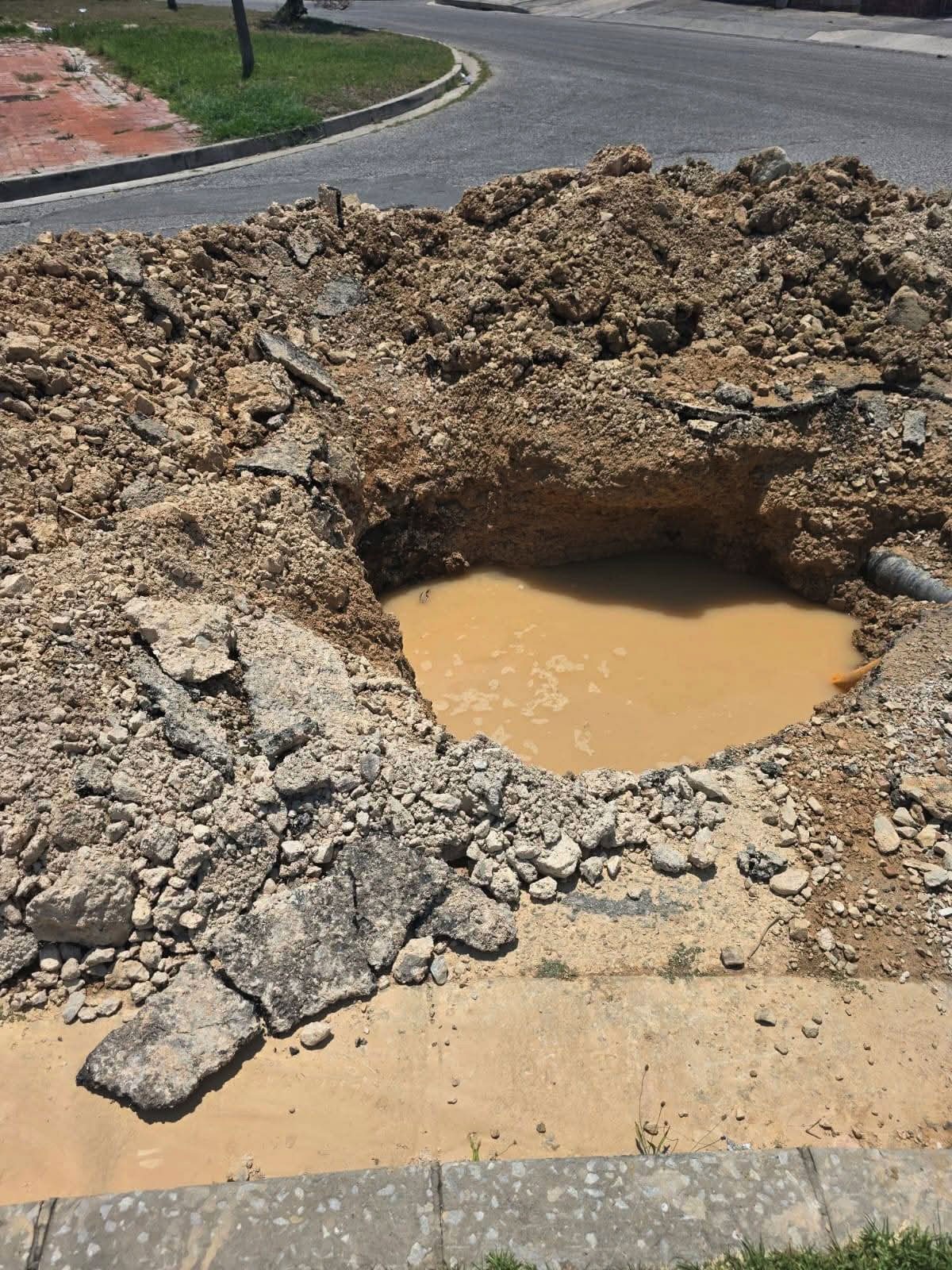
 A water leak in Booysen Park, Gqeberha, was reported in November last year, but took until 6 January to repair, resulting in clean water wastage for more than a month, leaving the water supply in Nelson Mandela Bay dams to dwindle. (Photo: Facebook)
 As residents are urged to implement stringent water conservation measures, the Nelson Mandela Bay metro is struggling to repair more than 2,000 water leaks, some of which have persisted for months after being reported.
The call to save water comes as the metro’s combined water dam levels dropped to 39.10% on Friday, raising questions about the metro’s efforts to save water by responding to leaks expeditiously.
This comes as the minor leaks repair contract expired in September 2025, resulting in further delays in responding to water faults.
Last year, the metro reported that it received about 6,000 water-related complaints every month.
The metro announced the city’s dwindling water reserves last week, calling on residents to reduce water usage at home by shortening showers and turning off taps, recycling the resource where possible and limiting the watering of lawns and washing of cars.
Water management crisis looms
The Nelson Mandela Bay Business Chamber has since relaunched its Adopt a School initiative as an urgent intervention to slow the rapid and ongoing loss of water as the city edges towards a water management crisis.
The initiative focuses on fixing leaks, repairing faulty plumbing and installing rainwater-harvesting systems at high water-use schools — sites that together account for about 10% of the metro’s total water losses from leaks.
Chamber chief executive office Denise van Huyssteen said unattended leaks and decaying infrastructure contributed to the dwindling water reserves.
“This decline in available water is not driven by declining dam levels alone, but also by unaccounted water losses of well over 50% caused by the lack of maintenance of water infrastructure and leaks, which is costing the metro millions of litres of treated water every day, including meter tampering, inadequate security at pump stations, water billing and other technical issues.”
Van Huysteen said another key contributing factor was the increased water usage levels compared with what was permitted.
“The increased water usage levels of consumers is trending in the wrong direction, currently tracking at 384 megalitres per day versus the target of 280 megalitres per day and is clearly unsustainable.
Extreme heat
“The situation is being compounded by extreme heat conditions, with the municipality experiencing a series of runaway fires that have placed further pressure on an already fragile water system. The reality is that we are watching dam levels drop while simultaneously needing water for firefighting; this convergence should be setting off alarm bells across every level of leadership in the metro.”
Van Huyssteen said three years ago, the city came dangerously close to running dry, and it was deeply concerning that there had not been a sustained and escalated focus on protecting water security since then by both the municipality and consumers.
Ward 6 councillor Gert Engelbrecht said his area had three big underground water leaks that had caused outages.
“The main issue is the water leaks that take time to be repaired. The issue is quite big, particularly in the Overbaakens area, where the leak has been running for a few days now with no water coming from the taps,” said Engelbrecht.
“It’s affecting the residents, and they have been on my case, especially on the day before schools opened, because they needed to prepare, and that requires water.”
Engelbrecht said one leak had been reported in December, but had not yet been addressed, after it had been reported several times.
“Maybe it has not been done because they have to lift the tar. I had over 10 leaks in December, and it has been very difficult to get the municipality to do repairs. One of the leaks was caused by a private contractor [who] hit the pipe. The guys are waiting for the municipality to turn the water off so they can do repairs, but it’s taking too long. These leaks have caused major water outages and it’s been very frustrating for me, because I have no answers for the residents.”
/file/dailymaverick/wp-content/uploads/2023/08/ED_388470.jpg "Nelson Mandela Bay’s Churchill Dam, which also supplies the Kouga municipality, is 43.91% full. (Photo: Gallo Images/ Die Burger/ Lulama Zenzile)")
Ward 40 councillor Jason Grobbelaar said it took almost a month for municipal officials to attend to water leaks.
“I have some water leaks in my area – sometimes it takes about three weeks to be attended to, and other times they are repaired in 24 hours. I think there are so many leaks that need to be prioritised, hence the city takes a while to get to others, but they are being attended to.”
Municipal spokesperson Sithembiso Soyaya said last week that a new tender had been awarded and was in the objection stage of the tendering process.
“The previous water leaks tender expired at the end of September 2025. While it is not possible to pre-empt the outcome or duration of the objection period, all things being equal, the process is anticipated to be concluded within approximately four weeks,” he said.
“In the interim, the municipality continues to manage and repair water leaks daily through its internal teams, with the current reported backlog being approximately 2,000 minor leaks.”
While internal capacity was in place to address the water faults, Soyaya said augmentation was required to reduce turnaround times.
“Notwithstanding these challenges, the municipality remains committed to maintaining continuity of service and responding to water leaks across the metro.” DM