




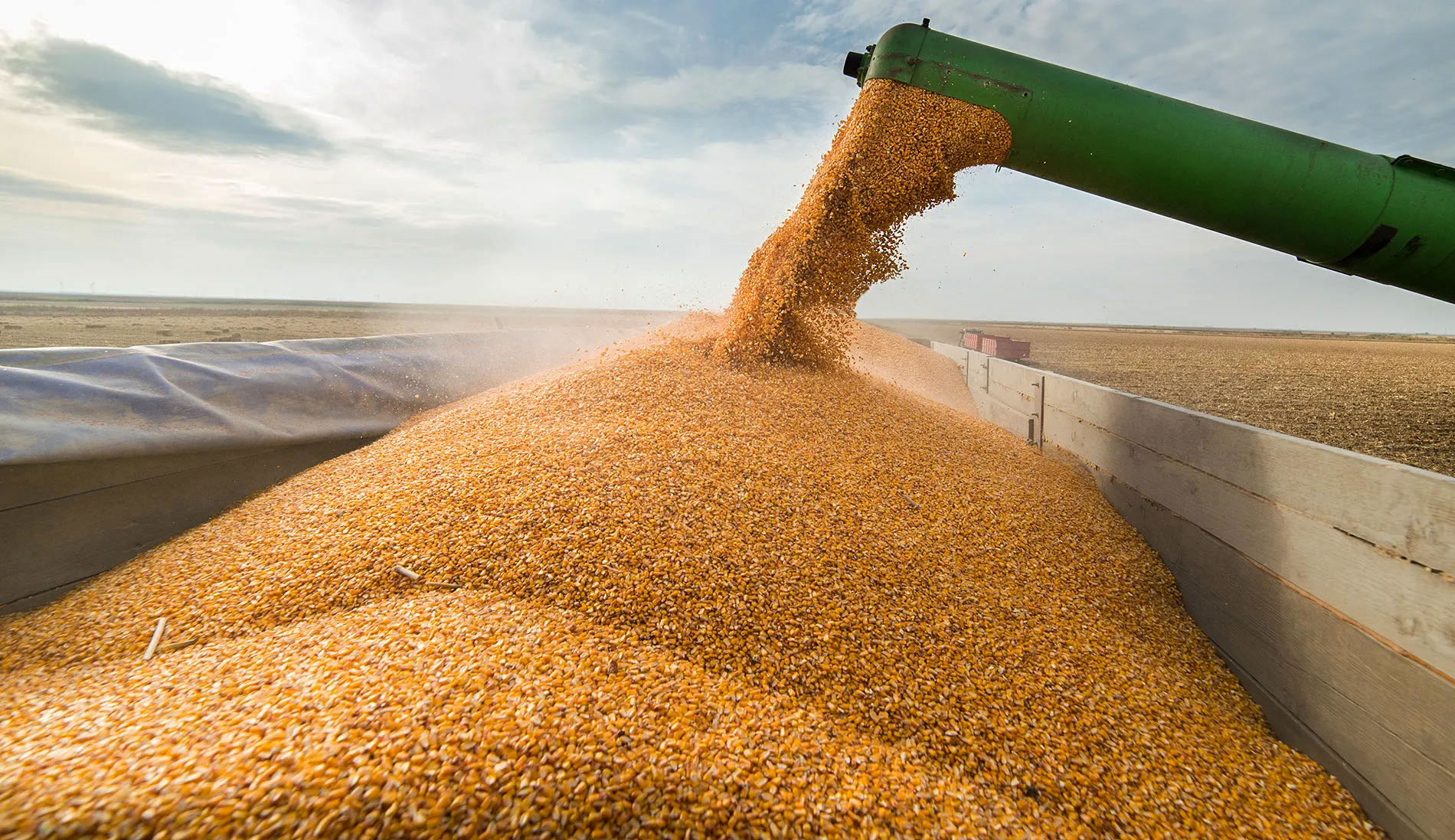
 Last season’s bumper maize crop, lifted by the rains of the La Niña weather pattern that has returned this season, means South Africa has maize to spare. (Photo: iStock)
 South African white and yellow maize futures have fallen to four-year lows, a trend driven by the rampant rand, abundant global supplies and the rains of La Niña that will help to douse domestic food inflation with mixed outcomes for the domestic farming sector.
White maize futures are down 35% over the past 12 months to just over R3,400 a tonne, their lowest levels since late 2021. Yellow maize futures have fallen 18% since early last year and are now fetching just under R3,350 a tonne – also their trough since late 2021 – according to data compiled on Barchart.
The trifecta of factors outlined above explain this state of affairs. Last season’s bumper crop, lifted by the rains of the La Niña weather pattern that has returned this season – albeit in a weak form – means South Africa has maize to spare.
“We have an ample maize supply. We had the second-largest maze harvest on record in the 2024-25 season, at about 16.44 million tons. This ample maize harvest is behind the recent decline in maize prices,” said Wandile Sihlobo, chief economist at the Agricultural Business Chamber of South Africa.
This year’s crop should also be stout, though some caution is needed at this critical stage of the season. The government’s Crop Estimates Committee (CEC) will release its first production estimate for this summer’s grain crop including maize on 26 February, and that will be closely watched by the markets.
The rand has also been key, a point that underscores the crucial impact its performance has on inflation. The currency gained about 12% against the greenback last year, and South African agricultural products such as maize dance partly to the tune of import/export parity pricing.
This helps to contain domestic prices for the commodity when the rand is gaining ground against the dollar, with the opposite effect when it is weakening.
Global supplies – or in this case oversupplies – have also brought domestic prices to heel.
“Many major maize-producing regions have seen record or above-average crops, especially in the United States, Brazil, and the European Union, boosting global inventories. Some reports point to forecasts of high global maize output and growing carryover stocks as farmers planted more and yields were strong,” said Daneel Rossouw, Head of Sales for Agriculture at Nedbank.
“This has contributed to ample maize supplies internationally, which keeps world prices relatively subdued even when regional conditions vary. For South African farmers – who operate in a partially export-linked price environment – this typically puts downward pressure on local maize prices and increases price volatility.”
"Lower maize pricing is good news for consumers and the livestock sector, as cheaper feed supports softer prices for staples and meat. But its a very harsh reality for grain producers - a bumper local crop, weak global prices and a stronger rand have pushed prices down sharply, cutting many farm incomes by close to half," Tobias Doyer, the CEO of Grain SA told Daily Maverick.
What this means
Consumers and cattle farmers can expect relief, but it translates to falling earnings for grain farmers. More broadly, it bodes well for inflation and ultimately interest rates. This is a space that the Monetary Policy Committee of the South African Reserve Bank watches like a hawk, and this trend will help to bring out its dovish side.
This bodes well for South Africa’s inflation outlook as the Reserve Bank strives to anchor it at 3.0%. South African consumer inflation slowed in November to 3.5% from 3.6% in October on an annual basis – but food inflation quickened to 4.4% from 3.9%.
Read more: CPI slows to 3.5% in November but food inflation accelerates
Meat prices were the main accelerant, heating up to 12.2% in November from 11.4% in October – a reflection in part of the unfolding consequences of the foot-and-mouth disease (FMD) outbreaks among South Africa’s cattle herd.
But yellow maize is used primarily as feed for livestock and so its falling price should filter through the value chain, bringing relief to cattle farmers reeling from the FMD outbreaks.
Meanwhile, retail maize meal prices have been cooling – a welcome trend for poor and working-class households that rely heavily on the staple for their caloric intake.
For maize farmers, this is not good news and signals a compression of their margins. Commercial grain farming is a highly capital-intensive business and even with a good harvest, platteland profits may plummet. But at least key costs such as diesel are falling. DM