




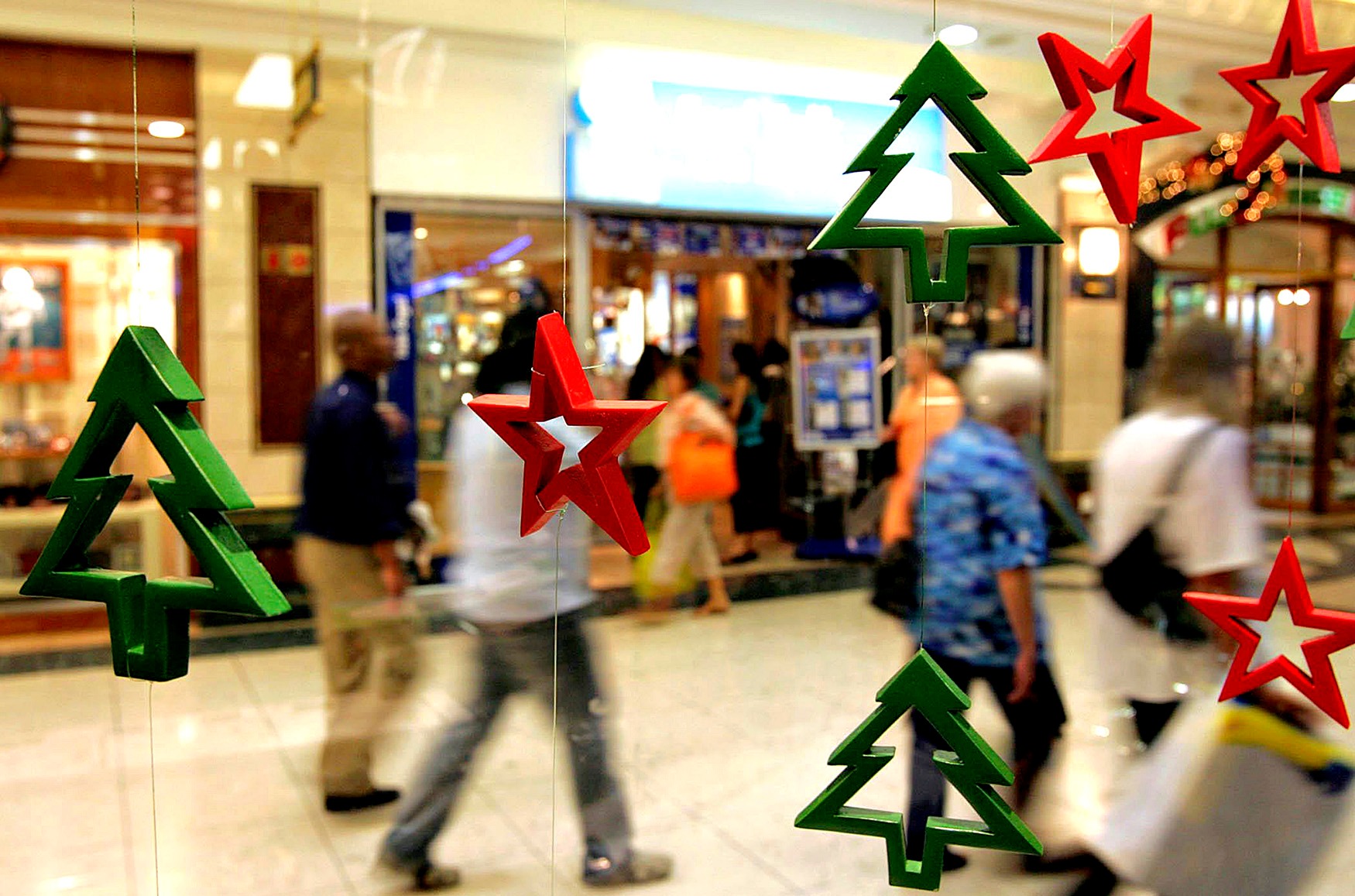
 The festive season may still deliver a temporary lift, but the underlying data show that South Africa’s retail story is no longer defined by short-term cycles alone. (Photo: Gallo Images)
 South Africa’s retail sector has entered the 2025 festive season in a state of cautious transition. While the final months of the year traditionally serve as a barometer of consumer confidence, the current picture reflects more than a seasonal upswing. It points to households emerging from a prolonged period of elevated inflation while adjusting to deeper changes in how and where spending occurs.
Rather than a straightforward recovery, recent data suggest a retail economy being reshaped by two parallel forces: constrained household budgets and a steady migration toward digital shopping channels. Together, these dynamics are redefining festive season “growth”.
October data provides a stable anchor
Statistics South Africa’s latest retail trade figures show that sales rose by 2.9% year on year in October, measured in real terms at constant 2019 prices — meaning the data adjusts for inflation to reflect actual changes in the volume of goods sold. Growth, however, was uneven. Textiles, clothing, footwear and leather goods expanded by 5.8%, contributing one percentage point to overall growth. Household furniture and appliances also posted strong gains, increasing by 13%. Collectively, discretionary spending — items households can defer or cluster around promotions — drove much of the lift.
All other retailers, which include smaller specialist and online stores, grew by 7.2%, contributing an additional 0.7 percentage points to the total, highlighting how online channels are increasingly capturing consumer demand. By contrast, food and beverages sold through specialised stores contracted by 1.9%, indicating that everyday essentials remained under pressure. Households appear to be prioritising value, timing, and necessity rather than broad-based consumption.
Assessing the sustainability of growth
While October’s figures are positive, longer-term outlooks caution against reading them as a decisive turning point. The Bureau of Market Research (BMR) projects that total retail trade sales for 2025 will reach R1.53-trillion nominally, but only about 2% in real terms once inflation is accounted for. Much of the headline growth reflects higher prices rather than significant increases in volumes sold.
Festive-period gains are therefore best understood as concentrated spending spikes — driven by Black Friday promotions and year-end discounts — rather than evidence of a broad consumer rebound. Higher-income households continue to account for a disproportionate share of retail value, while middle- and lower-income consumers remain highly sensitive to price, service costs, and credit conditions.
Inflation relief and the spending lag
Macroeconomic conditions are beginning to ease, though the effects at the checkout are gradual. Reuters reported that South Africa’s headline inflation slowed to 3.5% year on year in November, down slightly from October, comfortably within the SA Reserve Bank’s target range.
Lower inflation reduces the pace at which living costs rise, but it does not instantly boost discretionary spending. For many households, the primary benefit is stabilised debt repayments and a slower erosion of real wages, rather than a sudden increase in disposable income. Transport and recreation costs have moderated, but everyday expenses — including food and dining — continue to climb, reinforcing cautious spending habits.
The structural rise of online retail
A major factor reshaping retail readings is the acceleration of online commerce. The Online Retail in South Africa 2025 report by World Wide Worx estimates that online turnover will exceed R130-billion this year, accounting for nearly 10% of total national retail sales. Online retail is expanding far faster than physical stores, driven by convenience, transparent pricing and improved delivery infrastructure. Growth has been particularly strong in groceries, fashion, and home goods — the same categories underpinning festive-season spending.
Notable performers include Checkers Sixty60, which reported 47% growth in the first half of 2025, generating nearly R19-billion in sales; Pick n Pay, whose online turnover rose by more than 60% in its 2024 financial year; and Woolworths, which recorded 37% growth in online fashion, beauty, and home sales — all according to the World Wide Worx 2025 report. At the same time, global entrants are reshaping competition: Amazon’s South African site, launched in 2024, is now used by 12.3% of online shoppers, while Shein and Temu captured nearly 40% of online clothing sales, reaching an estimated R7.3-billion in turnover.
Read more: SA’s R130bn e-commerce boom sparks fears of retail sector job losses
Regulatory shifts, such as the closure of tax loopholes and stricter customs enforcement, have narrowed the price advantage of these global platforms. At the same time, shipping fees and delivery speed are now cited as the primary reasons for cart abandonment, making logistics the new competitive frontier. Efficiency, reliability and fulfilment speed remain decisive differentiators for retailers in both physical and digital spaces.
Heading into 2026
Taken together, the data point to a retail sector that is resilient but under sustained pressure to adapt. Consumers continue to spend, particularly during peak periods, but with greater deliberation, emphasising value, convenience and timing. Growth remains concentrated in specific categories and channels rather than evenly across the sector.
As online retail continues to redraw the competitive landscape and easing inflation stabilises conditions without sparking a surge in demand, retailers heading into 2026 will need to focus less on capturing seasonal spikes and more on aligning operations with a consumer base that is digitally fluent, price-conscious, and increasingly selective.
The festive season may still deliver a temporary lift, but the underlying data show that South Africa’s retail story is no longer defined by short-term cycles alone. Structural shifts are now steering how — and where — consumers spend, with long-term implications for both physical and online retailers. DM