



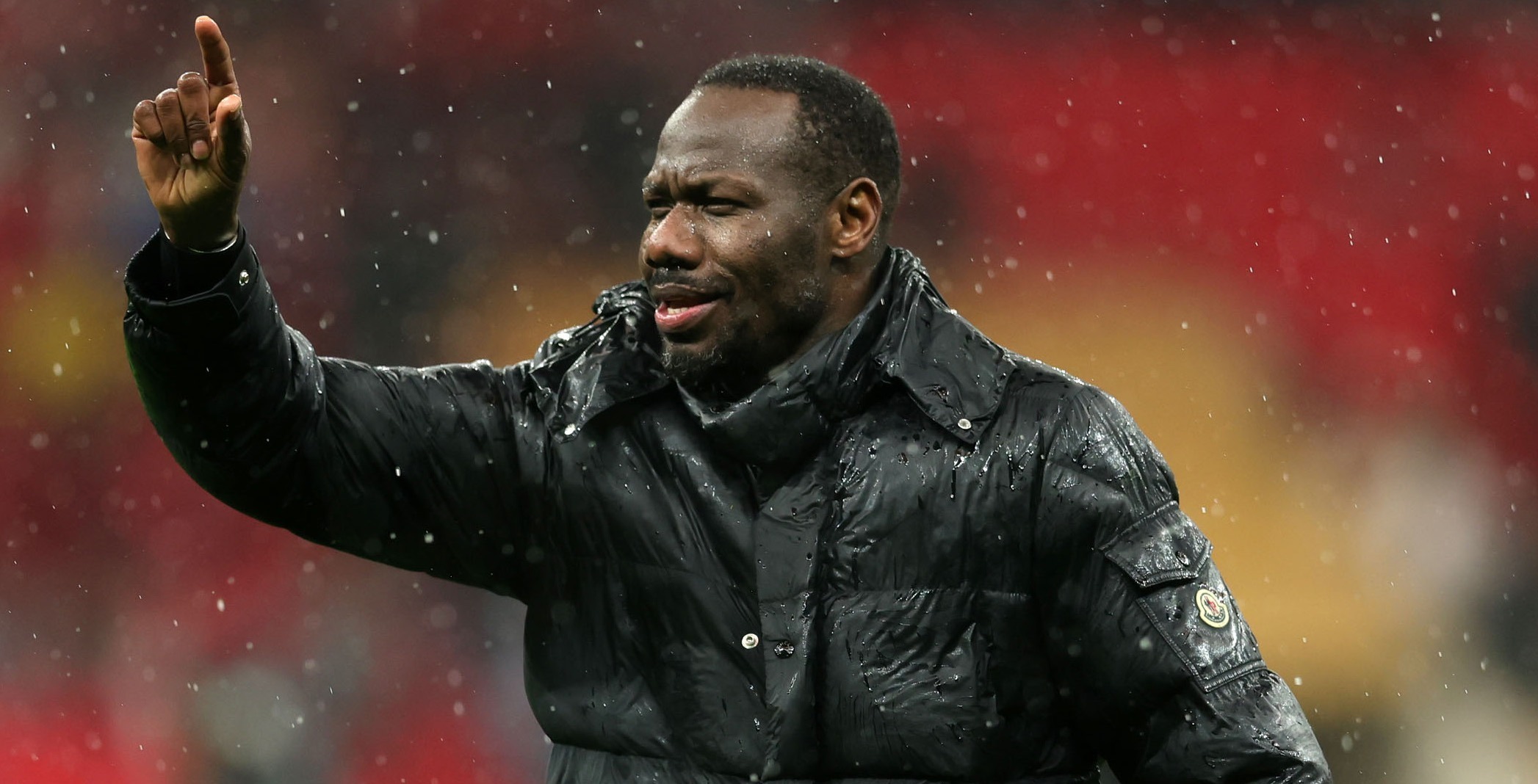
 Pape Thiaw, head coach of Senegal, has been heavily sanctioned by the Confederation of African Football for his part in undermining the referee’s authority at the 2025 Africa Cup of Nations. (Photo: Samuel Shivambu / BackpagePix)
 At the start of a week, as soccer lovers dissect the weekend’s action, it is rare for controversial refereeing decisions to not feature. This is applicable both in South Africa’s Premiership, as well as other international leagues and even further afield.
Just recently at the 2025 Africa Cup of Nations (Afcon), the theme of refereeing decisions being questioned was rampant. After the animosity towards officials showed itself in the quarterfinals of Africa’s premier soccer competition, the Confederation of African Football (CAF) had to issue a stern statement.
The matches between heavyweights Morocco and Cameroon, as well as Nigeria versus Algeria, were singled out by CAF. In its statement, the federation said it would not tolerate any threatening behaviour towards match officials.
“CAF strongly condemns any inappropriate behaviour which occurs during matches, especially those targeting the refereeing team or match organisers. Appropriate actions will be sought against anyone whose behaviour is not consistent with professional conduct at CAF events,” said the custodian of African soccer.
The lack of trust in referees and the decisions they make came to a head during the Afcon final – in which Senegal beat Morocco 1-0 to be crowned champions of Africa for the second time in their history.
As the match approached extra time, tied at nil-all, Senegal head coach Pape Thiaw instructed his players to leave the pitch in response to a penalty granted to Morocco by referee Jean-Jacques Ndala. The eventual African champions felt it was not a penalty.
/file/attachments/orphans/B26ARSS3576_268263.jpg "Senegal fans clash with security during the 2025 Africa Cup of Nations final match between Senegal and Morocco at the Prince Moulay Abdellah Stadium in Rabat, Morocco on 18 January 2026. (Photo: Samuel Shivambu / BackpagePix)")
Eventually sanity prevailed, through the intervention of the Lions of Teranga’s talisman Sadio Mané, and the Senegalese returned to the field.
Morocco went on to miss their penalty and the Senegalese scored the match-winning strike in extra time. But the damage to the image of African soccer was done. After investigating the unscrupulous scenes of that match since the culmination of the 18 January final, CAF has since issued heavy sanctions to a number of parties.
Running theme
One of those is Senegal coach Thiaw. The 44-year-old was slapped with a five-match ban for his actions in the final. He was also handed a fine of $100,000 (approximately R1.6-million). Senegalese players Iliman Ndiaye and Ismaila Sarr received two-match bans for “unsporting behaviour towards the referee” in the final.
But the Senegalese were not the only ones to question refereeing decisions at Afcon. CAF slapped Cameroon soccer boss Samuel Eto’o with a four-game suspension for his questioning of the officiating as his country took on Afcon 2025 hosts Morocco in the quarterfinals.
/file/attachments/orphans/B26ADME0761_114589.jpg "Bafana Bafana coach Hugo Broos was one of the people to question the referees at the 2025 Africa Cup of Nations. (Photo: Majt Esseddik / BackpagePix)")
In the group stages, Bafana Bafana boss Hugo Broos was also critical of the match officials as his team went down 1-0 to Egypt. Broos suggested that the current rules in soccer were too convoluted, which created all-round confusion when they were applied.
“I want to talk about the 45-minute meeting you get before a tournament, explaining the different rules. Between 25 and 50 rules,” said Broos. “Then it’s a penalty. Then it’s not a penalty. Then it’s a red card because you hit a player. Then it’s not a red card. In the end, there are so many rules that nobody knows anymore what to do, [or not do].”
Broos’ sentiments are shared by a number of fellow coaches, including Manchester City boss Pep Guardiola. The Spaniard was fuming after the most recent Manchester derby against city rivals Manchester United, which his side lost 2-0.
Further abroad
United defender Diogo Dalot was fortunate to escape being sent off after a tackle on City forward Jérémy Doku. Dalot was only shown a yellow card by on-field referee Anthony Taylor, with the video assistant referee Craig Pawson backing the on-field decision.
Professional Game Match Officials Limited chief refereeing officer Howard Webb, who is a former international referee, supported the decisions made by the referees. Speaking on the Premier League’s Match Officials Mic’d Up show, Webb said the decision to hand Dalot a yellow card was correct.
/file/attachments/orphans/4861967_599784.jpg "Former Fifa referee Howard Webb suggests that no matter what decision a referee makes, there will always be someone who is unhappy with it. (Photo: EPA / Peter Kneffel)")
“When you play it in real time, you can see there’s not a great deal of speed in the action, not a lot of intensity,” Webb explained. “We were heavily criticised a few years ago for using slow motion and freeze frames because people said, this is not reality. It’s not how the game is played. When you slow it down, it can look a lot worse. When you freeze frame it, you can make a lot of situations look like red card offences,” the former Premier League official added.
“So, it’s difficult for me to hear people make a judgement on this just by analysing freeze frames and slow motion, and then coming to the conclusion that it’s a red on that basis.”
/file/attachments/orphans/13687628_339065.jpg "Manchester City manager Pep Guardiola has been unhappy with a number of refereeing decisions against his team in recent weeks. (Photo: EPA / Peter Powell)")
Guardiola, however, was adamant that the offence should have been a red card, especially because Doku picked up a knock in that sequence of play.
“I defend my club and my players. Howard Webb defends the referees. He has to do that,” said the City coach.
As a demonstration of the convoluted rules and how they are applied, another ex-Premier League referee, Dermot Gallagher, said he would have shown Dalot a red card.
“He’s gone in high and with a straight leg. He’s hit him with his studs on the knee. The ball is not there, it’s gone. So, for me, it’s a red card. But for others, it is not,” said Gallagher on Sky Sports’ Ref Watch show.
/file/attachments/orphans/B25JNAG3733_426850.jpg "Minister of Sport, Arts and Culture Gayton McKenzie has been a big advocate for VAR in South African soccer. But it is not likely not solve the refereeing problems in the Premiership. (Photo: Alche Greeff / BackpagePix)")
These differing interpretations from former officials are one of the problems that will continue to plague soccer. More so in South Africa’s Premiership, where the officials are not even fully professional and juggle their refereeing duties with full-time jobs.
South Africa’s Minister of Sport, Art and Culture, Gayton McKenzie, is insistent on introducing VAR in the Premiership. However, the examples of refereeing decisions being questioned at Afcon and in the other competitions (despite the presence of VAR) suggest that this will not eradicate the controversy around refereeing decisions. DM