




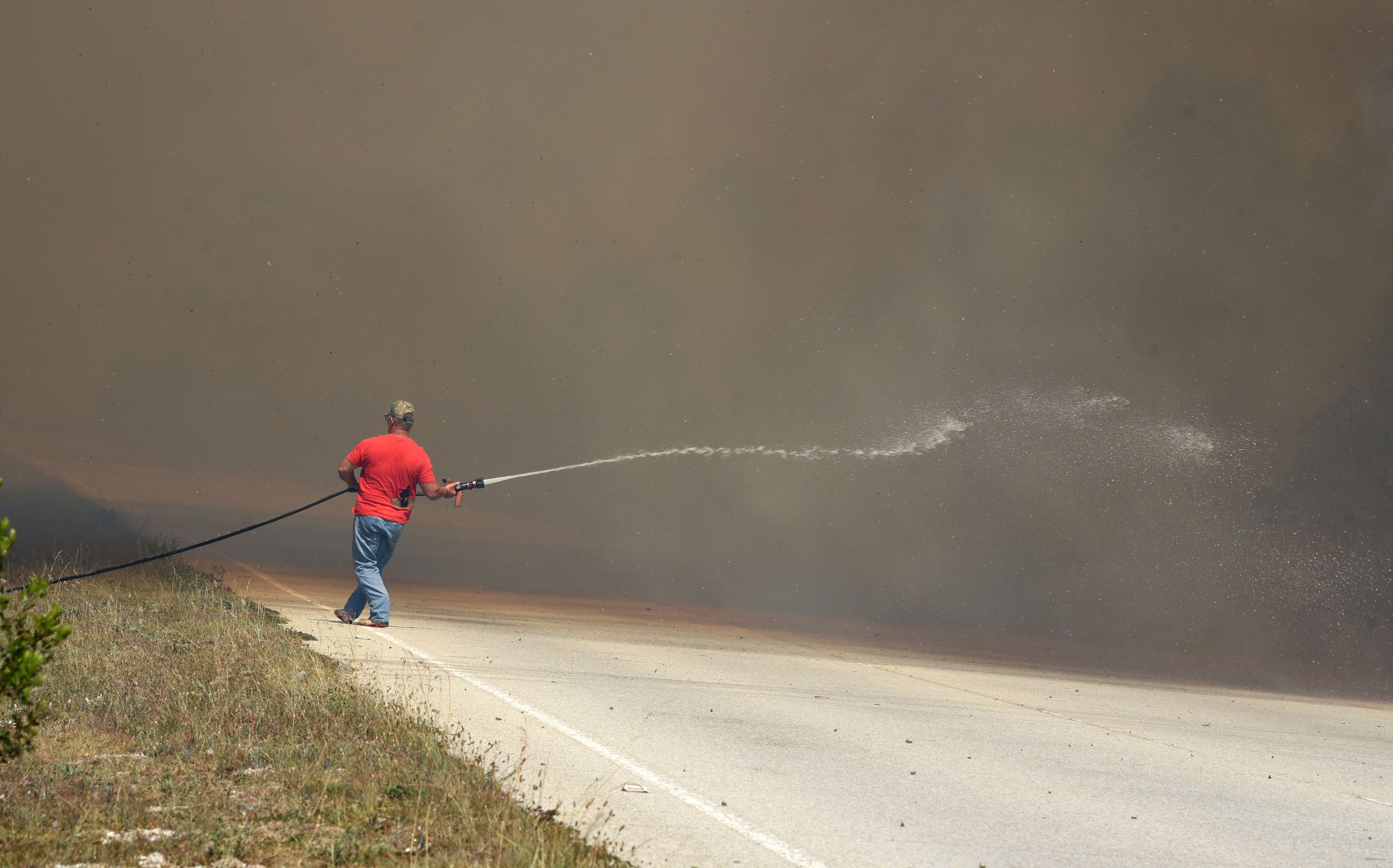
 Dense smoke from a veld fire along the N2 reduces visibility as a man drags a firehose in an effort to contain the blaze. (Photo: Deon Ferreira)
 A relentless run of veld and bushfires has scorched large swathes of land around Nelson Mandela Bay in recent weeks, threatening homes and major transport routes as dry, windy conditions fuelled the blazes.
Traffic ground to a halt on the N2 between Nelson Mandela Bay and Jeffreys Bay on Tuesday, 6 January, as thick, choking smoke from a raging veld fire billowed across the highway, reducing visibility to near zero, while municipal firefighters and farmers battled to bring the flames under control.
Local authorities say a combination of hot summer temperatures, low rainfall and the region’s strong, unpredictable winds has created near-perfect conditions for fires to spread rapidly, stretching firefighting resources and keeping communities on high alert.
/file/attachments/orphans/DSC_6146copy_568841.jpg "Thick plumes of smoke billow from a raging veld fire along the N2 between Nelson Mandela Bay and Jeffreys Bay.
<br>(Photo: Deon Ferreira)")
(Photo: Deon Ferreira)
Municipal spokesperson Sithembiso Soyaya said the metro had experienced a sharp increase in veld fires since December 2025, largely driven by prevailing summer weather conditions.
“These natural weather conditions significantly elevate fire danger levels, allowing fires to spread rapidly and unpredictably once ignited,” Soyaya said.
“Areas most affected include open veld, road reserves and sections adjacent to residential communities, placing pressure on emergency resources and posing risks to property, infrastructure and public safety.”
Despite the surge in fires, the municipality said its Fire and Emergency Services remained operationally alert. Soyaya said teams had been able to manage and contain incidents, even under difficult conditions.
“As a municipality, we are satisfied with the capacity we have in terms of manpower and equipment, as demonstrated by how quickly we are able to extinguish fires,” he said.
/file/attachments/orphans/DSC_6252copy_212105.jpg "Nelson Mandela Bay Municipality firefighting crews battle a veld fire alongside the N2 on Tuesday afternoon.
<br>(Photo: Deon Ferreira)")
(Photo: Deon Ferreira)
Traffic between Nelson Mandela Bay and Jeffreys Bay was diverted from the N2 to the Old Cape Road on Tuesday after dense smoke made the route unsafe. The blaze, which flared up late on Monday, 5 January, was still raging on Tuesday afternoon, when the municipality deployed 10 firefighting vehicles and teams near the wind farm.
Kanyiso Miti, assistant manager for Fire Protection Services at Agri Eastern Cape, said the fire along the N2 had started days earlier, with the municipality initially assisting to extinguish the blaze.
/file/attachments/orphans/DSC_6196copy_828890.jpg "Farmers from the Van Stadens area outside Nelson Mandela Bay assist Nelson Mandela Bay Municipality crews in their efforts to bring the fire under control. (Photo: Deon Ferreira)")
/file/attachments/orphans/DSC_6215copy_540337.jpg "A local farmer from the Van Stadens area stands by as a water tanker sprays the ground and vegetation to prevent the fire from spreading. (Photo: Deon Ferreira)")
“We thought everything was under control, but the fire flared up again because of the heat, wind and extreme dryness of the land due to the lack of rain,” Miti said.
“Because of today’s wind, the fire picked up and spread rapidly along the N2. It started north of Nelson Mandela Bay and moved further south towards Jeffreys Bay.”
The cause of the fire remains unclear, but Miti said that, in addition to weather conditions, it may have been sparked by motorists discarding cigarette butts.
In addition to municipal firefighting crews, Miti said about six farmer-led teams from the Van Stadens area and Working on Fire (WoF) crews had been deployed.
“The municipality and farmers from the Van Stadens area are assisting, and the Working on Fire teams have now been deployed,” Miti said.
“The road remains closed because smoke is extremely dense, making travel very dangerous. Because of the wind speed and direction, the fire keeps changing. Once you think it’s under control, the wind shifts again. The N2 is closed indefinitely, and it’s unclear when it will reopen.”
While no buildings were lost along the N2 corridor, farmers suffered significant damage to grazing and agricultural land.
“Because there are so many fires, including smaller flare-ups, it is difficult to determine the total area burnt without satellite data,” Miti said.
At least 100 hectares of land is reportedly destroyed, Miti estimates.
Although the municipality did not respond to questions about how many fires it had attended to since December, Johan Cloete of Farm Comm PE said volunteer firefighting crews had responded to about eight major fires in the past two weeks alone.
“The main problem is that conditions are extremely dry, and the combination of heat and strong winds is significantly worsening the situation,” Cloete said.
Most fires have started in dense bush, making them difficult to reach in their early stages. Crews are often forced to wait until flames move into more accessible terrain before launching a full response – a delay that can prove costly when winds change suddenly.
“Many fires start in bushy areas, which makes access very difficult,” Cloete said. “By the time we can reach them, wind shifts can push the fire in a completely different direction.”
He said that while several fires had come dangerously close to residential areas, no homes had been destroyed.
“There was a fire in Seaview recently that caused major concern, and again this week flames came close to homes. Fortunately, no houses were lost,” Cloete said.
/file/attachments/orphans/DSC_6188copy_390306.jpg "Farmers from the Van Stadens area outside Nelson Mandela Bay assist Nelson Mandela Bay Municipality crews in their efforts to bring the fire under control. (Photo: Deon Ferreira)")
/file/attachments/orphans/DSC_6268copy_828933.jpg "A man walks through dense bush just metres from a raging veld fire near the N2. (Photo: Deon Ferreira)")
Meanwhile, retired South African Weather Service employee Garth Sampson, based in Nelson Mandela Bay, said rainfall over the past six months had been exceptionally low.
“This region can receive rain at any time of year, but the dam-filling rains usually occur in autumn and spring,” Sampson said. “Summer rainfall is very scarce.”
“We are far below normal rainfall levels,” Sampson said.
Fire officials and agricultural organisations have urged residents and motorists to remain vigilant, and to report fires immediately.
Cloete added: “Early detection and rapid response can make the difference between a manageable incident and a destructive blaze.
“People must remain aware of the danger. Bringing a fire under control while it is still small is far easier than trying to extinguish a fully developed fire.” DM