



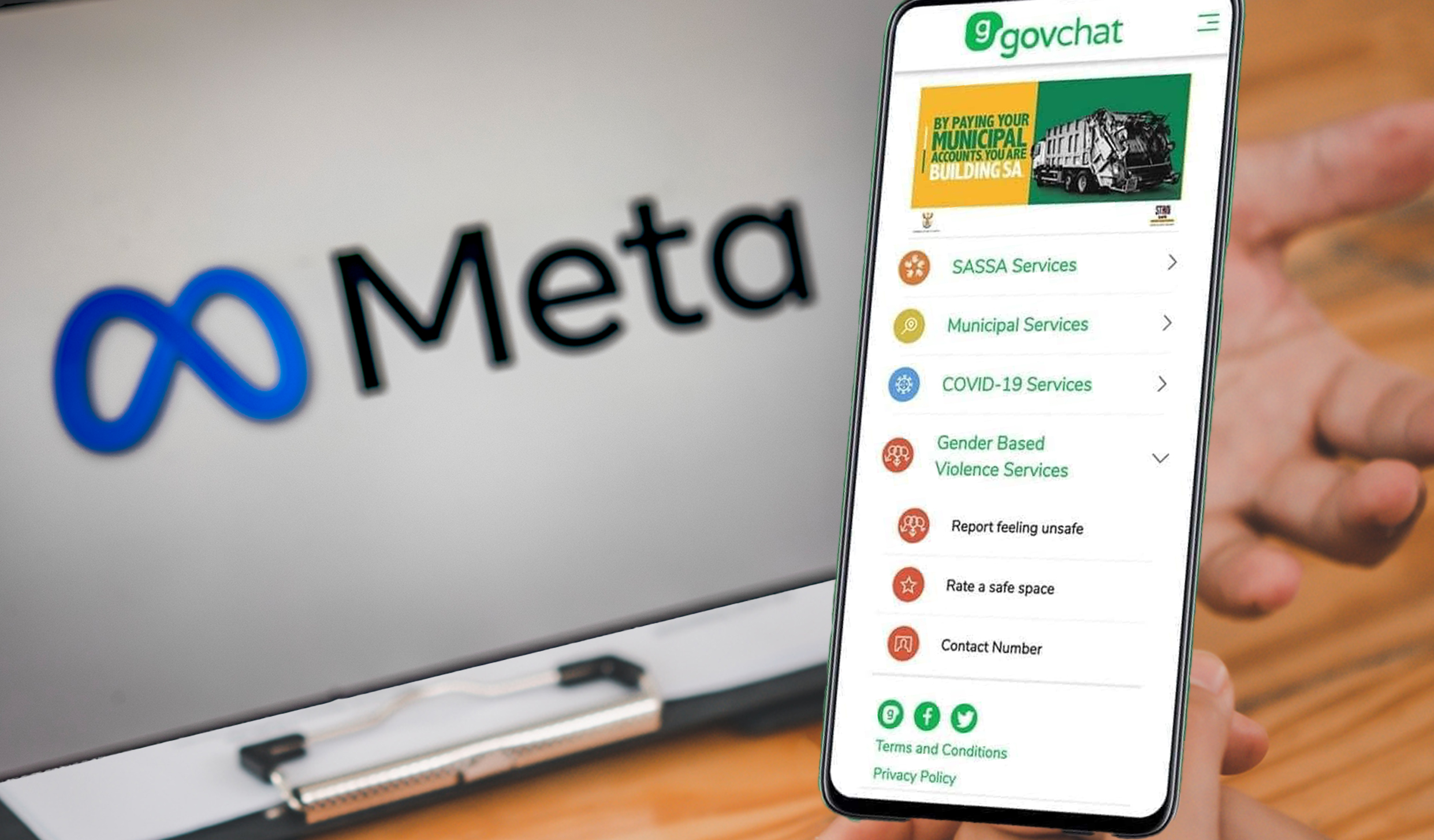
 The Meta logo and its verified logo. (Photo: Ezra Acayan / Getty Images) | GovChat. (Photo: X) | (Photo: iStock)
The second day of hearings at the Competition Tribunal in the ongoing dominance case involving Bradley Jonathan Sacks, Meta, WhatsApp and Facebook South Africa saw Meta shift strategy.
Instead of demanding outright production of documents, the tribunal pressed for clarity and transparency from GovChat and #LetsTalk. The move responded to GovChat’s defence: it is a dormant shell, with its central data destroyed, limiting its ability to comply.
Recap: Day 1 — human oversight demanded
The first day set a high bar. The tribunal required Meta to fully explain its E‑Discovery process – how it collects, filters and reviews electronic evidence. Even when automated tools are used, human oversight is essential: custodians must be identifiable, search terms clearly defined and filtering steps fully documented.
Read more: Competition Tribunal ruling in GovChat case could be a game-changer for Big Tech in SA
Day 2: Discovery deficiencies and the ‘shell’ conundrum
The morning began with Meta seeking further discovery from GovChat/#LetsTalk, then moved to challenge a summons issued to Bradley Jonathan Sacks, CEO of Capital Appreciation and GovChat’s principal shareholder.
Compelling clarity: Operational limits in focus
Meta’s legal team argued that GovChat/#LetsTalk’s discovery was “wholly deficient”, producing only 182 documents compared with roughly 800 from Meta. Affidavits – sworn statements describing search efforts – from GovChat and Sacks were “carefully worded and tailored”, raising questions about the claimed operational limits. Meta referenced precedent to probe whether these disclosures were reasonable.
Two issues dominated:
- The deleted database: GovChat claims its central email repository, hosted by GoDaddy, was deleted automatically after nonpayment. Meta sought clarity: were the documents permanently lost or merely inaccessible due to unpaid fees? If the latter, the materials remained under GovChat/#LetsTalk’s control.
- The harvested documents: Affidavits showed proactive contact with 14 key individuals, including former employees and directors, producing only 55 documents. Meta questioned whether these efforts were meaningful, requesting a schedule showing what each custodian provided.
Competition Tribunal member Geoff Budlender cautioned that any order could only concern documents genuinely in GovChat/#LetsTalk’s possession.
“What they’re required to produce is documents which are in their possession… Are we able to say that’s not true?”
Meta’s counsel clarified the request was for explanation, not production, formalised in a draft order seeking clarity on steps taken and the status of deleted or inaccessible data.
GovChat/#LetsTalk pushes back
Senior counsel Paul Farlam stressed that GovChat was a “dormant company which is on the books, but that’s all.” A business rescue practitioner had concluded there was nothing to be done, leaving GovChat a shell with no assets or documents.
Farlam said Sacks had already gone “well beyond” standard discovery requirements, and Meta’s proposed order was “wholly impermissible” and counterproductive. He highlighted a key legal principle: a sworn discovery affidavit is generally accepted as true unless deliberate dishonesty can be proven.
The summons challenge: Re-litigating discovery
The second matter involved a summons issued by Meta to Sacks as CEO of Capital Appreciation. Farlam argued it was defective on two counts:
- Improper service: It was sent to Sacks, a New York resident, via email rather than through a sheriff, as required.
- Lack of necessity: The documents had already been provided and were not essential to determining whether Meta’s off-boarding of GovChat was lawful.
Meta’s counsel acknowledged the service could be questioned, but maintained Sacks had been properly notified. She argued the documents were critical to understanding GovChat/#LetsTalk’s strategy and funding, central to the alleged anti-competitive conduct.
Budlender highlighted the difference between relevance and necessity: documents might inform potential damages, but were not necessarily central to proving the main conduct issue.
The tribunal has reserved rulings on both applications. Meta may still receive clarification from GovChat/#LetsTalk on:
- The status of the GoDaddy repository;
- Keywords and search methods used by Sacks; and
- Document yields from the 14 custodians contacted.
The summons outcome will decide whether Meta can pursue Capital Appreciation documents or whether Meta must wait until Sacks is physically in South Africa. The hearings continue on Wednesday, 3 December 2025. DM