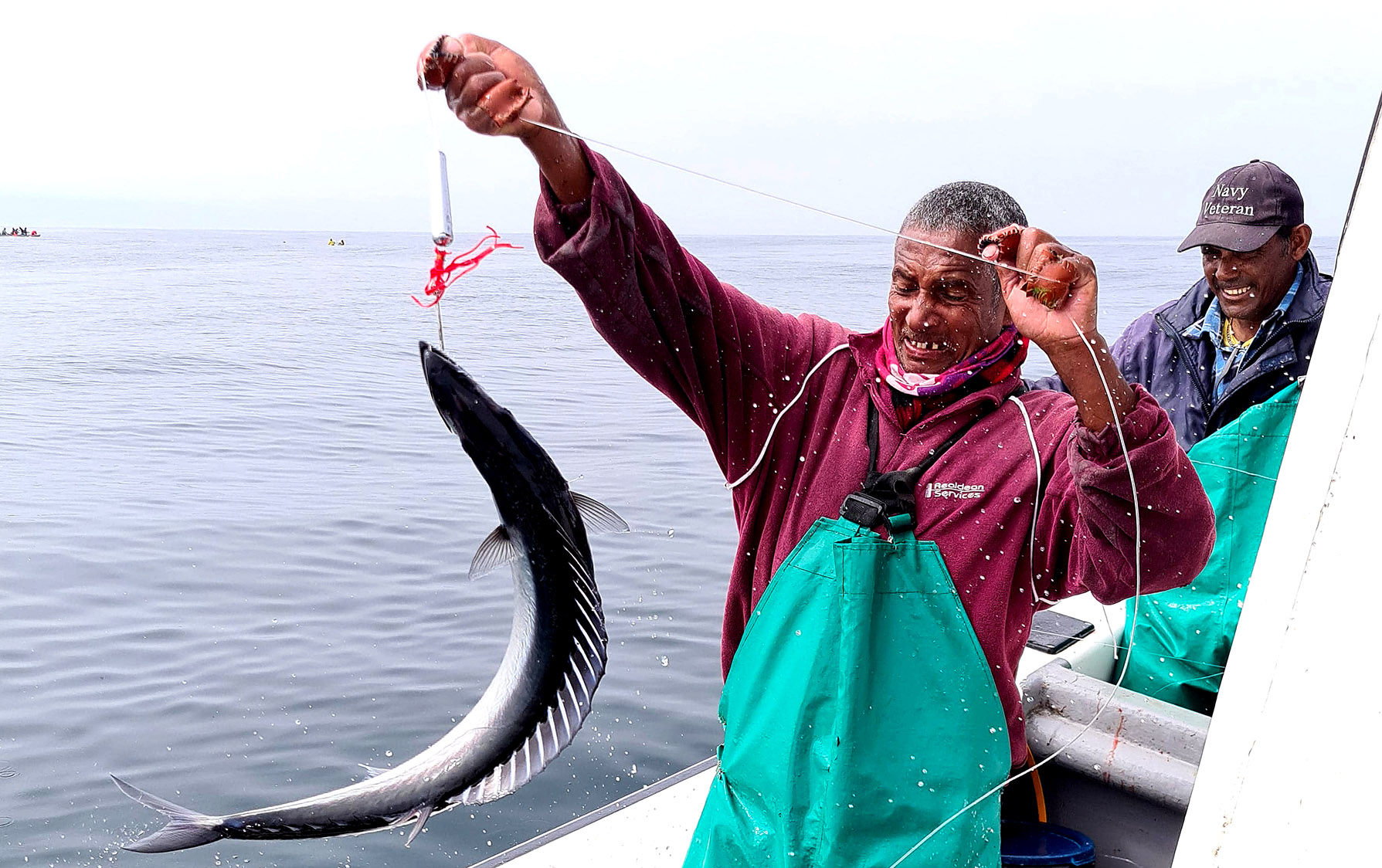
 A snoek catch. (Photo: Travis Daniels)
 /file/attachments/2985/TroubledWaters_405609.jpg)
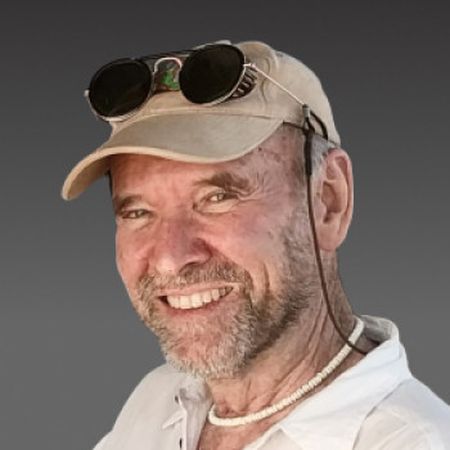
When it comes to understanding South Africa’s troubled but fascinating fishing industry, few people have as broad a view as Shaheen Moolla. A lawyer by training, Moolla once headed the country’s fisheries management and compliance unit, wrote some of the sector’s key policies and has since advised governments, businesses and NGOs on marine and coastal governance.
He has spent years navigating the politics of quotas, the science of fish stocks, the rise of small-scale cooperatives and the sprawling underworld of poaching. There are spaces in the world of fishing where he is feared and deeply unpopular.
I sat down with Moolla, not to dissect a single crisis or quota dispute, but to ask a more basic question: how do you even begin to map out this vast and fragmented industry? What are the sectors, the issues and who are the people worth talking to?
/file/attachments/orphans/ShaheenMoolla_225873.jpg "Shaheen Moolla. Photo: Supplied")
This conversation sets the scene for a new series of stories that will dig into South Africa’s fisheries – stories of big corporations, small-scale canneries, trek netters, hand line fishers, poachers, policy battles, marine protected areas and the changing seas themselves.
Where does one even start when trying to understand the SA fishing industry?
You really have to start with the basic divide: there are the people who fish and then there’s government and regulation. That tension – between communities and companies on the one hand and the state on the other – defines everything. In fishing, the impact of government decisions is immediate and often brutal. Quotas, permits, allocations, bans – they can make or break a family or a company overnight.
Within the fishing community, you’ve got two big categories: nearshore, small-scale fishers who are usually generational, family-based, often men and women working in traditional communities, and then the commercial and industrial side, which ranges from small family businesses right up to corporates like Sea Harvest, Viking and Oceana.
So who exactly are the nearshore fishers?
These are the people diving for abalone and collecting mussels or oysters, catching lobster or pulling in line fishes such as yellowtail with trek nets and hand lines. They’re often from families who’ve been doing this for generations. They’re the “real” fishers, in the sense that this is both their heritage and their livelihood. And of course, there are poachers.
And on the commercial side?
There are three layers. At the bottom are small family businesses – think Kalk Bay outfits that grew from trek-netting into registered close corporations. Then you have emerging black-owned firms, like Letap, which began with line fishing and grew into long-lining for sharks, hakes and jigging for squids and have invested substantially in trawl and squid fishing vessels. And at the top are the big corporates – Oceana, Sea Harvest, I&J, Viking. They dominate industrial fishing, hold huge quotas and operate expensive fleets.
What’s the state of those big corporates today?
Honestly? Stagnation. Some sectors are contracting fast. Anchovy is in deep trouble because of consecutive recruitment failures – we could be looking at a zero total allowable catch (TAC) for anchovy next year, down from 400,000 tons in the mid-2000s.
Sardines, by contrast, are bouncing back. Horse mackerel is unsustainable and the trawl fleet is ancient. Some vessels were built in the 1950s and 60s. It’s shocking. The bread and butter of these corporations is hake, which rises and falls but overall is fairly steady.
The big question to ask the corporates is: how do you foresee the financial and ecological sustainability of this industry? Why haven’t you invested in new vessels, green technologies, or innovation? And why is the industry so passive in the face of government mismanagement?
/file/attachments/2985/FishingboatsoffSouthAfricaonasingledayShipTracker_466483_935c55492fa2d2a0c1d6bf3f8b641f9b.jpg "Fishing boats off South Africa on a single day. (Graphic: Ship Tracker)")
You mean they’re not pushing back?
Exactly. When I was head of fisheries, I said to them: Don’t come to me as industry representing an association; the association should be representing you. But conflicts of interest run deep.
Industry associations are often chaired by the very people who run the biggest companies, so they’re protecting shareholders rather than the sector as a whole. That weakens their voice, and government takes advantage.
If we want to speak to the corporates, who should we approach?
Start with Tim Reddell, the director of Viking Fishing. He’s a library of information. He came through Viking, was part of the transition when Sea Harvest bought them out and he knows the industry inside out. And someone like Deon van Zyl of Afro Fishing, who’s had many years’ experience.
Let’s shift to abalone — everyone knows it’s a huge, messy story.
It’s the biggest illegal wildlife trade on the planet in volume: nine million abalone animals are lost from South Africa each year. The entire legal TAC (total allowed catch) is about 40 tons, while illegal trade moves thousands. That’s where corruption comes in – officials laundering confiscated abalone, Chinese-owned factories processing it and syndicates running the show.
In January 2025, the department summarily stripped 179 divers of their permits, accusing them of violations without due process. We’ve challenged it in court. It’s absurd – they’re punishing the few who actually play by the rules, while the real criminal trade goes unchecked.
And the Chinese connection?
There are processing factories, some owned by Chinese interests, that effectively control divers. It’s very hard to get them to talk. But one name is Blue Star Holdings, linked to Chinese businessman Tom Sun, who runs combined abalone processing operations. That case with the 179 divers hit them hard. It’s a whole racket: factories, boats, divers, all in a chain, feeding the black market.
What about West Coast rock lobster?
That’s another collapse. In 2004, we had the highest TAC ever. Ten years later, it was gone, through sheer mismanagement and corruption. Officials taking bribes, misreporting landings, adding thousands of people into the sector without any biological basis. I eventually walked away from the department in 2018 after death threats to my family while trying to clean up the lobster allocations.
/file/attachments/2985/THeendofthedaypexels-glen-chapman-freetouse_265015_acfc8a74d7f03c3c125ba901faa08fe4.jpg "The end of a fishing day. (Photo: Glen Chapman)")
You mentioned squid – what’s happening there?
Squid is managed not by TAC but by TAE, total applied effort. The number of crew, the vessel size, the sea days – all calculated to match the biology. But with the introduction of small-scale cooperatives, that system collapsed. Chiefs and local strongmen grabbed allocations, threatened operators, demanded money, even threatened to burn boats. The squid sector has been rendered dysfunctional.
Explain the small-scale fishing cooperatives.
The idea was to create co-ops and add maybe 3,000 new small-scale fishers into the system. But in practice, it turned into 30,0000-40,000 people, dominated by chiefs in the Eastern Cape and KwaZulu-Natal. That’s catastrophic.
In the squid sector, for example, these co-ops have been extortionist – threatening to burn vessels or yank crew off boats if operators didn’t pay them. And remember, squid isn’t even a small-scale fishery. It’s a multimillion-rand export industry that needs multi-million-rand vessels with freezing capacity and access to Mediterranean markets.
By handing 15% of the allocation to co-ops, government effectively gave chiefs control of other people’s boats without them contributing to costs, maintenance or insurance. It’s crippled the sector and created massive dysfunction.
And foreign fleets? The Chinese boats switching off their transponders?
The data is opaque, enforcement is non-existent and proving it is another matter. Unless someone does an “insider” investigation, we’ll never get the full picture.
You’ve spoken about ‘emerging businesses’. Who are they?
These are black-owned companies straddling the line between family outfits and corporates. For example, Imie Patel and his wife started Letap in the early 2000s. They moved from line fishing into long-lining for hake and catching squids, and eventually caught fish on behalf of Oceana and Sea Harvest. These firms are an important barometer of whether transformation is working – are historically disadvantaged operators growing into sustainable enterprises?
For handline fishing, talk to Travis Daniels.
What about trek-netting, that old beach-seine tradition?
That’s still alive in False Bay. Talk to Val Arendse, known as Aunty Val, one of the few women in trek netting. Her story captures the romance and the danger – boats flipped in the surf, ropes tangled, nets bulging with snoek. She’s a character worth profiling.
/file/attachments/2985/FishingboatsatKalkBaywaitingfortherighttofishDonPinnock_355993_fca57dada50a4cfed422da58516fe99b.jpg "Fishing boats at Kalk Bay, waiting for the right to fish. (Photo: Don Pinnock)")
What about those small fishing boats that are docked in harbours like Kalk Bay and Hout Bay?
The person to talk to about them is Kobus Poggenpoel. He is, I think, a third-generation small-scale commercial fisher and a great story weaver. A really nice guy struggling to stay afloat in a quota system that doesn’t favour his sector of fishing.
Do you think poachers would talk to me?
I don’t see why not. They have a legitimate story in their terms. Ask Kobus to connect you.
And on the policy and history side?
If you want context, speak to Mark Wiley. He’s not active in industry now, but has a room full of historical books and documents. He collects the stories of fishing in the Western Cape and can provide that broader sweep.
How about the science of quotas?
The scientists who deal with quotas include people like Doug Butterworth and Colin Attwood. Both professors at UCT. See what they have to say.
If you step back, what’s the big picture?
We had 22 viable commercial fisheries in 2004. Today we’re down to 13, all over-subscribed, many in crisis. It’s a mix of biology, climate change and disastrous management. Transformation has been reduced to vote-buying schemes. Enforcement is riddled with corruption. The corporates are old and slow to innovate. The small-scale fishers are squeezed. And on top of it all, foreign vessels probably plunder our seas at night.
So the challenge for us as journalists is to piece this all together?
Exactly. Don’t just write about the crises. Map the whole system – the big corporates, the family businesses, the nearshore divers, the cooperatives, the poachers, the regulators. Show how decisions made in government ripple down to a diver in the Overberg or a trek-netter in False Bay. That’s the story.
Talking with Shaheen Moolla is like peering into a spider web: every thread in South Africa’s fishing industry connects to another, from the collapse of lobster stocks to the boardrooms of Viking, from poachers in Gansbaai to co-ops in the Eastern Cape. For this series, we’ll follow some of those threads – through interviews with corporates and small-scale fishers, regulators and poachers, historians and industry veterans.
It’s a complex story, and what follows from tomorrow may not satisfy those in the industry who needed to be heard, but whom space forced us to overlook. But the result, we hope, will be a sharper picture of an industry still going strong in some sectors, but on the brink in others: often mismanaged, contested, yet still full of extraordinary stories and people. DM