



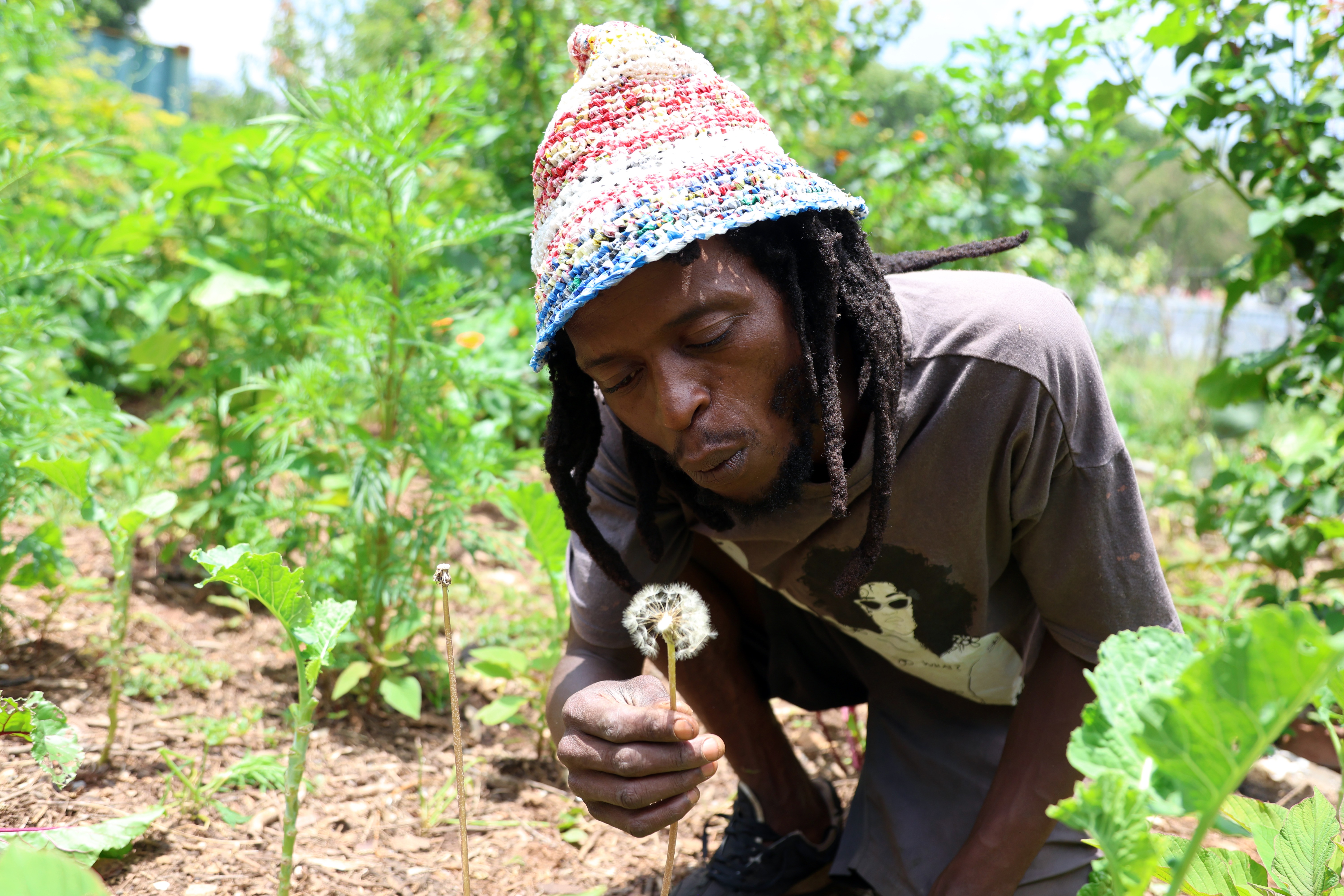
 Nkosinathi Mbele, the custodian of Ndawo Entle, an urban farm in Bez Valley on 8 January 2026 in Johannesburg. (Photo: Felix Dlangamandla)
/file/dailymaverick/wp-content/uploads/2025/10/label-Op-Ed.jpg)
In the final days of 2025, Kensington, Troyeville and their surrounding neighbourhoods were overwhelmed by a sense of abandonment. For weeks, refuse had not been collected. Residents received morning messages instructing them to put out their bins, only to be told later in the evening to bring them back again, with vague assurances that collection will happen “tomorrow”. Tomorrow rarely comes.
The consequences are immediate and visceral. Rubbish piles up in the summer heat, creating environmental and road hazards and an overpowering stench. Residents resort to donning masks and gloves, transferring decomposing waste into black bags and attempting to take it to the Pikitup refuse drop-off facility in Bezuidenhout Valley.
That site, however, has been “under construction” for more than two months. It is closed, with no alternative facility identified and no guidance issued to residents. The result is predictable: informal dumping grounds mushroom across the area, rats the size of bricks run freely through the streets, and informal recyclers work bravely among the filth.
/file/attachments/orphans/RefuseuncollectedBezValley_188724.jpg "Uncollected refuse in Bez Valley, Johannesburg. (Photo: Leah Marais)")
/file/attachments/orphans/6I1A9956_340269.jpg "Nkosinathi Mbele, waters the garden of Ndawo Entle, an urban farm in Bez Valley on 08 January 2026 in Johannesburg. (Photo: Felix Dlangamandla)")
/file/attachments/orphans/6I1A9951_607643.jpg "Nkosinathi Mbele, the custodian of Ndawo Entle, an urban farm in Bez Valley on 08 January 2026 in Johannesburg. (Photo: Felix Dlangamandla)")
What is most striking is the silence. There has been no meaningful communication from Pikitup or the City of Johannesburg explaining what residents should do, what contingency plans are in place, or when services will be restored. This absence of accountability compounds the crisis. No service, no accountability.
Read more: Frustrated residents unite to fight terminal decline of Joburg’s eastern suburbs
The decay is not limited to refuse removal. Residents have now been alerted to the possible contamination of municipal water supplies in neighbouring Bez Valley following sewage leaks, with advisories to use bottled water for drinking and cooking until testing is concluded.
The Braamfontein Spruit, which flows through the eastern suburbs, carries a foul, unmistakable smell. Pavements are overgrown, streets are scarred by deep potholes and eroded dongas, and the detritus of daily neglect, including food waste, bones and broken glass, litters the streets and public spaces.
This is not merely service delivery failure. It is a slow erosion of dignity and safety, and a clear signal that municipal systems in this part of Johannesburg are no longer functioning as they should.
/file/attachments/orphans/6I1A9949_284152.jpg "Joao Paulo Dapiedade in the kitchen of Ndawo Entle, an urban farm in Bez Valley on 08 January 2026 in Johannesburg. (Photo: Felix Dlangamandla)")
/file/attachments/orphans/6I1A9935_212423.jpg "Sammy Mndawo works in the garden of Ndawo Entle, an urban farm in Bez Valley on 08 January 2026 in Johannesburg. (Photo: Felix Dlangamandla)")
A beautiful place amid the ruin
And yet, in the midst of this urban decay, something remarkable is growing.
In Bez Valley, a once-neglected field has been transformed into a working, thoughtful and increasingly thriving urban farm known as Ndawo Entle. In isiZulu and isiXhosa, Ndawo Entle translates as “Beautiful Place”, a name that feels both aspirational and quietly defiant in its context.
The farm is run by Nathi Mbele, a 34-year-old urban farmer whose depth of knowledge consistently surprises visitors. With minimal formal schooling, he speaks with confidence about accumulator plants such as comfrey, which draw minerals up from deep in the soil and release them during drought. He discusses biomass creation, soil regeneration and the production of activated charcoal with ease, while also engaging thoughtfully with the social and environmental pressures of inner-city living.
/file/attachments/orphans/6I1A9930_242250.jpg "Nkosinathi Mbele, the custodian of Ndawo Entle, an urban farm in Bez Valley on 08 January 2026 in Johannesburg. (Photo: Felix Dlangamandla)")
/file/attachments/orphans/6I1A9903_946171.jpg "Nkosinathi Mbele feeds chicken on 8 January 2026 in Johannesburg. (Photo: Felix Dlangamandla)")
/file/attachments/orphans/6I1A9897_549692.jpg "Nkosinathi Mbele. (Photo: Felix Dlangamandla)")
Ndawo Entle is situated on land leased from a local Kensington school. Despite operating for several years, the farm is still battling the City of Johannesburg for something as basic as a dedicated water meter. These bureaucratic obstacles stand in stark contrast to the care, organisation and foresight evident throughout the space.
Walking through the farm, there is an immediate sense of calm. Every corner reflects intention and labour. Milk thistle grows alongside vegetables and fruit trees. Fennel, berries and leafy greens thrive in carefully tended beds. Chickens roam freely. Dogs and cats laze peacefully among the plantings. There is even an animal burial ground, marking a deep respect for life in all its forms. It is, quite simply, a place where you can exhale.
More than a farm
Ndawo Entle is not only about food production. It functions as a small but significant node of urban resilience. There is a designated space where informal recyclers can sort their collections, supported by the presence of a nearby buy-back centre just a block away.
Plans are under way to explore the production of hemp-based bricks as a sustainable building material that could contribute to inner-city housing solutions. Biomass production and soil-building practices underpin the farm’s long-term sustainability.
/file/attachments/orphans/NdawoEntle1_245059.jpg "Ndawo Entle, or ‘Beautiful Place’, an urban farm in Bez Valley, Johannesburg. (Photo: Leah Marais)")
/file/attachments/orphans/6I1A9831_813507.jpg "Nkosinathi Mbele, the custodian of Ndawo Entle, an urban farm in Bez Valley on 08 January 2026 in Johannesburg. (Photo: Felix Dlangamandla)")
Nathi has lived on the site for four years. Before that, he worked on an urban farm in Orange Farm, an initiative now largely run by older community members. His journey to Bez Valley is part of a broader, largely unrecognised movement of urban agriculture practitioners quietly responding to failures in formal systems.
On weekends, local children spend time at the farm, learning about plants, soil and food. Fresh produce is supplied to nearby spaza shops. What is being cultivated here is not only vegetables and herbs, but knowledge, connection and a sense of shared responsibility for place.
Two futures, side by side
The contrast could not be sharper. On one side, a city administration seemingly unable or unwilling to maintain basic municipal services, communicate honestly with residents, or protect environmental and public health. On the other, a small, under-resourced urban farm demonstrating what care, competence and commitment can achieve, even in the most challenging conditions.
Ndawo Entle has already drawn attention in previous media coverage, yet its continued existence remains precarious. It needs basic tools, infrastructure support and, above all, a municipality that recognises and enables such initiatives rather than obstructing them.
Read more: Ndawo Entle: From Joburg dumping site to a community garden helping green a city
The question facing Johannesburg is not whether urban decay is inevitable. Ndawo Entle proves that it is not. The real question is why residents and community-led initiatives are expected to carry the burden of a city that appears to be actively dismantling itself.
Shame is too small a word for this failure. But so, too, is despair. In Bez Valley, a beautiful place is growing, quietly insisting that another way of living in this city is still possible.
A call to action
The City of Johannesburg and its municipal entities must be held to account for failing to deliver the most basic obligations of urban governance. Reliable refuse removal, transparent public communication and the protection of water and environmental systems are not optional extras; they are foundational services.
At the same time, initiatives such as Ndawo Entle should be actively supported rather than obstructed. This includes practical measures such as access to a water meter, responsive engagement from municipal officials, and formal recognition of the role that urban agriculture can play in food security, environmental repair and social cohesion.
Residents, civil society organisations and the media must continue to document both failure and possibility. Johannesburg’s future will be shaped either by neglect and decay, or by care, accountability and imagination. The choice is still ours. DM
Leah Marais is an editor and publishing professional based in Johannesburg.