




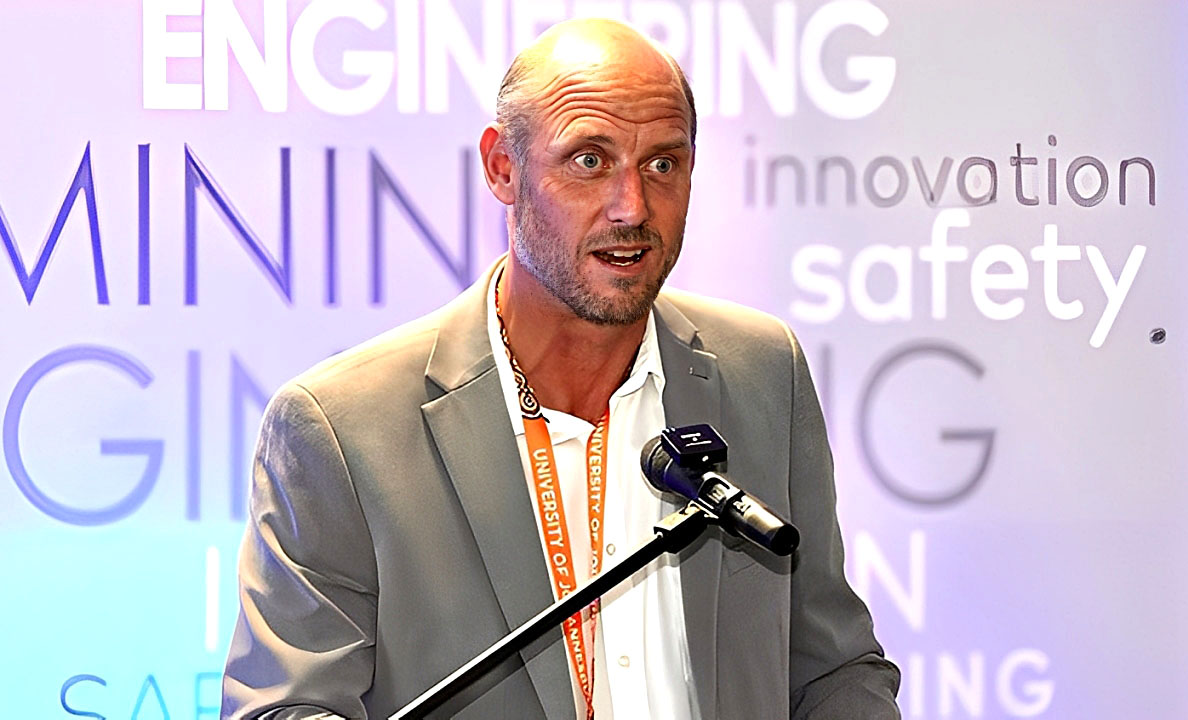
 Sibanye-Stillwater CEO Richard Stewart. (Photo: Sibanyestillwater.com)
 Having diversified while extracting value from operations such as Lonmin’s Marikana operation — which was writing its own obituary before Sibanye acquired it — the company is now looking at what value its current suite of assets can deliver.
Spun out of Gold Fields in 2013, Sibanye-Stillwater subsequently embarked on a diversification drive that raised eyebrows and sceptical scrutiny in some circles.
It turns out to have been a case of diversify or die.
In a presentation on Thursday to update the markets on the company’s strategy, newish CEO Richard Stewart said the gold operations it inherited from Gold Fields would now have been nearing the end of their life, and the company would have gone the way of the dodo by 2028.
But its obituaries are now a long way off, and the mining life of its current and mixed basket of assets currently extends to 2040 and beyond.
/file/attachments/orphans/Screenshot-2026-01-29-151303_517741.jpg "Inherited life of mine. (Image: Sibanye Stillwater)")
“We have come through a period of phenomenal growth,” Stewart said at the presentation at the JSE.
It’s been a long journey, with many twists and turns, that was driven by founding CEO Neal Froneman, a deal-maker of note with M&A in his DNA.
Having inherited conventional, deep-level South African gold mines from Gold Fields, which was embarking on a mechanisation and geographical pivot under former CEO Nick Holland, Froneman saw where that spoor was leading and set out to hunt down assets in other metals.
Platinum group metals (PGMs) was the first game he bagged in South Africa, followed by the palladium-rich Stillwater mine in the US state of Montana. Battery metals, tailings processing and recycling operations were then added.
One of the slides presented by Stewart on Thursday showed that Sibanye’s total shareholder return since its listing in 2013 has been 582%.
But having diversified while extracting value from operations such as Lonmin’s Marikana operation – which was writing its own obituary before Sibanye acquired it – the company is now looking at what value its current suite of assets can deliver.
“We do not have an acquisition strategy ... our immediate focus is unlocking the potential from our existing resources,” Stewart said.
Having diversified for growth and survival, Sibanye is now reviewing its assets and might even sell off those deemed as non-core.
At a time when the gold price is surging to new record highs on an almost daily basis, Sibanye remains committed to the asset where it all began. But the company is transitioning to higher-margin and shallower mines such as its Burnstone project in Mpumalanga – a sign of revived fortunes for South Africa’s declining gold sector.
Sibanye is now tracking the spoor within its own kraal. Where that leads will be the next chapter in its history. DM
Comments
Scroll down to load comments...