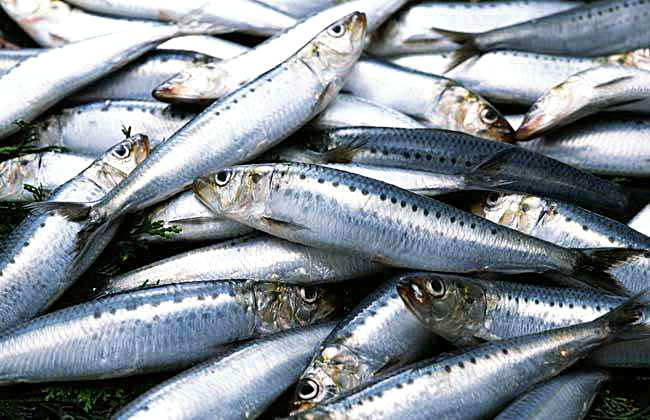
 South Africa's small pelagic fishing sector is engaged in a delicate balancing act that is deeply affected by government inefficiency, and the stakes for fishing town's like Mossel Bay are extremely high. (Photo: Wikipedia Commons)
/file/attachments/2985/TroubledWaters_405609.jpg)
Nestled on the South Coast in Mossel Bay, Afro Fishing is one of South Africa’s few pilchard canneries – and the only one on this coast. During its peak season the factory employs up to 400 seasonal staff, feeding not just a market but a town. Deon van Zyl, who has spent more than two decades in the industry, is the chief executive of Afro Fishing with a deep commitment to keeping this small but critical sector alive. We spoke to him about fish stocks, government quotas and the precariousness of staying in business when policy and science collide.
------
Tell us a bit about Afro Fishing — how big are you, and what do you do?
We’re a medium-sized company, competing in the small pelagic fishing sector. We have 29 permanent staff, and in season we employ about 400 seasonal workers. Our cannery is one of six fishing canners in the country and the only one on the South Coast – the rest are concentrated on the West Coast. We also have a fishing vessel, ice plant and fish meal and oil processing facility.
We process pilchards – or sardines, depending on what you call them. In the industry, “pilchards” refers to the upright, mass-market big cans, while “sardines” is more of a marketing term used for flat cans with sauces like peri peri or lemon. But they’re the same fish.
/file/attachments/2985/DeonvanZyl_879330_926399418513c6a24f395ba2338e9e9a.jpg "Afro Fishing CEO Deon van Zyl.")
What is your biggest worry as a medium-sized fishing company?
Right now, it’s government failure – and how that cascades down on businesses like ours. We’re being forced to shut our factory months early for the first time in our history, not because there are no fish in the sea, but because the Department of Forestry, Fisheries and the Environment can’t keep its research vessel running and the scientists are forced to work with broken data.
The R.S. Africana was supposed to do its adult biomass survey in October/November 2024; due to mechanical failure the survey was completed five months later in April 2025. The May recruitment survey was also delayed due to department financial constraints and was completed in July. So we get an allocation cut nearly in half – from 65,000 tonnes last year to 37,000 this year – and we caught our portion of that by 12 May. Since then, our plant has stood silent.
Hundreds of seasonal workers have been sent home early. That means no income for them, no knock-on spend in the town, and a cannery sitting idle in a year when boats are coming back full with little fishing effort. We know there’s fish out there – we can see it, we can catch it – but the models say “be cautious”.
And that’s what makes me furious. The industry has to prove job creation, B-BBEE compliance, capital investment, social spending and skills development to get fishing rights. Yet the government can simply fail to do surveys on time, take a conservative view, and cripple a billion-rand sector overnight. The result of not getting research surveys done has real economic consequences – and the people paying for it are factory workers, not the policy makers.
/file/attachments/2985/PilchardbyMarcusElieserBlochWikimediaCommons_181126_a8598314b6bc951df26098dc3b8e9e46.jpg "Pilchard, by Marcus Elieser Bloch. (Image: Wikimedia Commons)")
How do quotas get decided — and what’s going wrong with allocations?
Quotas are based on annual scientific surveys. The research vessel Africana is supposed to conduct an adult survey in November and a recruitment survey in May, collecting hydroacoustic and biological data. Scientists feed that into long-established models, which estimate the total biomass and recommend what proportion – traditionally between 13% and 19% – can be harvested sustainably.
This year, because surveys were late and previous surveys were incomplete, scientists opted for extreme caution. Instead of the usual harvest fraction, they cut it to about 6%. That’s why our allocation was halved.
We’re not against sustainability – we sit on the scientific working group as observers, and we support SA Sustainable Seafood Initiative and MarinTrust requirements – but this is overcorrection based on flawed data. The industry has suggested chartering foreign vessels or even co-funding surveys to make sure they happen on schedule every year. But the department keeps control in house, even as its only survey vessel keeps breaking down.
The second big issue currently is that the OMP (Operating Management Procedure) has not been updated since 2018. The international standard is that countries update their OMP every five years. It is now seven years later and the scientists are still scoping a new OMP. So because this work is late, the industry gets penalised with another level of caution when determining allowable catches.
The result is a crisis: factories closing early, jobs lost, and smaller rights holders – many of them new entrants brought in through the Fishing Rights Allocation Process – are pushed to the edge. It defeats the very transformation goals the rights process was meant to advance.
/file/attachments/2985/MosselBayPilchards_328776_ea09f938f22e68903e9a84363227a804.jpg "Afro Fishing's Pilchards in tomato sauce.")
How does Afro Fishing source its fish?
Ideally, we want to catch fish as close to Mossel Bay as possible. That’s the cheapest and freshest route – boats out, catch landed straight to the cannery. But fish move. If we can’t find them locally, we may send vessels as far as Port Elizabeth or Gansbaai, adding cost because we have to preserve the fish on ice and truck them back.
South Africa is a net importer of frozen pilchard raw material for our canned pilchard market. Unfortunately, imported raw material is currently scarce due to resource problems elsewhere, and the fish that is available is very expensive. So it has not been possible this year to simply start importing to keep factories productive and to make up the low local allowable catch.
What is the state of pilchard stocks at the moment?
If you look at the long-term picture, we had record highs between 2001 and 2005 – millions of tonnes of biomass, with 300,000 to 400,000 tons allocated to industry. Then stocks declined and peaked again in 2011 and declined again from 2014. In 2019 we hit rock bottom – allocations fell to just 12,250 tonnes, and even then we couldn’t catch our full quota. That’s when you know there’s really a problem: when you can’t find the fish.
Since then, the biomass has been steadily climbing, which is encouraging. But the industry is very boom and bust. Climate plays a massive role – El Niño, La Niña, sea surface temperature, upwelling. Everything happens in the top layer of the ocean: if phytoplankton and zooplankton thrive, the fish do too. Fishing itself is tightly managed – traditionally we’re only allowed to take 15-20% of the stock – so overfishing isn’t the problem here. Climate variability, predation and fish mortality is.
Are foreign fishing fleets a threat to your sector?
Not really, because pilchards are an inshore species. If foreign factory trawlers came within 10 miles of the coast, everyone would see them. The real damage from those fleets is in countries like Namibia and Angola, where corruption allows them to fish out resources. I’ve seen it myself – lights covering the sea at night, and within a year or two the stock collapses and factories close. Luckily, South Africa still has stricter controls, but we do have less capacity now to monitor our waters than we used to.
How do appeals and rights allocation fit into this?
The Fishing Rights Allocation Process (Frap) was run in 2021 under Minister Barbara Creecy, and to her credit it was the most transparent yet. Attorneys handled the legal side, accountants did the scoring, forensic auditors weeded out paper quota holders.
But inevitably, many companies who lost rights took the department to court, and many years later we’re still in the second round of appeals. These cases can drag on for the entire 15-year rights period. Meanwhile, allocations are adjusted and readjusted, creating massive uncertainty for planning and investment.
/file/attachments/2985/PilchardsWikimediaCommons_932419_e595eddbbad446ed3d4be200ec96f032.jpg "A school of pilchards. (Photo: Wikimedia Commons)")
Is it possible for companies like Afro Fishing to grow?
Not by simply catching more fish – quotas are capped. Big players like Sea Harvest have grown by buying other companies and acquiring their quotas. Our sector, the small pelagic sector, is far more volatile because pilchards have a short life cycle and are highly sensitive to environmental factors.
Investment in new boats or technology is risky when your season can end in May because of a reduced quota decision. That’s why many of us are calling for a more reliable survey regime – even if that means industry co-funds research or charters foreign survey vessels so we can get trustworthy data on time every year.
What keeps you up at night?
Fishing is a feast-and-famine business. When the fish are there, you must catch them – you can’t take a long weekend because the shoal will be gone when you get back. That pressure never stops.
But this year what keeps me up is my factory standing idle and my staff without work because of departmental failures. Fortunately, after much deliberation, the Scientists and the deputy director-general of the Department of Forestry, Fisheries and the Environment agreed to top up the directed pilchard allowable catch by 7,000 tonnes on 11 November 2025. This will certainly assist with building up stock and providing employment opportunities for our seasonal staff before the year-end shutdown.
The government needs to understand that we are part of the food-security chain. Our canned fish goes into school feeding programmes and onto the tables of millions of South Africans. If we have months of downtime, it isn’t just business owners who feel it – it’s hundreds of workers, their families and the communities they support.
What would you like to see happen?
First, get reliable surveys back on track – whether that means fixing Africana properly, chartering foreign research vessels, or an industry vessel used to do the surveys. The scientists need reliable data.
Second, restore allocations to a realistic level – at least the 13% plus harvest rate we had before – so factories can stay open. For the scientists to agree to this they will need to scope a new Operational Management Procedure, so let’s get that done.
Essentially, we need to get all stakeholders doing what they are employed to do so that we can remove all these layers of caution. This would result in more working days for my staff and more product to market.
Minister Dion George of the Department of Forestry, Fisheries and the Environment has been replaced. Lets hope this will have minimal impact on the industry, and that the new minister will be accessible.
------
Deon van Zyl’s account is a window into the fragile balancing act of South Africa’s small pelagic fishing sector – a sector buffeted by climate, politics and patchy surveys. For the people of Mossel Bay, though, the stakes are clear: when the factory doors close early, the whole town feels it.DM
Tomorrow
Doug Butterworth: Seafood’s balancing act and the science of sustainable catch limits
Previously
Setting up the series: Untangling South Africa’s fishing industry
Mark Wiley: South Africa’s vanishing fish
Tim Reddell: Steering Viking Fishing through South Africa’s troubled waters