



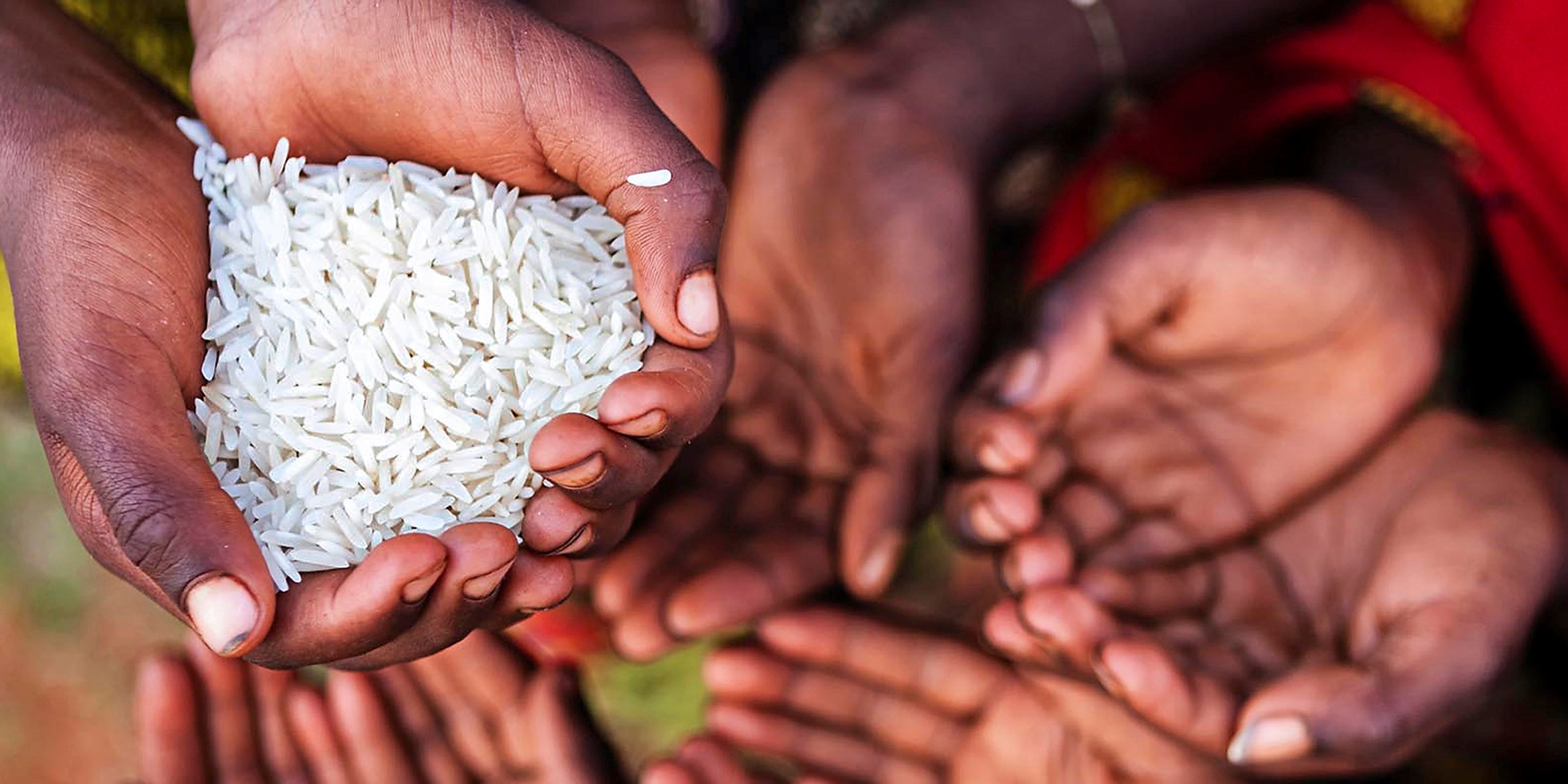
 Hunger is the nexus of so many of South Africa’s social problems, with an incalculable social, economic and political cost. (Photo: observances.global / Wikipedia)
/file/dailymaverick/wp-content/uploads/2025/10/label-Op-Ed.jpg)
Despite good harvests, agricultural surpluses, advanced food systems and available land in 2026, hunger will continue to stalk the land in South Africa. It is estimated that up to 20 million people live on a spectrum of hunger. Some are hungry all the time. Some “only” suffer from seasonal hunger. Some suffer monthly hunger when social grants or wages run out.
Further, because the food most accessible to the poor is low in nutrients and high in sugar, fat and unhealthy additives, diseases of hunger are rife even among those who can “afford” food but cannot afford nutritious food.
Unhealthy food is contributing to growing epidemics of diabetes, hypertension and cancer. The starkest statistics concern hunger, malnutrition and undernutrition in children. The numbers reflect a perfect storm of preventable death (more than 10,000 kids a year if you count those where malnutrition is an underlying cause), stunting in children under five (29%) and now a rising tide of childhood obesity linked to poor diet.
Hunger is the nexus of so many of South Africa’s social problems.
Evidence shows that hunger is a determinant of noncommunicable disease; a factor in poor educational outcomes, due to stunting and low energy; that women carry the heaviest burdens of hunger, directly and indirectly; it is also a factor in domestic violence and mental illness.
Hunger has an incalculable social, economic and political cost. “Incalculable” only because nobody has really added it all up.
Turn tragedy into hope
This tragedy should cause all of us to hang our heads in shame.
But look at it another way for a minute: if we were able to reduce hunger it would have a positive ripple effect on so many other social ills.
If society, led by civil society, united around campaigns to end hunger, apart from millions of happier, healthier human beings there would be many other beneficial outcomes.
/file/dailymaverick/wp-content/uploads/2023/12/5E2B2116-1.jpg "Zoliswa Bushula (31) and her children walk home with food parcels donated by SA Harvest in Lusikisiki, Eastern Cape, on 21 December 2023. (Photo: Hoseya Jubase)")
In 2025 there was growing advocacy and campaigns that focused on the constitutional right (found in section 27) of everyone in South Africa to “sufficient food” and of every child to “basic nutrition”. This was led in particular by the newly formed Union Against Hunger, which now numbers more than 50 organisations who challenged both the government and the private sector to do more.
As the clamour for action on hunger grew it was echoed even by President Cyril Ramaphosa, who used World Food Day 2025 to deliver a major speech focusing on hunger.
The President called in particular on the big food retailers – Shoprite/Checkers, Spar, Woolworths, Pick n Pay and Boxer – to reduce prices on foodstuffs that are essential for health and development, and to make food more affordable.
Read more: Clever economic and political decisions will manage SA’s food insecurity
For the reasons below, 2026 is an opportunity to build on that momentum, change the trajectory and unite our country to end hunger. Notably:
- Cabinet has approved the National Strategy to Accelerate Action for Children, which includes as one of its 10 priorities “improving” basic nutrition for children. According to David Harrison, the CEO of the DG Murray Trust (DGMT): “Topping the list is improved child nutrition by restoring the Child Support Grant to the food poverty line, getting business and government to significantly discount a basket of protein-rich food staples and ensuring that every malnourished child gets the treatment they need, which is enough nutritious food.”;
- The draft National Food and Nutrition Security Plan was finalised and handed over to the minister of agriculture in October 2025, and is due to be published soon for public engagement and discussion, and finalised this year;
- The South African Human Rights Commission is holding a groundbreaking national inquiry into food systems and has invited written submission by 27 February before holding public hearings in March; and
- Local government elections are due at the end of the year. Access to cultivable land and municipal systems that support informal agriculture and nutritious food sales could (and should) be made an important issue in the elections.
/file/dailymaverick/wp-content/uploads/2025/05/OD-MC-Tuesday-people_1Main-option1.jpg "Despite good harvests, agricultural surpluses, advanced food systems and available land in 2026, hunger will continue to stalk the land in South Africa. (Photo: iStock)")
In this context it’s important for us all to understand that hunger and malnutrition are preventable.
They exist because we allow them to.
They exist despite the existence of plans which, if implemented, or implemented at scale, could go a long way towards reducing hunger.
For example, in 2023, the DGMT and the organisation Grow Great developed a proposal for “10 Best Buys”: they identified 10 foods that would meet children’s nutritional needs and proposed that retailers forgo profits on just this small subset of foods and that the government provide a subsidy. If prices on these foods dropped by 25%, their research shows, up to 11 million more children could benefit.
/file/dailymaverick/wp-content/uploads/2023/11/MC-Hunger-Hoseya_7.jpg "A child in a child-headed household in the Alfred Nzo district, Eastern Cape, shows the only food they have left for the month. (Photo: Hoseya Jubase).")
This proposal was presented to the Consumer Goods Council of SA in 2023 but rejected on the grounds that their members – the highly profitable major retailers – are already doing enough to tackle hunger.
To quote the brute Donald Trump, in the campaign for sufficient food the government and the retailers can “either do it the hard way or the easy way”. They can be pressured, litigated and shamed into action.
Or they can do the moral thing, the economically far-sighted thing, the constitutional thing: work with civil society and communities to solve the food crisis together. If there is one issue on which South Africa can build social solidarity and social cohesion, hunger and access to sufficient food is it. DM