



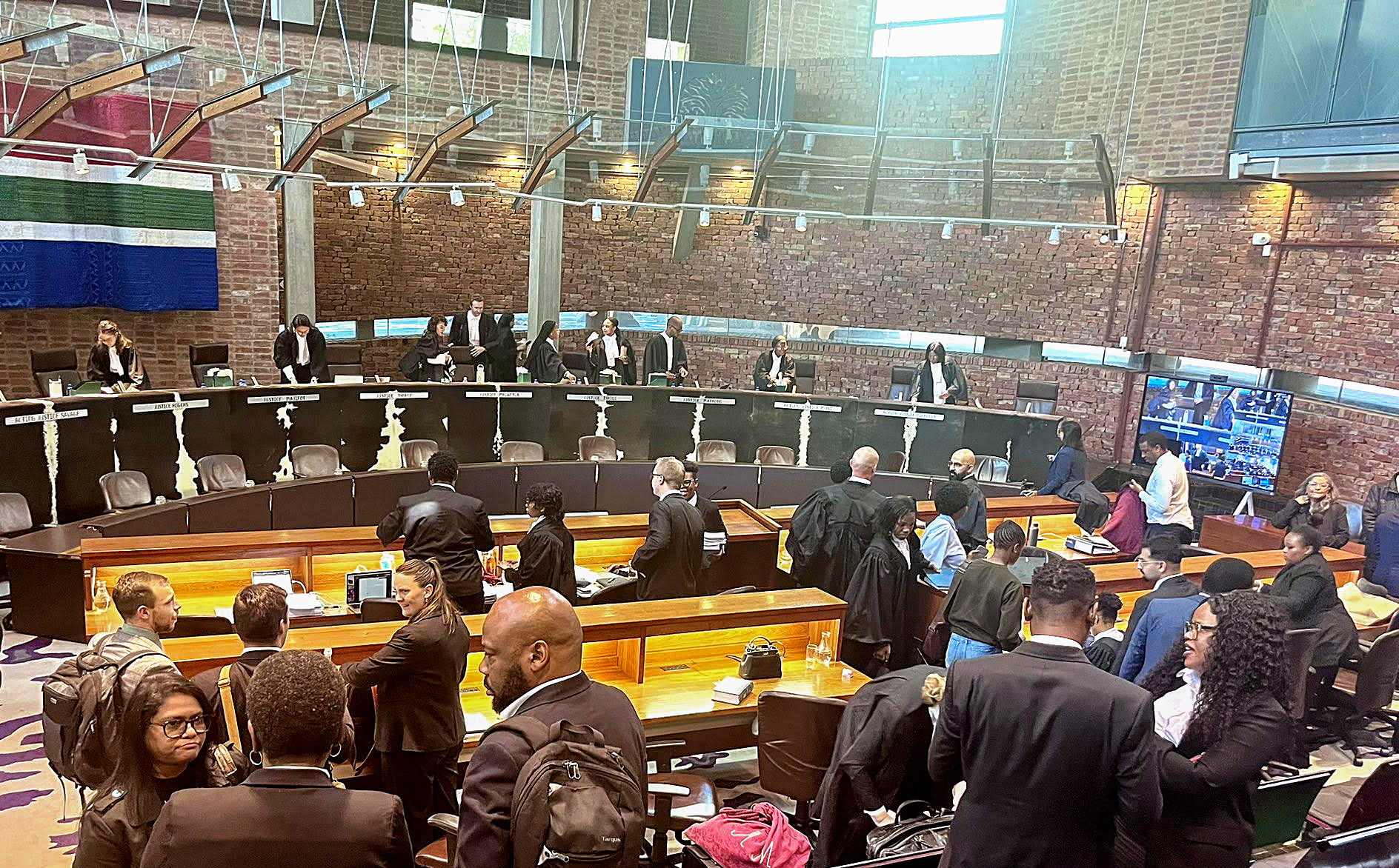
 On Tuesday, 25 November 2025, the South African Human Rights Commission appeared before the Constitutional Court to find out if its directives are legally binding. (Photo: South African Human Rights Commission)
On Tuesday, 25 November 2025, the South African Human Rights Commission (SAHRC) appeared before the Constitutional Court in the matter of whether its directives are binding. This comes after the commission gave directives to a farmer to give farm dwellers access to water and the directives were ignored.
In 2018, Tubatsi Mosotho and other occupiers of the De Doorn Hock Farm in Mpumalanga lodged a complaint with the SAHRC. The complaint was against Francois Gerhardus Boshoff whom they alleged imposed restrictions on their use of borehole water on the farm, thereby depriving them of access to water that is essential for daily living.
The commission took on the case and after its investigation found that Agro Data CC and Boshoff had violated the occupiers’ rights to access to water as specified by section 6(2)(e) of the Extension of Security of Tenure Act 62 of 1997 (Esta) and section 27(1)(b) of the Constitution.
The court documents show that the SAHRC gave these directives in line with its findings. It asked Mr Boshoff and Agro Data CC to restore the supply of borehole water to the occupiers within seven days of the report.
The parties were supposed to converse in good faith on the management of water on the farm within 30 days to ensure “an equitable sharing of this scarce resource”, the case documents read.
This discussion was meant to include the costs incurred, the measured amount of water available underground and any other factors that could help facilitate a fair conversation.
‘Appropriate relief’
Lastly, “If the parties are not able to reach an amicable resolution on the issue of water management on the farm, each party may approach a court of law for appropriate relief,” the SAHRC said.
This was in 2019.
The respondents did not follow the directives, which led to the SAHRC going back to the courts to help enforce these regulations in 2022, but to no avail.
The respondents did not comply with the directives. The SAHRC then launched an application in the high court seeking a declaration that its directives were binding and that the respondents’ non-compliance was unlawful and constitutionally invalid.
/file/attachments/orphans/unnamed1_674103.jpg "The South African Human Rights Commission presents its case before the Constitutional Court.<br>(Photo: South African Human Rights Commission)")
(Photo: South African Human Rights Commission)
The court dismissed the application for declaratory relief but ordered the respondents to provide information and the SAHRC to facilitate/mediate the engagement.
The court’s flynotes and order indicate that the appeal was dismissed. The court held that the SAHRC had no powers to make binding directives, distinguishing its powers from those of the Public Protector.
Distinct mandates
Chapter 9 institutions fulfil distinct mandates, and the SAHRC’s role was to bolster constitutional democracy, but not through binding orders.
The judgment reviewed the relevant constitutional provisions, particularly Section 181 (independence of Chapter 9 institutions) and Section 184 (functions and powers of the SAHRC), as well as Section 13 of the SAHRC Act.
This leads to this present case. The commission released a statement on the same day explaining that: “This follows the Supreme Court of Appeal’s decision on 15 August 2024, which upheld the 2022 decision of the Mpumalanga High Court. Both courts held that the commission’s directives are not binding. Instead, it must enforce all its directives through a court of law,” the statement reads.
The SAHRC’s statement explains that it has carefully considered the judgment and its broader implications for human rights protection in South Africa, and took a decision to take the matter to the Constitutional Court.
“The commission firmly believes that the apex court is best placed to interpret Section 184 of the Constitution, which mandates the commission to protect human rights and secure redress where human rights have been violated,” the statement reads.
So what does the commission want? It aims to get clarity.
“The commission seeks authoritative clarity from the Constitutional Court regarding:
- The meaning of “take steps to secure appropriate redress” in section 184(2)(b) of the Constitution.
- The legal effect of its findings and recommendations after it has concluded a full investigation.
- The proper constitutional interpretation of its powers within the framework of Chapter 9 institutions. As an institution mandated to protect the most vulnerable and ensure access to justice in cases of human rights violations, the commission believes that clarity on its powers is essential to strengthening constitutional democracy.” DM