



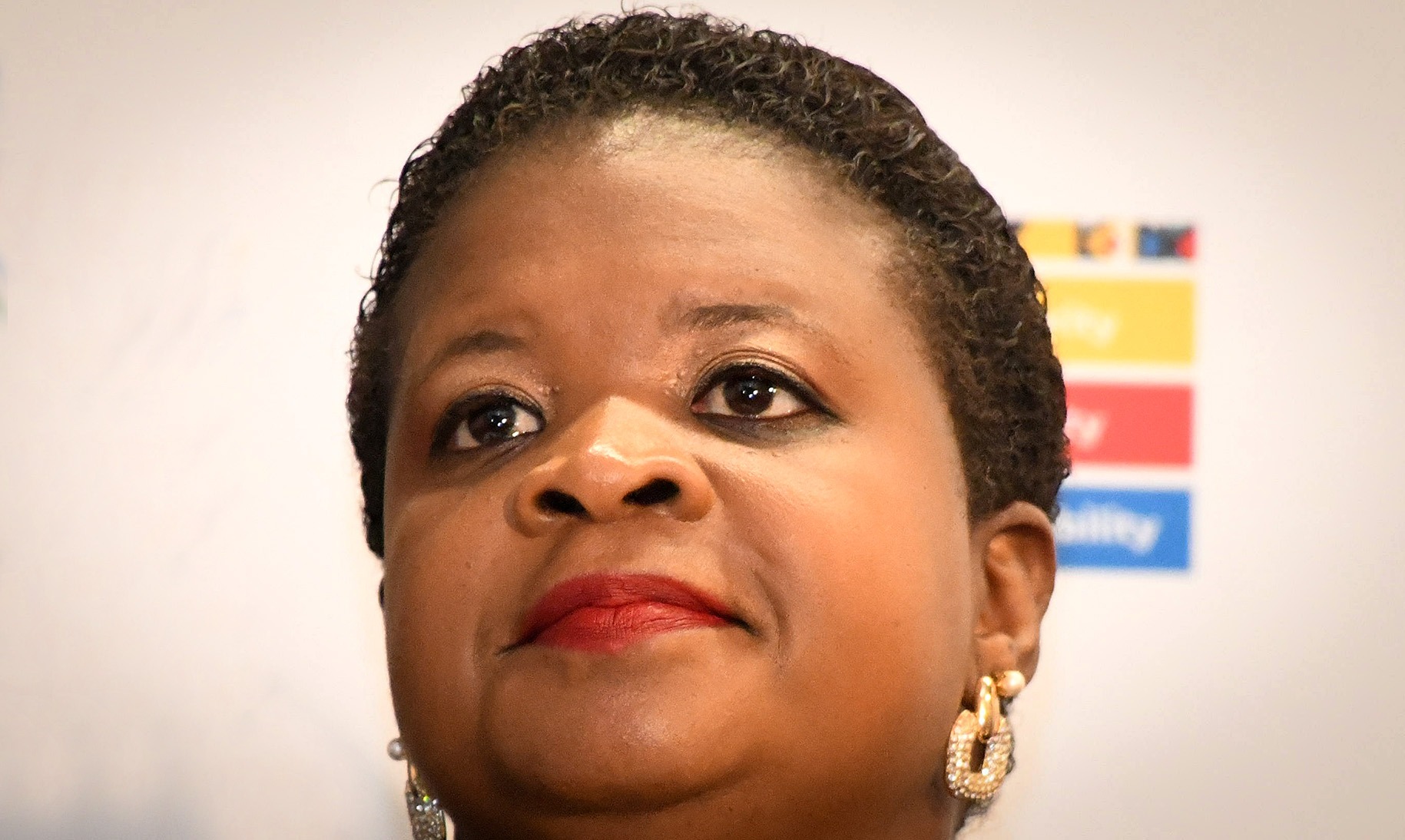
 Deputy Minister of Higher Education and Training Mimmy Gondwe. (Photo: Frennie Shivambu / Gallo Images)
Due to space constraints in public institutions such as universities and Technical and Vocational Education and Training (TVET) colleges, many people look for private colleges so they can continue to pursue education – however, not all private colleges are legitimate.
Deputy Minister of Higher Education and Training (DHET) Dr Mimmy Gondwe is leading four intergovernmental campaigns that have uncovered serious issues with unregistered private colleges that offer non-accredited programmes that do not meet the standards of the South African Qualifications Authority (SAQA), the Council on Higher Education (CHE), and the Quality Council for Trades & Occupations (QCTO).
During an oversight visit to the University of Western Cape (UWC) on Monday, 26 January, Daily Maverick asked Gondwe about bogus colleges. She warned parents and students to be cautious.
/file/attachments/orphans/IMG_9103_429753.jpeg "Deputy Minister of Higher Education and Training Mimmy Gondwe (right) and Vice Chancellor of the University of Western Cape Professor Robert Balfour. (Photo: Siyabonga Goni)")
“This time of the year, they (bogus colleges) tend to prey on desperate parents and students because they know that there isn’t enough space [in public institutions], so they prey on them, but I want to just appeal to students and their parents to do that bit of due diligence, do that bit of homework, such as visiting our website. We have around 146 registered institutions, private colleges or private institutions of higher education on our list. See if the one you want to enrol in is on the list. If it’s not, avoid it,” said Gondwe.
In March 2025, eNCA reported that bogus colleges in Durban had left a group of students questioning the legitimacy of their qualifications and demanding a refund of their fees.
How to spot a registered college
Gondwe said there were several ways to spot a bogus college. She emphasised that parents and learners needed to be on the lookout for the following:
- The college’s registration and accreditation details.
- Quality of teaching and learning facilities, such as a library, conducive lecture rooms and policies around exams
- Nature of the contractual agreement you are required to conclude with the college or the institution.
- Check the qualifications of the teaching staff.
/file/attachments/orphans/IMG_9087_594520.jpeg "Deputy Minister of Higher Education and Training Mimmy Gondwe on an oversight visit at the University of the Western Cape on 26 January 2026. (Photo: Siyabonga Goni)")
Working with SAPS and Home Affairs
While the primary victim of a bogus college is the student, the state has discovered that these institutions often serve as convenient fronts for broader illegal activities. By partnering with the South African Police Service (SAPS) and the Department of Home Affairs, the DHET has identified a disturbing trend.
Dr Gondwe explained during the oversight visit that, “We do that because we’ve picked up that the operational existence of some of these bogus colleges is coupled with other acts of criminality, such as flouting of immigration laws and labour laws. I’m even told about money laundering,” said Gondwe.
In November 2025, the DHET posted on its Facebook group that Gondwe had shut down the Mhlabuhlangene School of African Medicine in Ladysmith, KwaZulu-Natal, after finding that it was operating without DHET registration and offering unaccredited qualifications.
The institution had been offering a range of unaccredited programmes, including:
- Diploma in African Medicine – cost, R8,500;
- Bachelor’s degree in African Medicine – R9 500;
- Honours degree in African Medicine – R10,000;
- Master’s degree in African Medicine – R13,000;
- Doctorate in African Medicine – R15,000; and
- PhD in Healing Science, Facilitation – R18,500.
Read more: Students left stranded by the unravelling of City Varsity and the failures of Educor
Gondwe also said that for those who had already paid enrolment fees to bogus colleges, the department had limited powers to help them get their money back.
“We do advise them to go to the small claims court, or they can also report this college to the consumer ombudsman. We do write to the college as well to say this student wants a refund. But we encourage them to follow legal processes more than anything. Our concern is obviously quality teaching and learning,” said Gondwe. DM