



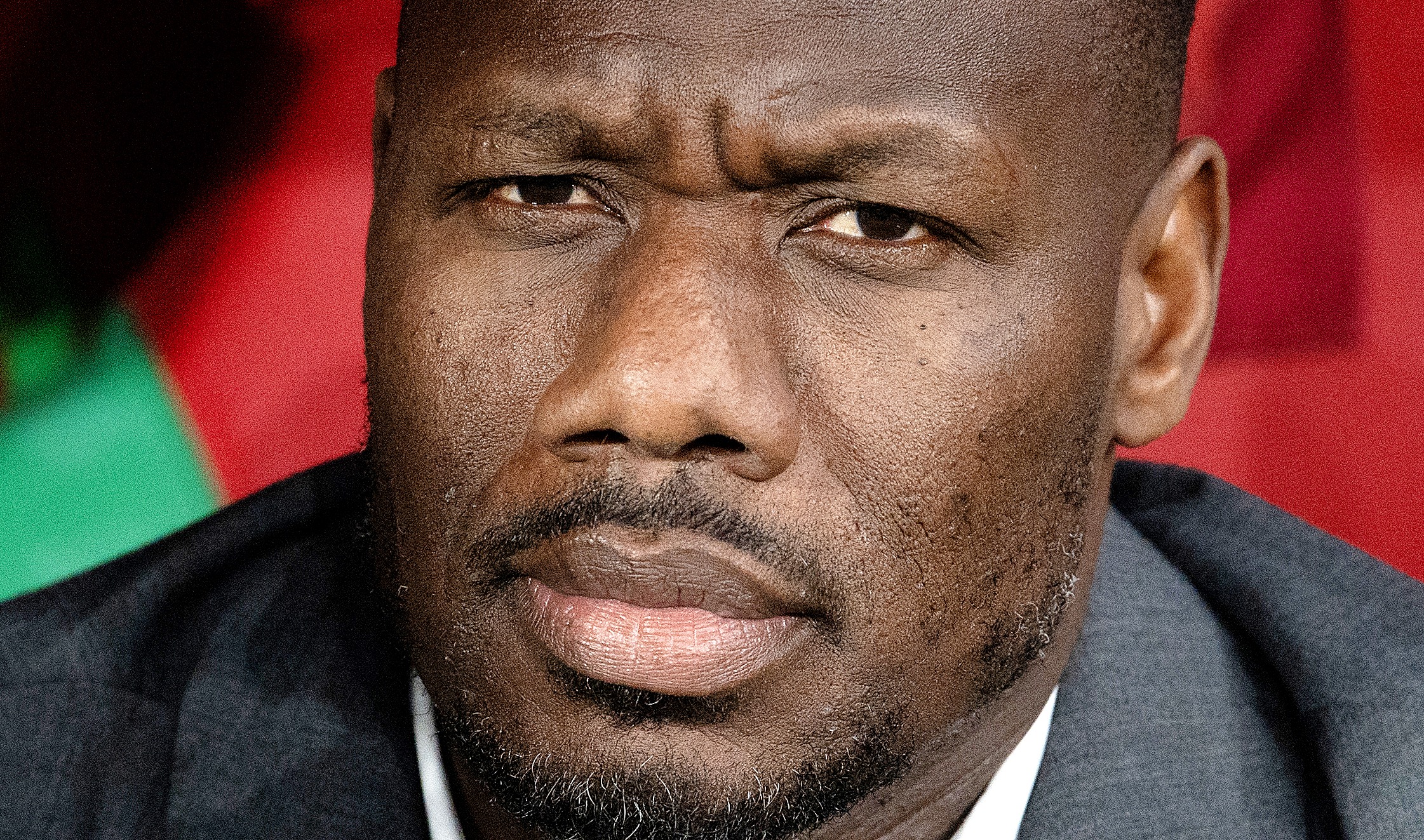
 Senegal head coach Pape Thiaw will hope to add his name to the growing list of African coaches who have won the Africa Cup of Nations. (Photo: Visionhaus / Getty Images)
The Africa Cup of Nations (Afcon) is nearing its conclusion. Senegal and Morocco will battle it out to determine the new kings of Africa, with one set to dethrone the 2023 champions Ivory Coast after setting up an intriguing final.
On Wednesday, 14 January, the Moroccans squeezed 4-2 past Nigeria on penalties after a goalless two hours of soccer in Rabat. Thus, the Atlas Lions’ dream of capturing just their second Afcon title (and their first in 50 years) is now just one win away.
/file/attachments/orphans/1477614494_927167.jpg "Morocco coach Walid Regragui (front) and his players will block the path of Senegalese coach Pape Thiaw and his players in the 2025 Africa Cup of Nations final, scheduled for 18 January 2026. (Photo: Alex Caparro / Getty Images)")
The Senegalese, who are also chasing a second Afcon crown after their maiden triumph in the 2021 edition, will be tough opposition. On the same day that Morocco downed the Super Eagles, the Lions of Teranga vanquished seven-time African champions Egypt to book their spot in the final, set to be played on Sunday, 18 January.
A rasping strike by ex-Liverpool star Sadio Mané broke the heart of his former Reds teammate Mohamed Salah. The latter was targeting his maiden continental title, with age not on his side as the 33-year-old edges closer to bidding farewell to the sport.
African coaches at Afcon
On top of the soccer action on display in the semifinals in Morocco, the presence of African coaches on the benches of all the semifinalists was special. It showed that African nations are increasingly backing home-grown coaching talent to achieve their goals.
The first Afcon in 1957 was won by an Egyptian, Mourad Fahmy. But the two subsequent tournaments saw coaches from Hungary and Yugoslavia achieve overall victory.
Morocco’s Walid Regragui will now take on Senegalese coach Pape Thiaw for the crown of African champion. They knocked out Malian Éric Chelle (Nigeria) and Egypt’s Hossam Hassan, respectively.
Prior to Egypt losing their semifinal match, Hassan, who won three Afcon titles as a player, was filled with pride when looking at the fact that all four of the semifinalists are coached by home-grown mentors.
/file/attachments/orphans/2206911251_929636.jpg "Egypt may be out of the 2025 Africa Cup of Nations, but the team’s head coach Hossam Hassan is proud to have been part of an all-African coach semifinal lineup. (Photo: Sayed Hassan / Getty Images)")
“I may be biased… With all due respect and appreciation for foreign coaches, I am one of those who favour [countries hiring local] coaches,” Hassan told journalists.
Hassan’s point of view had earlier been echoed by South Sudan coach Kwesi Appiah, with the former Ghana player telling Reuters: “There have often been situations where African coaches have not been able to get jobs because federations and clubs prefer Europeans. But that seems to be changing a bit.”
A history lesson
Indeed, the tide is turning. Over the past three Afcon editions, there have been more African coaches than their counterparts from around the world. In the Morocco-hosted 2025 edition, 14 of the coaches who took charge of teams were African. The remaining 10 were foreigners, with nine Europeans and Argentinian Miguel Gamondi representing South America as he took charge of Tanzania.
As more evidence of a gradual deviation from Eurocentrism in this specific instance, the last four coaches to conquer Afcon have all been African. Coincidentally, those successful coaches are all from the countries they won the continental title with.
/file/attachments/orphans/InstagramPost-AFRICACUPOFNATIONS1_330746.jpg "In recent Africa Cup of Nations tournaments, African coaches have dominated. That trend is expected to continue after the 2025 tournament. (Source: Daily Maverick)")
Emerse Faé with Ivory Coast in 2023, former Senegal captain Aliou Cissé with his home country in 2021 and Algerian tactician Djemal Belmadi with the Desert Foxes in 2019.
Before that, there was current Bafana Bafana boss Hugo Broos guiding Cameroon to overall success in 2017 to add to Europe’s Afcon haul.
Frenchman Hervé Renard masterminded double Afcon success with two countries. He first led an unfancied Zambia to Afcon glory in 2012, before repeating the trick with Ivory Coast in 2015.
The GOATS
Renard also boasts the honour of being the only man to steer two nations to Afcon glory. Although another record (for the most successful coach in Afcon history) belongs to two African tacticians.
Ghanaian Charles Gyamfi was the first to achieve the feat, with overall Afcon victories in 1963, 1965 and 1982.
/file/attachments/orphans/TL_2504062_924297.jpg "Nigeria played some of the most exciting soccer under coach Éric Chelle during the 2025 Africa Cup of Nations. Unfortuntately it was not enough for a place in the final after they fell to Morocco on penalties in the semifinals. (Photo: Mahugnon Leopold Soglo / Gallo Images)")
The man who shares the honour of being statistically the most successful in Afcon history to date is Hassan Shehata. What makes the Egyptian coaching great’s treble more impressive is that it came in successive Afcon tournaments.
Shehata engineered Afcon dominance for Egypt between 2006 and 2010. Since that history-making treble, it’s been a dry spell for the Pharaohs. They were hopeful of finally returning to winning ways in Morocco, after twice tripping at the final in recent Afcons. Alas, Senegal’s Lions of Teranga destroyed that dream.
Africa’s rise
Nevertheless, African coaches are destined to be the victors once more by the end of the 35th edition of Africa’s premier soccer competition. In the past 34 instalments of Afcon, African coaches have guided a team to victory 18 times. Foreign coaches have managed 16 overall successes over the years.
/file/attachments/orphans/2218958191_754613.jpg "Senegal and Pape Thiaw face a massive challenge as they try to deny Morocco a second Africa Cup of Nations title, especially because Morocco, as hosts, will enjoy overwhelming home support during the final on 18 January. (Photo: Charles McQuillan / Getty Images)")
When the 2025 tournament concludes on Sunday, Africa’s cohort of coaches will extend their overall haul to 19 gold medals from 35 editions. The only question to be settled is whether the victor will be Morocco’s Regragui or former Senegal forward Thiaw.
The last time a rare all-African-coached Afcon final took place was when Algeria and Belmadi beat Cissé’s Senegal in the 2019 decider. DM