



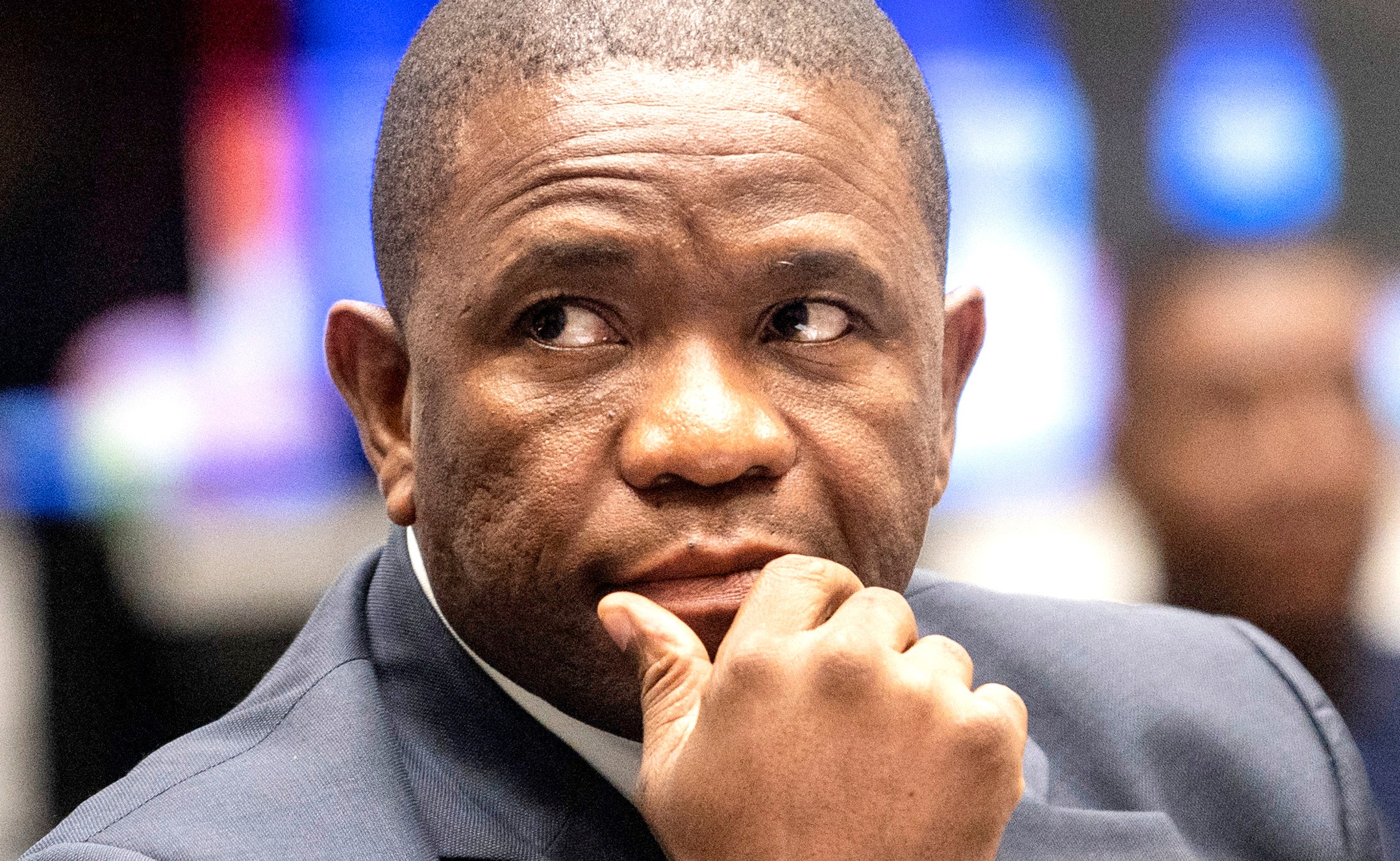
 Lieutenant General Nhlanhla Mkhwanazi on 18 March at the parliamentary ad hoc committee inquiry into alleged corruption and political interference in the criminal justice system. (Photo: Brenton Geach / Gallo Images)
The fallout has been unprecedented. Twelve months after KZN Police Commissioner Lieutenant General Nhlanhla Mkhwanazi’s explosive briefing on 6 July 2025, 13 police officers, including National Commissioner General Fannie Masemola, are facing criminal charges, while a further 15 members are the subject of disciplinary proceedings.
Mkhwanazi alleged that high-level officials, including Police Minister Senzo Mchunu, were colluding with a criminal syndicate. Following these claims, Mchunu was placed on special leave, and President Cyril Ramaphosa established the Madlanga Commission of Inquiry to investigate the allegations.
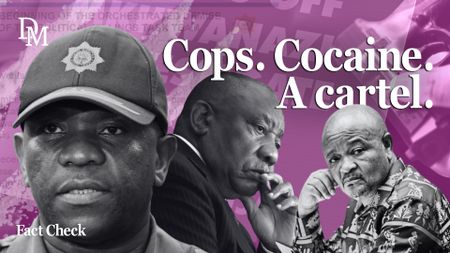
Among the matters that emerged was that of the R228-million SAPS health services contract awarded to Vusimusi “Cat” Matlala’s company Medicare24 Tshwane in June 2024. The contract was terminated in May 2025.
The accused, along with Matlala and his business associate James Murray, face charges of corruption, fraud and money laundering. Masemola is only charged with contravening the Public Finance Management Act. The State alleges that Matlala bribed senior police officers, including generals, to secure the contract, which was awarded in June 2024. The group first appeared in court in March.
/file/attachments/orphans/ED_608875_582985.jpg "Fannie Masemola appears in the Pretoria Magistrates' Court on 13 May. (Photo: Frennie Shivambu / Gallo Images)")
Calls for reform
The commission has exposed what many observers describe as deep-rooted institutional failures within the SA Police Service (SAPS), with the fallout reaching the highest ranks of policing. Senior officers have been arrested, suspended or appeared in court to answer allegations ranging from corruption and fraud to defeating the ends of justice.
Beyond the individual cases, testimony before the Madlanga Commission and parliamentary inquiries has painted a broader picture of organised crime syndicates infiltrating law enforcement for years while exploiting political connections to shield themselves from investigation.
The revelations have also intensified divisions within the justice cluster. Public clashes between senior SAPS leaders, including Mkhwanazi, and anti-corruption bodies such as the Independent Directorate Against Corruption (Idac) have highlighted competing narratives over who is driving reform and who is resisting it. Mkhwanazi has publicly warned of brewing pushback and a “war” within the structures.
The fallout has intensified calls for systemic reform. In response, the government established specialised task teams that have carried out a series of high-profile arrests, while the Madlanga Commission has become the focal point for investigating allegations of organised crime, corruption and political interference within law enforcement.
Its proceedings have exposed years of ignored whistleblower complaints, the alleged abuse of covert police funds and intelligence resources, and oversight failures that allowed criminal networks to operate within state institutions, further eroding public trust.
Heads continue to roll
The list of law enforcement officials implicated in investigations linked to alleged organised crime figure Matlala continues to grow. A senior Hawks official has resigned, while two other officers have been dismissed, adding to the widening fallout from probes into alleged ties between organised crime and South Africa’s policing structures.
/file/attachments/orphans/ED_612446_150013.jpg "Vusimusi 'Cat' Matlala in the Gauteng High Court on 15 June. (Photo: Fani Mahuntsi / Gallo Images)")
The developments signal an escalating effort to root out corruption within the SAPS and related law enforcement agencies, while further eroding public confidence in a police service already under scrutiny over allegations of organised crime, corruption and political interference.
Among the most significant departures was that of suspended KwaZulu-Natal Hawks head Major-General Lesetja Senona, who resigned with immediate effect on 26 June after the SAPS rejected the retirement notice he had submitted months earlier. His resignation came before disciplinary action could be instituted following findings by the Madlanga Commission that there was prima facie evidence warranting a criminal investigation against him.
Senona was grilled by the commission about a R200-million cocaine consignment that was stolen from a Hawks building in his province in 2021. During Senona’s previous testimony before the commission, he was grilled about his dealings with Matlala.
The fallout has extended beyond the Hawks. On 1 July, acting National Police Commissioner Lieutenant-General Puleng Dimpane confirmed the dismissal of Brigadier Rachel Matjeng following the conclusion of an internal disciplinary process. Matjeng had come under scrutiny because of her relationship with Matlala.
/file/attachments/orphans/images19_723803.jpg "Brigadier Rachel Matjeng. (Photo: MDN News / Facebook)")
The net has widened further in the Medicare24 procurement scandal. Fourteen SAPS members have now been suspended in connection with the R228-million tender, including Lieutenant General Molefe Fani, Lieutenant General Lineo Nkhuoa, Lieutenant General Nonkululeko Edith Mavundla and Major General Thokozani Mathonsi.
/file/attachments/orphans/MadlangaCommisionExposeInfographicv2_160764.png)
Police spokesperson Brigadier Athlenda Mathe said internal disciplinary processes were continuing and, to protect their integrity, SAPS would not comment further while the investigations were under way.
The fallout has extended beyond the SAPS. Chief Inspector Samuel Mashaba of the Gauteng Traffic Police was suspended on 14 June after testifying before the Madlanga Commission about his alleged involvement in a R286-million cocaine shipment concealed in Scania truck parts and smuggled from Brazil to Durban and subsequently transported to Aeroton, south of Johannesburg. He was one of four individuals arrested in connection with the case several years ago.
/file/attachments/orphans/ED_612185_872426.jpg "Chief Inspector Samuel Mashaba testifies at the Madlanga Commission of Inquiry on 11 June. (Photo: Frennie Shivambu / Gallo Images)")
Cartel violence
The SAPS Crime Intelligence head, Lieutenant General Dumisani Khumalo, told the Madlanga Commission that the Big Five drug cartel, with international links, had infiltrated South Africa’s political landscape while expanding into tender fraud, extortion, kidnappings and contract killings.
Although Khumalo named only two alleged members of the syndicate — Matlala and Katiso “KT” Molefe — the commission has heard evidence linking the network to a string of violent crimes.
The inquiry has also raised alarm over witness safety. In December 2025, whistleblower Marius van der Merwe was shot dead outside his home, months after alleging before the commission that the suspended Ekurhuleni Metropolitan Police Department (EMPD) deputy chief Julius Mkhwanazi instructed him to dump the body of a tortured suspect in a dam near Nigel to conceal a murder.
/file/attachments/2988/2026-02-10-iss-today-full_716927.jpg "Suspended EMPD deputy head Julius Mkhwanazi. (Photo: @City_Ekurhuleni)")
Adding another layer to the case, the commission also heard testimony that alleged underworld figure Brown Mogotsi circulated CCTV footage of the murder of Vereeniging engineer Armand Swart on the day of the killing to individuals linked to the taxi industry, including the late Pretoria taxi boss Mswazi Msibi. The evidence has intensified concerns about the intersection of organised crime, political influence and alleged interference in criminal investigations.
The gravity of the allegations surrounding organised crime’s alleged infiltration of the SAPS was reinforced by remarks made by magistrate Ignatius du Preez in the Specialised Commercial Crimes Court in Pretoria on 1 July.
Rejecting an agreed eight-year plea and sentence agreement for Matlala, Du Preez found the proposed sentence to be unjust and indicated that a 12-year prison term would be more appropriate.
The case relates to the alleged corruption surrounding the R228-million Medicare24 SAPS tender, and Du Preez painted Matlala as the central figure in a scheme to defraud the police.
Killarney raid
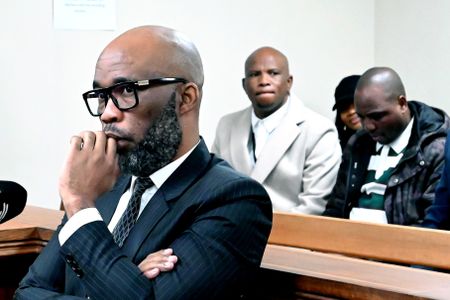
The latest arrests linked to the Madlanga Commission stem from the alleged theft of precious stones worth R14.9-million during an unlawful raid on a Killarney home in 2023.
The case gained renewed prominence after Witness K testified before the commission and alleged that Julius Mkhwanazi orchestrated the raid, placing it at the centre of claims that law enforcement officials worked alongside criminal networks.
The commission has also heard testimony linking Mkhwanazi to a murder investigation, a rogue unit allegedly involved in extortion, kidnapping, theft and truck hijackings, renewing questions over why repeated calls for his suspension allegedly went unheeded for years.
Mkhwanazi has also been implicated in the Blue Light scandal, in which he allegedly signed an agreement between the EMPD and Matlala’s security company that bypassed procurement processes to provide surveillance technology and tactical support.
Arrests have now been made in connection with the Killarney raid. On Saturday, 4 July, the Independent Police Investigative Directorate, assisted by the Tactical Response Team, arrested one of three suspects wanted in connection with the raid. The following day, a second suspect handed himself in at the Edenvale Police Station.
The investigation initially implicated six suspects: three EMPD officers, a Gauteng Traffic Police officer, a Johannesburg Metropolitan Police Department officer and a businessman accused of posing as a police officer. One suspect has since died.
The two suspects are expected to appear in the Johannesburg Magistrates’ Court on Monday, 6 July. DM
Comments
Scroll down to load comments...