



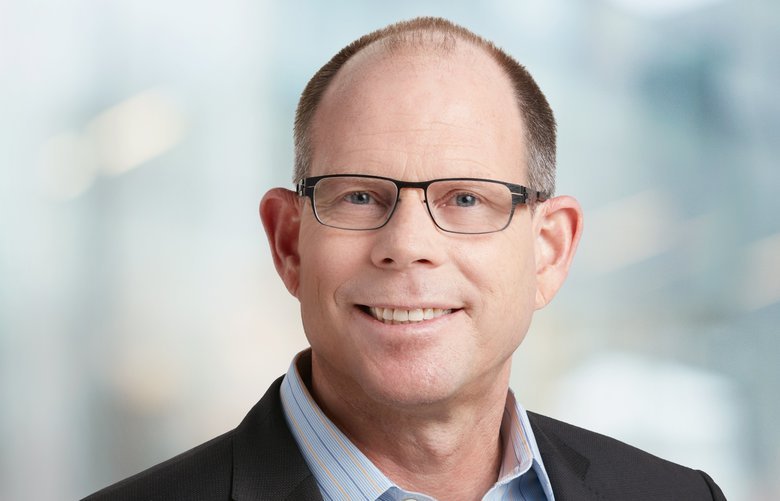
 Mark Suzman, CEO of the Bill & Melinda Gates Foundation. (Photo: Supplied)
The Gates Foundation annual letter generally serves as both a reflective and forward-looking take on the global nonprofit’s operations, touching on key accomplishments and goals heading into the new year. However, the most recent letter, released on Tuesday, 3 February 2026, stands out from its predecessors for two main reasons.
Firstly, there are the extraordinary geopolitical circumstances that form the backdrop of CEO Mark Suzman’s 2026 missive. Over the past year, wealthy, developed nations – most notably the US under President Donald Trump – have withdrawn billions of dollars in global health and development funding.
Secondly, it’s the first annual letter released by the foundation since billionaire founder Bill Gates’ mid-year announcement in 2025 that the organisation would close its doors for good by 31 December 2045.
/file/attachments/orphans/11767453_698762.jpg "Bill Gates, founder of the Bill and Melinda Gates Foundation, speaks during the Grand Challenges Annual Meeting 2023 opening ceremony in Dakar, Senegal, 09 October 2023. Great Challenges, supported by the Bill and Melinda Gates Foundation, promotes crowdsourcing solutions for requests to grant proposals in areas such as global health science and innovation. It is the first time the annual meeting has been held in West Africa. (Photo: EPA/JEROME FAVRE)")
As Suzman puts it in his opening line: “It’s been two years since my last letter, and the world has changed dramatically since then.”
He notes that while the start of the 21st century kicked off “two decades of unprecedented progress”, momentum in the last few years has slowed.
“Last year, deaths from HIV, TB and malaria rose. And in 2025 – for the first time this century – it’s almost certain that more children died than the year before,” he wrote.
So, in these turbulent times, with a 20-year timeline to spend an additional $200-billion to “save and improve lives”, what are the foundation’s priorities? Daily Maverick spoke with Suzman about the past, the future and the obstacles that lie in between.
Q: Your letter comes at a pivotal time for global health and development funding… Are there specific diplomatic strategies you’re employing to bring donors back to the table?
A: “I think one of the central messages I’m trying to [share] with this letter, and what we’re trying to do as the Gates Foundation, is to make a broad statement to say the world hasn’t forgotten how to save lives. It’s lost the will to prioritise saving lives, and we believe it’s incredibly important that we turn that around.”
Suzman told Daily Maverick that there were strong political coalitions in place, such as the Global Fund and Gavi, the Vaccine Alliance, that had a proven track record of pulling in the private sector and building relationships with civil society partners to save lives. However, he acknowledged that both organisations in 2025 saw a drop in the amount of money raised.
“We think that’s a real call to action… We are engaging directly with the traditional donor community, saying it’s critically important that they step up, that the relative amounts of money that we’re trying to raise in these areas are small compared with the proven impact that they can make,” said Suzman.
He added that it was a “critical moment” for countries of the Global South to take primary responsibility for the needs of their own citizens, including around healthcare issues.
“It needs to be about putting in place a long-term infrastructure that is going to be self-reliant. And I think if there’s one silver lining to the challenges of last year, with the significant cuts and pullback made – especially for the US, but across many donors – it’s that it’s now reached a political level of prioritisation for presidents and finance ministers, stretching beyond health ministries.”
Q: What would you say are some of the priorities when it comes to strengthening developing countries’ health structures, to ensure there’s less vulnerability to these types of shocks in the global aid system?
A: “Certainly the highest priority is to focus on a well-resourced, well-run, well-maintained primary healthcare system. That includes the training of community [and] primary healthcare workers, ensuring that facilities have access to the right products, the right advice… That’s the most cost-effective way of saving lives.
“If you can address a lot of basic needs at the primary healthcare post… you actually take a load off the much more expensive secondary and tertiary facilities.”
Suzman emphasised the importance of innovation and identifying the most effective new interventions, an area where entities like the Gates Foundation can play an “important partnership role”.
/file/dailymaverick/wp-content/uploads/2025/03/TB-meds.jpg "Tuberculosis preventive therapy usually involves just one or two drugs and short treatment durations. (File photo: Nasief Manie / Spotlight)")
“We take at-risk bets with our resources. We think that’s the appropriate role of philanthropy, because it’s tough for cash-strapped governments to take risky bets.”
An example of this were studies supported by the foundation that showed just one dose of the human papillomavirus vaccine (HPV), rather than two or three doses, could provide protection against the virus and cervical cancer, said Suzman.
“A live example, which is being piloted in SA, among other countries, right now is the rollout of Lenacapavir, this very powerful new drug… that is more than 99% effective at preventing HIV.
“We’ve made a massive investment as the Gates Foundation into what will be manufacturing a generic product at much lower costs, which should come on screen in the next couple of years… By the time that’s getting ready to be scaled up, we hope countries like SA will be in a position… to actually purchase those products at scale.”
Read more: SA wants to make its own six-monthly HIV prevention jabs by 2027, but there’s a hitch
Q: What gives the Gates Foundation such confidence that despite the obstacles we’re seeing now in terms of funding, there’s potential to not only gain back the progress lost but also accelerate towards the ambitious goals laid out in your letter?
The Gates Foundation has laid out three goals for 2045:
- No mother or child dies of a preventable cause.
- The next generation grows up in a world without deadly infectious diseases.
- Hundreds of millions of people break free from poverty, putting more countries on the path to prosperity.
It will be focusing more on its core priorities: maternal and child health, nutrition, infectious disease, agriculture and US education.
By 2045, the foundation believes the world can eradicate polio and malaria, and bring TB and HIV under control as manageable conditions.
“We have an incredible pipeline of new innovations coming upstream – the equivalent of that HIV prevention tool, Lenacapavir,” said Suzman.
“We’re working on potential vaccines and treatments in tuberculosis. In fact, we have a trial that I mentioned in the letter of this one called M72, where the most trial sites are actually in SA. If successful, it will be the first new TB vaccine in over a century.”
Suzman also flagged important work around child nutrition, a key factor affecting children’s susceptibility to diseases.
/file/attachments/orphans/568515_882985.jpg "Bill and Melinda Gates visit a young patient suffering from malaria in the Manhica Research Centre and hospital in Manhica, Mozambique, in 2003. (Photo: EPA / Jeff Christensen)")
However, a mechanism through which he sees great potential for accelerating progress is artificial intelligence (AI).
“I know it gets hyped incredibly and it’s a buzzword. We try to make it very complex. Where and how do you think AI can actually drive improvement? On a continent like Africa, where we already know we have a massive shortage in healthcare workers and trained healthcare providers, I think there are incredible opportunities where access to AI in a cheap, cost-effective way… can actually provide resources and tools to those overstretched healthcare workers and to the patients themselves, in a way that can transform delivery systems.”
The Gates Foundation is already piloting some of these interventions. In January, it announced Horizon 1000 – a new partnership with OpenAI to bring AI tools to 1,000 primary healthcare clinics and surrounding communities across sub-Saharan Africa.
Conversations around guardrails and best practices are forming an important part of these processes, says Suzman.
“It’s not a panacea. It’s not a magical [fix]. We don't expect this to be a one to two-year phenomenon. In fact, we’re clearly in for a tough couple of years in the global health and development space because of the fiscal crises… But when you look over that 20-year timeline, we do think it’s very reasonable to expect not just a repeat of progress, but I’ll say an acceleration of progress.”
Q: Across which areas will you be decreasing investment to ensure you can accelerate towards the realisation of your primary goals?
A: “The truth is, we’ve already been steadily increasing the proportion of our funding against the three broad goals I lay out, especially the first two around child mortality and infectious disease. Those first two goals are currently around 7% of our funding.”
The foundation has been taking a “hard look” at which areas of need have reached a point where they can be sustained without the organisation’s interventions, or can be taken on by other partners.
An example was the foundation’s work in sanitation, said Suzman, which started in 2007 with a focus on rural communities.
“We’ve been phasing out our core work around that inclusive public sanitation, because these are now strong priorities of African health and sanitation ministers across the continent, of the African Development Bank, the Asian Development Bank, the World Bank.”
/file/dailymaverick/wp-content/uploads/2024/10/GroundUp-HIV-drug-users-main.jpeg "A bottle of methadone is handed out at a TB HIV Care drop-in centre in Cape Town, where opioid substitution therapy is available for people who inject drugs. (Photo: David Harrison)")
The foundation will also be phasing out its investment in inclusive financial services, aimed at ensuring that almost every African citizen has some degree of digital connectivity to these systems.
“There’s still work to be done, but we think the heavy lifting, the proof-point of, ‘Is this something that can be transformative at scale?’, has now reached a leverage point where it doesn’t need our long-term support in the same kind of way.”
Looking ahead to the closure of the Gates Foundation in 2045, Suzman said the hope was that some interventions, such as the work around polio, would no longer be needed.
“In most of those preventable child mortality health spaces, if we can have the robust healthcare systems that I talked about that are self-reliant and funded at scale, you won’t need the Gates Foundation to do quite the same work that we’ve done,” he said.
However, for other enduring areas of need, such as the education sector and economic opportunities, he hoped there would be a “coalition of both philanthropic funders and champions of a new generation of wealth” that would take on the challenges.
“I think we hope that this is an example to other philanthropists about the possibility of what can be done... to take on that next generation’s problems.” DM