



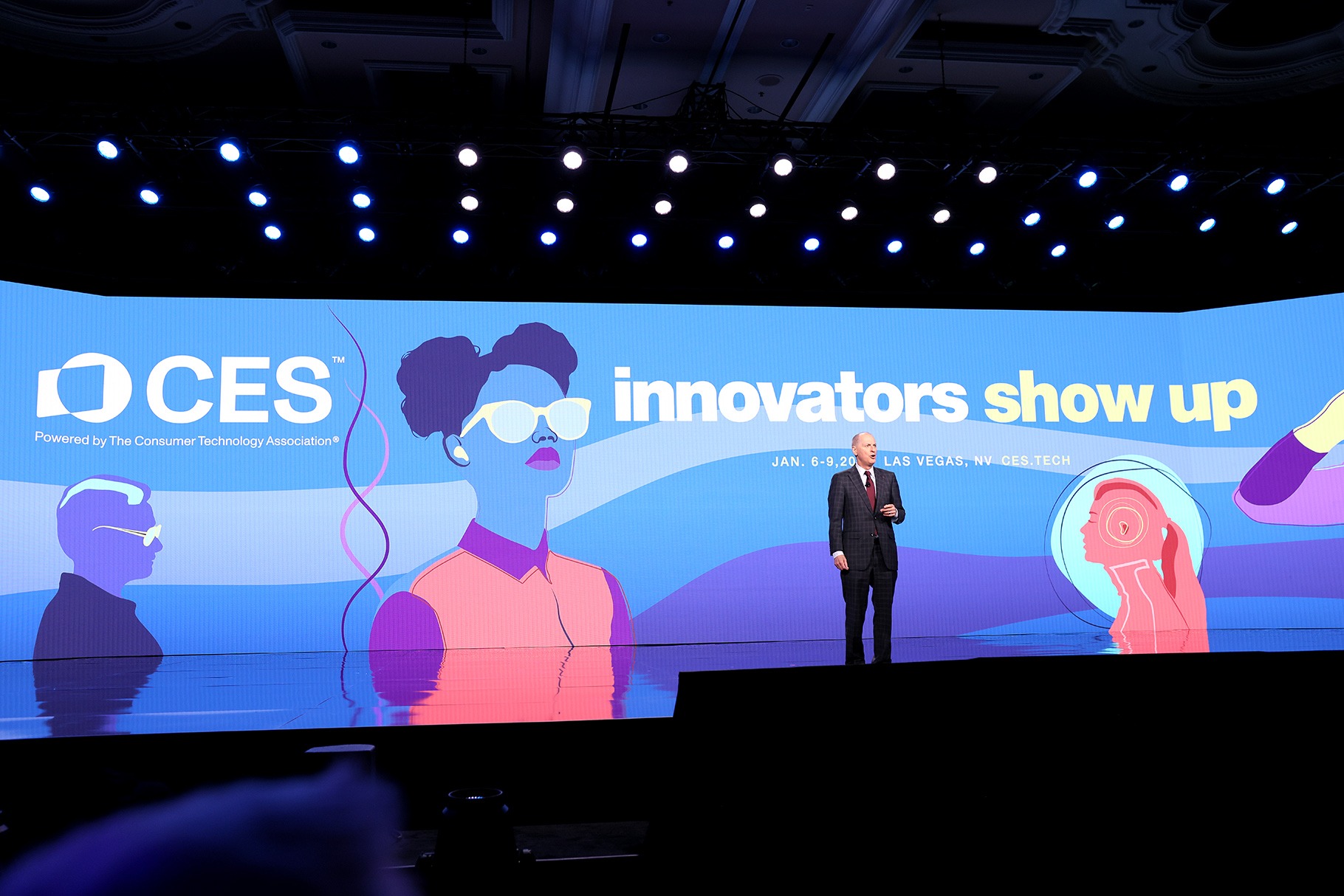
 CES has become more about the B2B deals over time, but the 2026 iteration had a refreshing touch of human-centric consumer products. (Image: Supplied)
Artificial intelligence is for businesses; computers are for the rest of us. At least that was the general idea we can glean from the 2026 edition of the Consumer Electronics Show (CES), which is held annually in Las Vegas and serves as the spiritual renewal of the technology journalists’ vows.
First among them (the vows) is not to report on vapourware — concept products that will never reach consumer shelves — but it’s a cardinal rule that often gets overwhelmed by the sheer awesome of the wares placed on display.
By all accounts, there was precious little for the average consumer at CES this year. The show floor was dominated by clever components, but what truly stood out was a pivot back to human-centric products, with Dell leading the retreat from AI everything, everywhere, all at once. And most of it is coming to SA.
Getting back to people
Dell’s head of product, Kevin Terwilliger, had this to say about the company’s direction: “One thing you’ll notice is the message we delivered around our products was not AI-first. So, a bit of a shift from a year ago, where we were all about the AI PC.
“We’re very focused on delivering upon the AI capabilities of a device — in fact, everything that we’re announcing has an NPU [neural processing unit] in it — but what we’ve learned over the course of this year, especially from a consumer perspective, is they’re not buying based on AI. In fact, I think AI probably confuses them more than it helps them understand a specific outcome.”
And then they backtracked on the nomenclature of the flagship laptop line with the return of the XPS branding for the XPS 14 and 16 laptops. This renewed focus, plus the efficiency gains from the new Intel and Qualcomm processors, should see the PC makers close the gap on the MacBook’s success.
Not getting the message, but grooving to the vibe
Unfortunately, the other PC makers didn’t read the room and continued to preach the Microsoft, Intel, AMD and Qualcomm AI PC gospel — still managing to deliver real solutions to problems that face humans.
But, to their credit, Asus and Lenovo corrected the physical experience of their hardware, proving that even enterprise devices don’t have to be boring.
Asus, in particular, has raised the bar. The ExpertBook has long been a staple of the mobile workforce — in fact, last year’s model was my favourite laptop for its sheer utility. But with the new ExpertBook Ultra, the Taiwan-based company has blurred the line between business tool and lifestyle object.
A magnesium-aluminium blend body should address the tactile flimsiness of the previous generation, which will matter far more to the daily handling than a slightly faster chatbot.
/file/attachments/orphans/Legion3_349461.jpg "Of all the devices mentioned, the Lenovo Legion Pro Rollable gives the most vapourware vibes, but it is cool. (Image: Supplied)")
More screen, less bulk
Lenovo, meanwhile, tackled a different human constraint: the need for visual space. Their strategy this year is effectively cramming as much screen as physically possible into devices we can still carry.
The Legion Pro Rollable proof of concept may or may not be vapourware (look, they did bring the foldable display laptop to market a couple years ago…) but it can morph from a standard 16-inch laptop to something with a 24-inch screen at the touch of a button.
How to steal the show
However, if there was a clear winner of CES 2026, it wasn’t a computer manufacturer at all. It was a company that remembered that the original building block of creativity isn’t a microchip.
Lego walked away with the show by doing exactly what it has done for 90 years: sparking imagination. But this time, they added a layer of silicon that feels genuinely magical rather than gimmicky.
/file/attachments/orphans/75421_Lifestyle_cons_347193.jpg "Lego absolutely stole the show with its Smart Play system. (Image: Supplied)")
The Danish toy giant unveiled Lego Smart Play, a platform that integrates a Smart Brick, Smart Tags, and Smart Minifigures. By embedding advanced sensors (accelerometers, light and sound readers) directly into the bricks, the new Star Wars sets react to how they are being played with. Swing a light-sabre, and it hums; move a ship, and the engines roar. It’s an enhancement of physical play, not a replacement of it.
Lego’s chief product and marketing officer, Julia Goldin, said it’s about “innovating to meet the play needs of each new generation” without losing the soul of the System-in-Play.
Fixing the occasional office headache
In a sea of identical silver clamshells, the HP EliteBoard G1a stood out as a genuine rethink of the corporate PC. It is, unfortunately, touted as a “full AI-powered computer”, built entirely inside a keyboard.
You simply pull the keyboard out of your bag, connect it to any screen, and you have your full desktop environment. Weighing just 750g, it’s lighter than almost any laptop but packs a dedicated NPU and AMD Ryzen AI processor.
/file/attachments/orphans/HPEliteBoardG1aNextGenAIPC_Hero4_895680.jpg "What the HP EliteBoard G1a loses is naming convention, it gains in sheer coolness. (Image: Supplied)")
It is the ultimate expression of the human-centric trend: hardware that adapts to how we actually work, rather than forcing us to adapt to the hardware.
Read more: Crossed Wires: Physical AI and the bloodied battlefield of autonomous vehicles
If CES 2026 proved anything, it’s that the tech industry might finally be over its obsession with technology for technology’s sake. The gadgets that won the week weren’t the ones with the most TOPS (trillions of operations per second), but the ones that respected our time, our backs, and our need to play. DM