



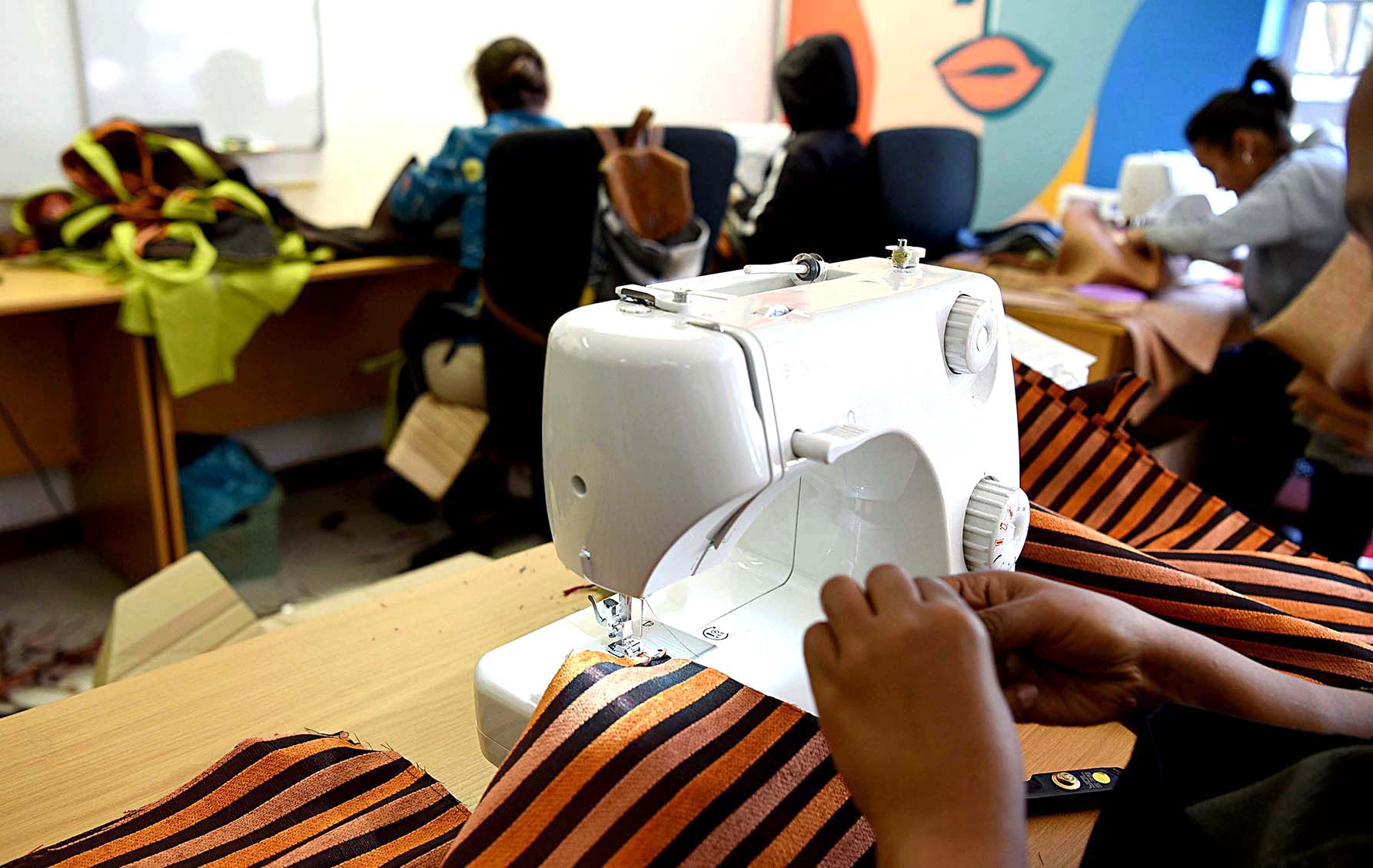
 South Africa’s small businesses are proving that in a market obsessed with speed and sameness, craft, story and human connection still win. (Photo: Nasief Manie / Spotlight)
In a studio in Woodstock, Cape Town, a group of women crochet hats from hemp and cotton, their movements slow and deliberate. Months later, those same hats sit in a Dior lookbook, worn by models striding Paris runways.
This is the improbable story of Earth Age, a business that began with three friends during lockdown and ended up collaborating with one of the most recognisable names in fashion.
Their story is also a blueprint for small business in South Africa trying to make sense of a market that rewards sameness and speed over meaning and craft.
The fight for value
The “never say die” spirit of a small business is often romanticised. The reality is that the market is tough and only getting tougher.
Consultancy company Kantar’s annual Mzansi Consumer Barometer tracks national consumer behaviour. Its latest findings show that South Africans are concerned about unemployment, corruption, crime, spiralling living costs, and load shedding.
The survey also found that household income was unpredictable in our country, as the sources of income varied from month to month, making it difficult for businesses to plan sales, said Stacey Saggers, commercial growth director at Kantar.
When the money does come in, it doesn’t stretch far. South Africans are consuming less essential items, Saggers added. Consumers are cutting back on things like luxury food items, alcohol, entertainment, going out and clothing.
Lurking in the background are juggernauts like Shein and Temu, peddling fast fashion at prices local makers can’t dream of matching. According to Saggers, 75% of South Africans surveyed have shopped on these platforms, and 48% admitted to doing so more in the last year than the one before.
Against this backdrop selling a R1,500 handmade jacket feels almost reckless, until you understand the industry shift that’s modifying perceptions of value.
Story as currency
“People want to purchase something more than just a piece of product. I think it adds value to it when they understand that it comes with so much meaning.”
These are the words of Harmonie Mbunga, founder of apparel and accessory brand Udo & Harmony. She observed that customers were initially drawn to the beauty and craftsmanship of her products, and upon learning the story behind them, discovered “so much more meaning”.
This wasn’t always the case. Erica Elk, CEO of the Craft and Design Institute (CDI), recalled that 24 years ago, when the CDI was established, there was an expectation that craft products should be cheap because they were made by hand.
“What we tried to do as an organisation with the businesses that we supported was actually to shift that narrative,” she said. “To say that because they’re made by hand, and because they’re an expression of an individual person and their creativity, you should be paying more.”
The market would respond, she argued.
“Somebody is going to come in and they’re not going to want to pay the price, but there will be customers that will come and they will appreciate the quality and the position and the value.”
Elk said this was because craft and design weren’t products, but rather the “process of making”. “When you understand that it’s a process of making, then you’re opening up market opportunities.”
Lessons from the frontlines
Brands like Hannah Lavery know this firsthand. In the early days, Lavery’s clothes hung on racks in the V&A’s Watershed, a Cape Town craft and design marketplace.
Their first year was challenging, Lavery said, as the Watershed was a new space and their product “wasn’t that cheap”. Her persistence, however, paid off. “We gradually got traction and we figured out our product and our messaging,” she said.
Before Covid-19, Lavery’s online store was an afterthought.
“We knew it was important to have one,” Lavery said, “but we never actually had any sales come through.” Sometimes it was only one order every three months.
Lockdown forced a pivot to online, and with it, a new approach. Lavery stepped in front of the camera.
“I got in front of the camera and, through our social media channels, told the story of what we are and what we do and who my team is.”
That human connection led to the growth of her brand and its sales.
Luck, strategy and a Dior email
Earth Age’s founders, Elektra Georgiadis, Ashley Wagner and Amy Kunz, began with restless ambition, dabbling in everything from apparel to homeware before finding their lane.
“We realised, hold on a second, this is impossible! We need to hone in on one product and figure that out,” Georgiadis explained.
They chose sustainability as their anchor, reaching for hemp and cotton and making hats their hero product. The hats are crafted by a team of Zimbabwean women using techniques passed down through generations.
Then came an email that looked a lot like spam: Dior wanted to collaborate. “We got this message from someone saying they’re from Dior… We all thought we were being scammed,” Georgiadis recalled.
The collaboration has propelled Earth Age to explore international markets, now selling their products in London.
Winning in a digital world
Today, countless small brands are lost in an algorithm-fed blur of sameness. This is because online engagement is exploding.
“Instant messaging and email as well as online video and social networks are absolutely ridiculously getting bigger and bigger every single year,” Saggers said.
Podcasts are booming too. In South Africa, one in four people listened to a podcast daily, Saggers said, and 55% listened to a podcast weekly.
For small businesses, this could translate into opportunity.
“If you can find a podcast that mirrors what you do with your brand, you have a very big opportunity to amplify awareness of your brand and position yourself as an expert,” she said.
The opportunity here was agility. Big brands couldn’t do what smaller businesses could, Sagger said.
“They will nod and nod… but none of them change their behaviour. They can’t do it because there are too many sign-offs that need to happen, and there’s too much risk to their brands to do anything adventurous or entertaining.”
Where the opportunities lie
Nearly half of South Africans believe the country will be in better shape in five years, Kantar’s survey found. Two-thirds expect their personal finances to improve within the next 12 months.
That optimism creates a window for the brands that can articulate why they matter.
“There’s a juggling act,” Saggers noted as consumers balanced essentials with small indulgences. They would down-trade in some categories to spend on what they truly loved.
According to her, the solution was to provide a “meaningful difference”. In a hyperinflationary environment, consumers would pay up to 14% more for brands they believed in, Saggers added.
In South Africa, local mattered. Unlike some African markets, Saggers said, “Made in South Africa” signalled artisanal, sustainable and something to be proud of. Paired with meaning and digital fluency, it was a potent differentiator. DM