



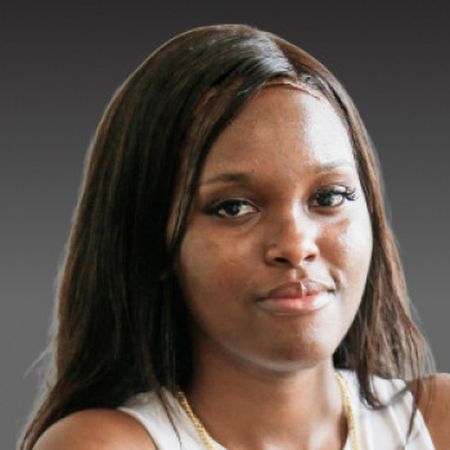
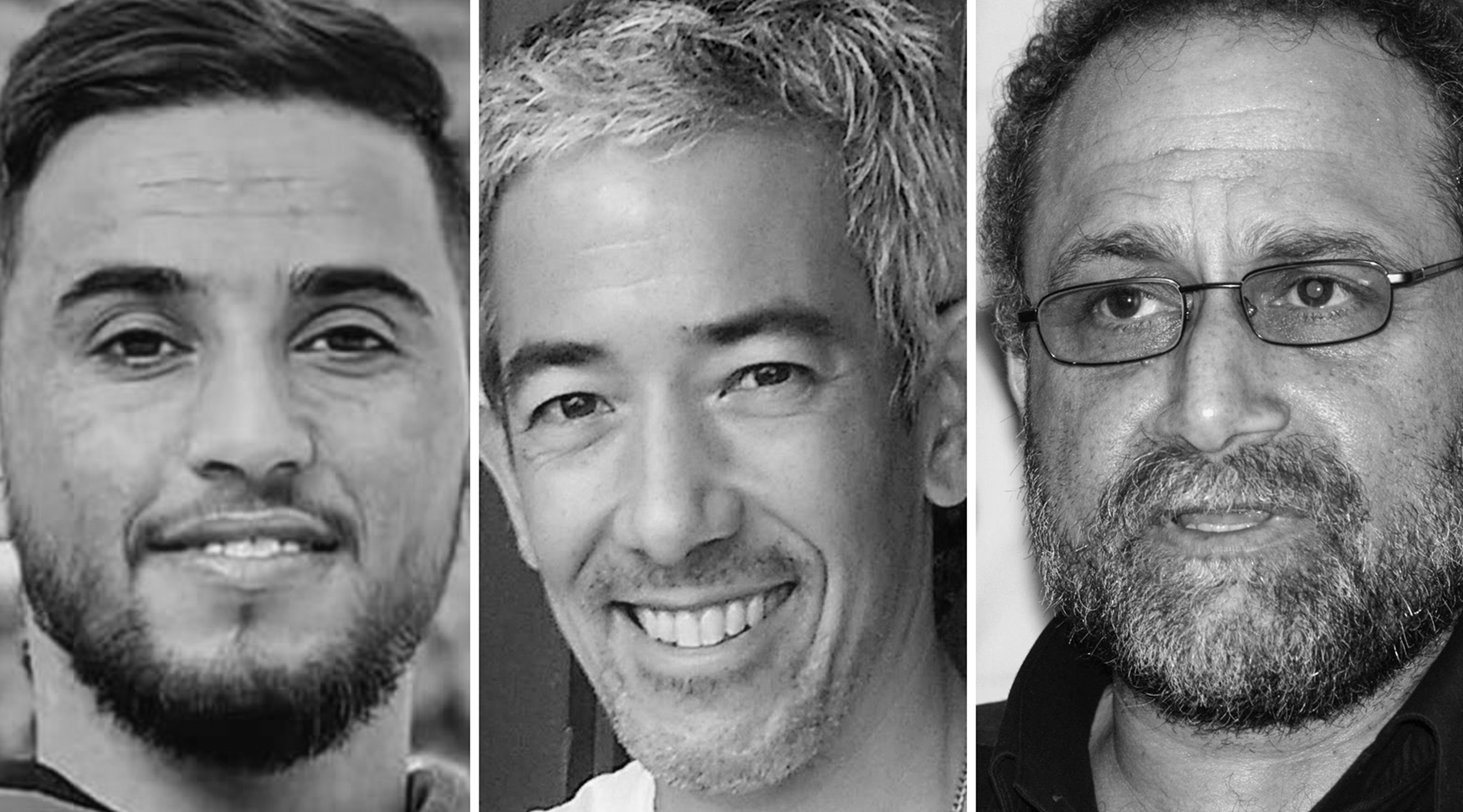
 From left: Alaa Hathleen; Dr Edward Chu; Dr Haidar Eid. (Photos: Alaa Hathaleen / Facebook / Navajo-Hopi Observer / Wikipedia / icahd / Wikipedia)
 “I’m actually a physical therapist and activist, and both of them are not a choice. To be in Palestine, you don’t have the right to choose what you want.”
These were the words of Alaa Hathleen, a 24-year-old from Hebron, Palestine, during a seminar on Wednesday hosted by Healthcare Workers for Palestine SA as part of its Israeli Apartheid Week.
Held annually in either February or March, the week aims to educate people about the nature of Israel as “an apartheid system and to build support for the Boycott, Divestment and Sanctions campaign globally”.
The first seminar of the week, titled “The Current State of Healthcare in Gaza; Experiences from the Frontline”, was held on Wednesday at the Stellenbosch University Faculty of Medicine and Health Sciences.
Palestinians more than just numbers, says activist
“I became a physical therapist after seeing my father suffering from a stroke and I saw how difficult it was with all the checkpoints around the West Bank to arrive at the health clinic and to get physical therapy sessions, and I became an activist after an Israeli court declared our land as military land,” Hathleen said.
He said he had been living without basic needs such as electricity, water and a home.
“I live in tents in caves without anything. In my community in West Bank, I spent half of my life in the checkpoints,” he said.
Hathleen said it was important to remember that the people in Gaza were “not just numbers” and that what was occurring was not a conflict, but a “genocide and ethnic cleansing”.
Israel has denied accusations that its military action in Gaza amounts to genocide. In January, the International Court of Justice ordered the country to prevent genocide in the occupied territory.
Read more in Daily Maverick: Middle East crisis news hub
“After 150 days since the genocide war began, 2,627 massacres were committed by the occupations, 39,178 martyrs are missing, 340 martyrs from the medical teams, 132 martyr journalists, 179 medical facilities are destroyed,” Hathleen said.
According to statistics from the Gaza health ministry, by Wednesday, 30,717 people had been killed in Gaza since Israel launched its attacks in response to the 7 October Hamas attack, which took the lives of more than 1,000 people.
Hathleen said just 12 out of 36 hospitals in Gaza were “partially functioning”, treating only emergency cases and surgeries were being performed without anaesthesia.
“Just imagine you are one of the doctors running to the emergency room for help and you find your son murdered. How do you feel when you are a doctor and you are amputating young daughters’ feet without anaesthesia? How do you feel when you are working in the medical sector in Gaza and you don’t know anything about your family? My friend is a medical student; he lost all of his family. All of his family.
“The occupation has killed all the meaning of the humanity which we live for. My uncle was killed by the Israeli settlers. My uncle was an old man, 70 years old and his name was Suleiman. He was a peaceful resistance man in the West Bank, all the time with no weapons. One day, settlers decided to run over him with a truck. I was the first one to arrive and I held some of his skull in my hand,” Hathleen said.
His 16-year-old brother was detained and brutalised, and had to walk more than 20km home.
“After that, he was in a coma for a week, and we arrived to him after six months. I left Palestine on 20 January and I talked with my brother the day before, but he was not with me; mentally he is not okay — I talk to him and he does not answer me.”
Hathleen said he had to leave Palestine after he became a target because of his activism. He could not say goodbye to his family as he was afraid he would be killed before he could leave.
Participants at the seminar were speaking from personal experience and Daily Maverick has been unable to verify their claims.
“Israel is not just looking to destroy Hamas. They want us to leave. They're looking for ethnic cleansing of the Palestinian people. You can see that everywhere,” Hathleen said.
Gaza situation ‘on another level’
Dr Edward Chu, an emergency medicine physician who worked in Gaza with Médecins Sans Frontières (MSF), said the situation in Gaza was “on another level in terms of the intensity of the violence of the bombing and the lack of respect for healthcare facilities”.
According to reports, as of February, almost 364 healthcare workers had been killed in Gaza, while healthcare services had been severely impaired by the large-scale destruction of healthcare infrastructure.
There were also severe shortages of medical products, very limited surgical capacity, a trickle of aid, a breakdown in routine care for chronic diseases including cancer, and large-scale outbreaks of infectious diseases.
Chu said even the few functioning hospitals were beyond the point of collapse.
“You’re talking about a hospital that is working at two, three times capacity. Patients are spread out all over the hospital wherever they can find space — there’s an entire population that’s taking shelter in the hospital in any open space,” he said.
Read more in Daily Maverick: ‘The basic necessities of human life are cut off’ — Gaza residents face gigantic humanitarian crisis
“I think many times we may be reluctant as individual doctors and nurses to get our hands dirty with politics, with advocacy, but we have to,” he said.
“We can’t just … say, ‘My role is just at the bedside.’ We have to advocate for patients, if we want to continue to have and benefit from this relationship that we have with society. We have to get our hands dirty, we have to advocate for our patients’ rights, for their access to healthcare.”
Dr Haidar Eid, author of Decolonising the Palestinian Mind, said sometimes he wondered whether he should stop talking about Gaza because he was unsure that the world was listening.
He has worked in Gaza since 2005 and spoke of previous Israeli attacks on Gaza.
“I was there and I saw amputated bodies of people, of Palestinian children, and the question arises, how many amputated bodies of Palestinian children does the international community want to see in order to act?”
Families wiped out and universities destroyed
Eid said he had lost more than 14 of his cousins.
“Entire families were wiped out, including my cousins. I’ve lost two of my colleagues in the English department of Al-Aqsa University, which is no longer there,” he said.
Eid said five out of six universities in Gaza had been destroyed, and 95 academics had been killed, including 88 professors and three presidents of universities.
“This is why academic institutions, including academic institutions in South Africa, have a responsibility, morally and ethically, to cut all academic ties with Israeli universities,” he said.
“We want an immediate ceasefire. We want the flow of humanitarian aid. We need at least 2,000 trucks of humanitarian [aid a day] in order to start talking about normal life. What we want is freedom. We want equality and we want justice.” DM
Comments
Scroll down to load comments...