



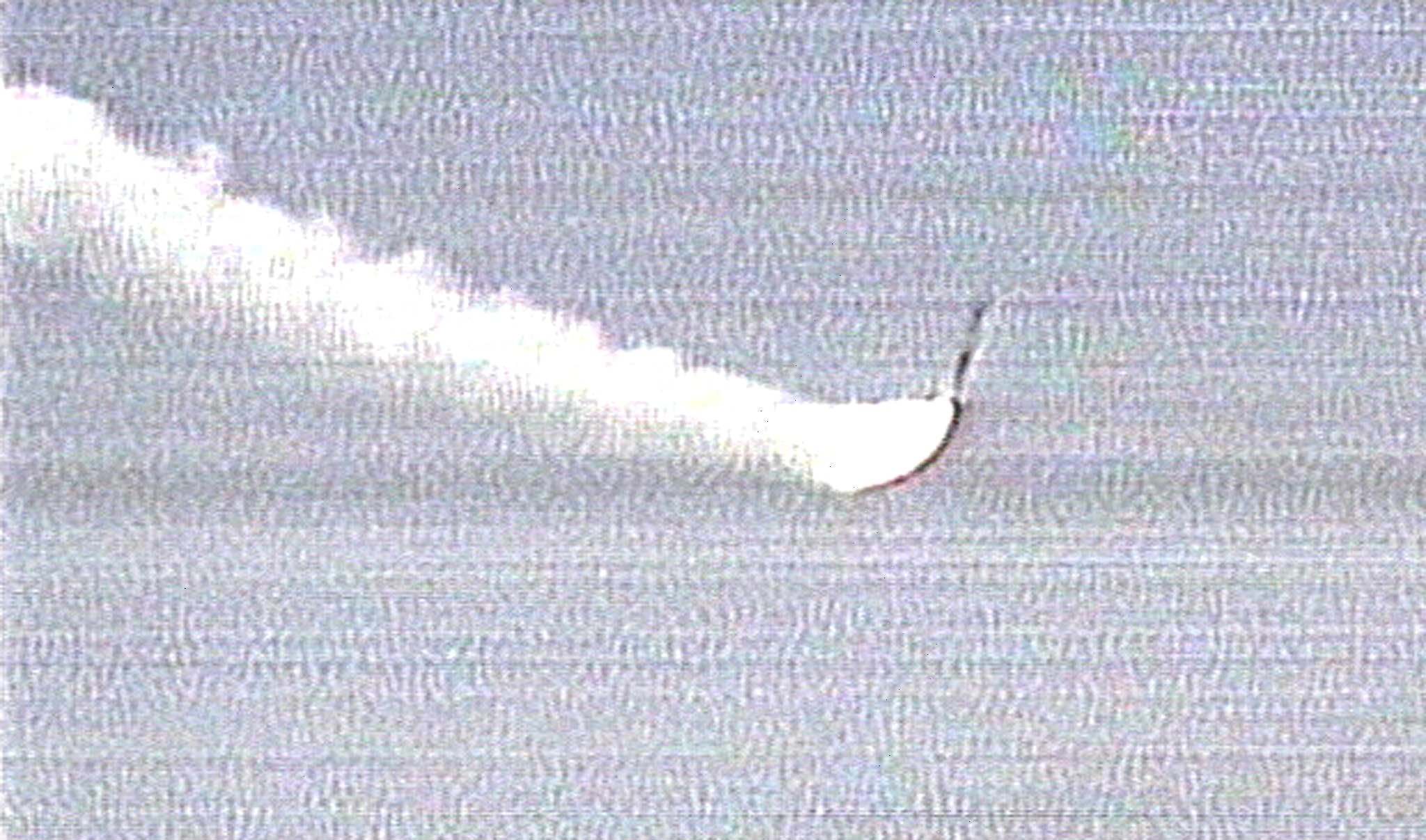
 DCA99 - 20010603 - WASHINGTON, DC, UNITED STATES : This frame grab from CNN of a NASA video shows the Pegasus rocket carrying the experimental X-43 hypersonic aircraft going off course 03 June, 2001. NASA said the booster rocket went out of control five seconds after being launched over the Pacific Ocean. NASA controllers destroyed both vehicles.The X-43 with its scramjet engine could be powered to seven times the speed of sound or 7,700kph (4,785mph), making it the first jet-propelled aircraft to reach that speed. EPA PHOTO NASA VIDEO VIA CNN
By Mike Stone
The test took place as the United States and its global rivals quicken their pace to build hypersonic weapons - the next generation of arms that rob adversaries of reaction time and traditional defeat mechanisms.
In July, Russia said it had successfully tested a Tsirkon(Zircon) hypersonic cruise missile, a weapon President Vladimir Putin has touted as part of a new generation of missile systems without equal in the world.
The free flight test of the Hypersonic Air-breathing Weapon Concept (HAWC) occurred last week, the Defense Advanced Research Projects Agency, or DARPA, said in a statement.
Hypersonic weapons travel in the upper atmosphere at speeds of more than five times the speed of sound, or about 6,200 kilometers (3,853 miles) per hour.
"The missile, built by Raytheon Technologies, was released from an aircraft seconds before its Northrop Grumman scramjet (supersonic combustion ramjet) engine kicked on," DARPA said.
"The DoD (Department of Defense) has identified hypersonic weapons and counter-hypersonic capabilities as the highest technical priorities for our nation's security," said Wes Kremer, president of Raytheon's Missiles & Defense business unit.
"The United States, and our allies, must have the ability to deter the use of these weapons and the capabilities to defeat them," he said.
In 2019 https://www.reuters.com/article/us-france-airshow-raytheon-hypersonic/northrop-engine-teams-with-raytheon-hypersonic-program-idUSKCN1TJ0UJ, Raytheon teamed up with Northrop Grumman to develop and produce engines for hypersonic weapons. Northrop's scramjet engine technology uses the vehicle's high speed to forcibly compress incoming air before combustion to enable sustained flight at hypersonic speeds.
"The HAWC vehicle operates best in oxygen-rich atmosphere, where speed and maneuverability make it difficult to detect in a timely way. It could strike targets much more quickly than subsonic missiles and has significant kinetic energy even without high explosives," DARPA said in the release. (Reporting by Mike Stone in Washington Editing by Dan Grebler and Mark Potter)