




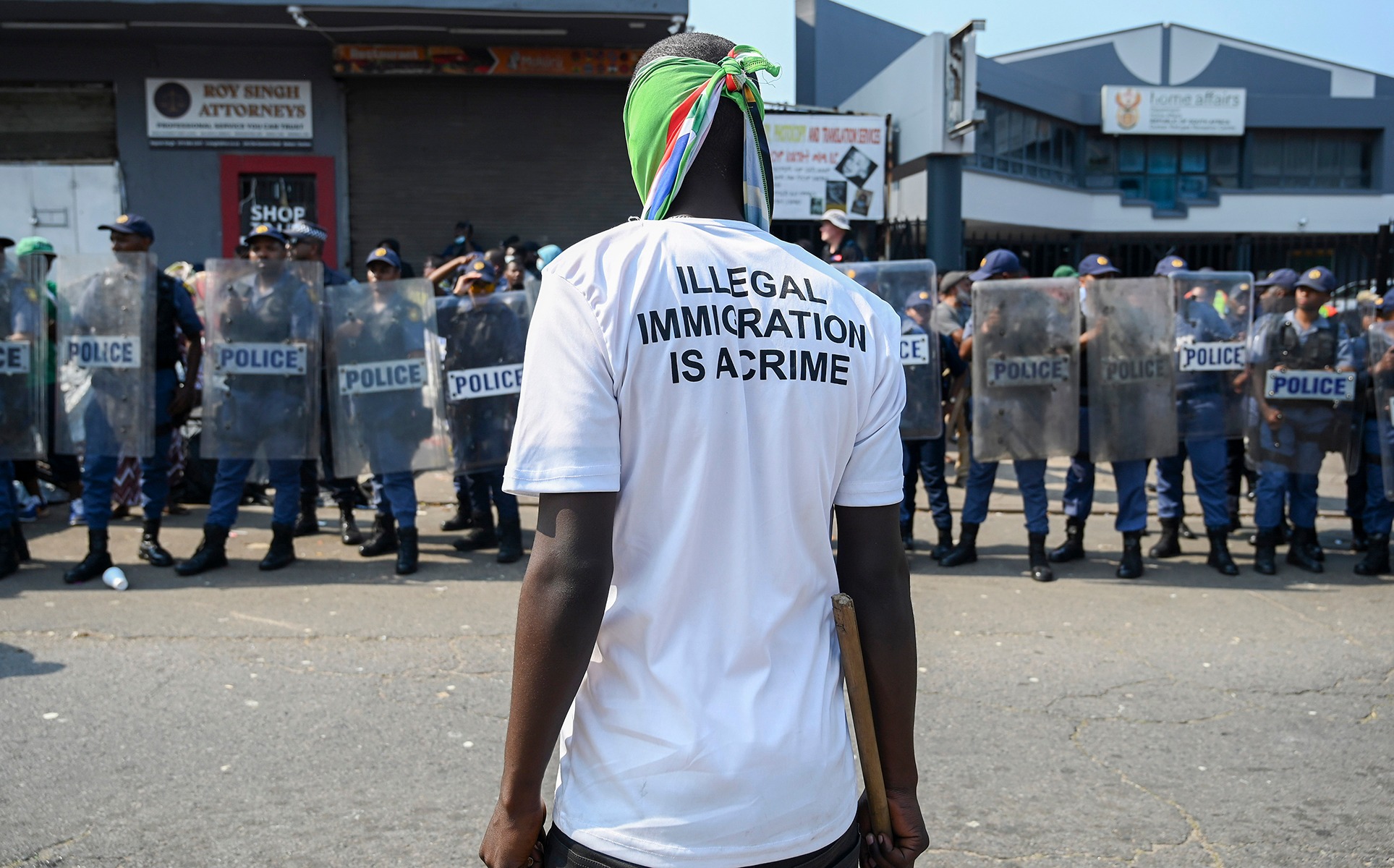
 Protesters march on 10 September 2026 from King Dinuzulu Road to Che Guevara Road against immigrants camped outside the Home Affairs Refugee Reception Office in Durban. The group is demanding that eThekwini Municipality enforce its bylaws and clear the pavements of foreign nationals. (Photo: Darren Stewart/Gallo Images)
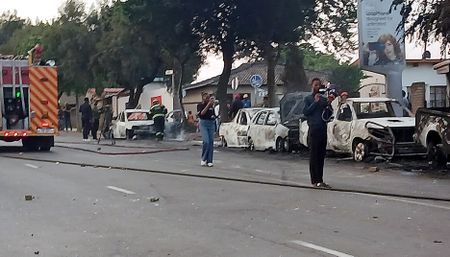
A total of 24 cars were torched during protests in Durban and Soweto on Thursday, 8 October 2026. To understand the violence, we have to go back to a court ruling on asylum seekers and the anti-foreigner movement that has been building throughout the year.
In July, the Constitutional Court declared certain provisions of the Refugees Act unconstitutional and invalid. The ruling said specific procedural barriers to lodging an asylum claim must be removed.
In late September, Home Affairs issued a directive to implement that ruling. That led to the violence in Durban and Soweto, which was amplified by online misinformation.
On Friday, the director-general of the Department of Home Affairs withdrew the directive. The department says it will start from scratch to draft a sustainable plan that meets the requirements set by the Constitutional Court.
Here’s what you need to know.
So, what happened in Durban and Joburg?
On Tuesday, 6 October, members of March and March disrupted asylum applications at the Durban Refugee Reception Office on Che Guevara Road, where hundreds of people had queued to apply for asylum.
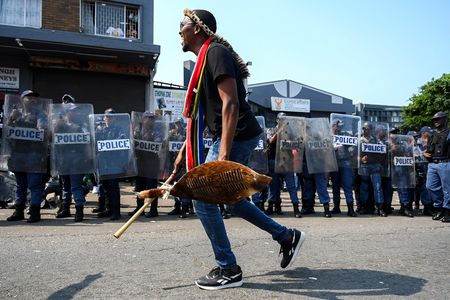
Anti-foreigner protests in Durban have continued throughout the week, with violence escalating. People have been injured and multiple vehicles have been torched while foreign-owned shops have been looted.
In Soweto on Thursday, anti-foreigner demonstrators clashed with foreign shop owners amid reports of gunshots and property destruction. Vehicles were also set alight.
/file/attachments/orphans/Tumi-refugee-explainer10_360405.jpg "Civilians protest Constitutional Court ruling on asylum seekers outside Home Affairs offices on October 08, 2026 in Soweto, South Africa. This comes after the court declared past rules unconstitutional, forcing Home Affairs to stop turning away undocumented or irregular entrants who want to apply for asylum. (Photo: Gallo Images/Fani Mahuntsi)")
Protesters gathered outside the Constitutional Court in Braamfontein on Friday, 9 October. The riot, which drew more than 300 anti-foreigner demonstrators, escalated and became violent. A vehicle was torched and police fired rubber bullets to disperse crowds.
What’s the Constitutional Court ruling about?
The Refugees Act required asylum seekers to enter South Africa through a designated port of entry to receive an asylum transit visa, which is valid for five days. Within that period, they were required to present themselves at one of the five refugee reception offices and to lodge an application for asylum.
If they were unable to do so, asylum seekers had to provide immigration officers with “compelling reasons” or show “good cause” for not following the prescribed process.
If unsatisfied with an explanation, officers could prevent an individual from lodging an application or reject them on the spot.
The court found that these procedural barriers could prevent genuine asylum seekers from accessing a merits-based assessment of their claim, particularly given the constitutional right to dignity and the principle of non-refoulement, which prevents states from returning people to countries where they face persecution or other serious harm.
What did Home Affairs do?
On 28 September, Home Affairs issued a directive instructing refugee reception offices to receive people who report in person and indicate that they intend to apply for asylum, and to help them lodge their applications.
It applied to people who had entered the country unlawfully, had entered somewhere other than a designated port of entry, did not have a visa, or had failed to report to one of the country’s five offices within five days.
Why the uproar?
The uproar over the asylum ruling and directive comes amid a growing wave of anti-foreigner mobilisation in South Africa.
Groups such as March and March have been at the forefront of demonstrations throughout the year, culminating in a 30 June “deadline” for foreign nationals to leave the country.
Demonstrations became more frequent as the deadline approached, while vigilantes targeted people they believed to be foreign nationals. Some were intimidated and assaulted, others were forcibly removed from their homes, and foreign-owned businesses were shut down.
The unrest has, at times, turned violent, resulting in the destruction of homes and businesses, the displacement of communities, and people fleeing the country. The violence has also claimed lives.
/file/attachments/orphans/Tumi-DHA-directive6_887395.jpg "Jacinta Ngobese Zuma, leader of March and March during the march from King Dinuzulu to Moore Road against immigrants camped outside Home Affairs Refugee Reception Centre on September 10, 2026 in Durban, South Africa. The group is demanding that the eThekwini Municipality enforce its bylaws and clear the pavements outside of foreign nationals. (Photo: Gallo Images / Darren Stewart)")
March and March leader Jacinta Ngobese-Zuma has emerged as a prominent figure in the mobilisation, drawing criticism over rhetoric and claims that have fuelled anti-foreigner sentiment.
Ngobese-Zuma described the court ruling as “absolutely shocking”, and argued that the recent Home Affairs directive would give foreign nationals “free will” to seek asylum and place further pressure on the country’s finite resources.
“As illegal as they are, it means that we have no need for immigration laws in this country … South Africans are being compromised in their own country. Even our documents are being bought like cakes at a market,” she said.
Ngobese-Zuma and others used the Home Affairs directive to further their claims that illegal migration is responsible for a wide variety of South African problems – unemployment, crime, healthcare and education.
Is it true? Are foreigners taking over?
On Thursday, the Inter-Ministerial Committee on Migration reasserted that the court’s judgment does not automatically grant refugee status or permanent residence, nor does it legalise unlawful migration.
“The ruling does not grant automatic refugee status or guarantee a right to remain in South Africa indefinitely. Every applicant must still subject themselves to the formal Refugee Status Determination process, where their claims will be thoroughly investigated under the strict criteria set out in international and domestic law.”
The committee also addressed the misinformation surrounding the ruling, warning that false or sensational claims could fuel social tensions and undermine confidence in public institutions.
Still, anti-immigrant groups and some political figures have used the judgment and directive, and in many instances misrepresented its meaning, to amplify anti-immigrant sentiment in South Africa.
Many widely circulating claims from anti-migrant groups are unsupported by evidence. Debate about South Africa’s immigration system is highly contested and many of the common claims that are made about foreigners aren’t backed up by facts. (See the end of Naledi Mashishi’s story here).
Could this relate to the elections?
Professor Loren Landau of the African Centre for Migration and Society at Wits University has argued that political actors across the spectrum have capitalised on anti-immigrant sentiment, helping move what was once considered fringe rhetoric closer to the centre of South African politics.
Landau pointed to politicians, including ActionSA leader Herman Mashaba and Patriotic Alliance leader Gayton McKenzie, as examples of figures who have made immigration a prominent part of their political messaging.
In a 6 October post, Mashaba explicitly linked an issue to upcoming elections – calling on citizens to vote for his party less than a month before the 2026 local government elections. Mashaba wrote on X:
Mashaba attached the post in response to a viral social media claim that more than three million refugees and asylum seekers had applied for Sassa relief, which is unverified.
South Africa provides social grants to people who meet the requirements for specific grants. Non-South African citizens may access certain grants if they have refugee status or permanent residency in South Africa.
Official Sassa figures also show that the number of non-citizen applicants was a small fraction of that figure.
“As of 01 January 2026, SASSA received 14,135 COVID-19 SRD applications from applicants who are either a permanent resident, refugee, or holder of a special permit. Of these, 8 368 applications were approved and 2 690 were paid,” Sassa has said.
But wait, Home Affairs is a mess. Can it actually evaluate each asylum case on its merits?
Despite the Constitutional Court’s ruling, this does seem to be a challenge.
On Thursday, the inter-ministerial committee admitted that refugee reception offices had been overwhelmed by people seeking to apply for asylum following the Home Affairs’ directive, with police helping officials to manage the queues.
The Department of Home Affairs said on Friday: “The attempt to practically implement the judgment immediately led to serious consequences that could not have been foreseen in the court order. This includes, among others, the fact that [refugee reception office] operations were overwhelmed within a matter of days since the directive was issued, Home Affairs officials were placed at risk, and that serious threats to public safety and order had emerged.”
It said: “With these new facts now at hand, the department will embark on a fresh process to determine the most appropriate operational approach to ensure compliance with the Constitutional Court’s order. The department reaffirms its respect for the judiciary and the rule of law, as well as its commitment to determine an operationally appropriate and sustainable method to comply with the order.”
Before scrapping its directive, Home Affairs announced it would report disinformation regarding the directive to the Electoral Commission for alleged breaches of the Electoral Code of Conduct. It did not disclose the political parties it planned to report.
Where to from here?
While Home Affairs is revising its directive, it’ll still need to adhere to the Constitutional Court ruling and allow asylum seekers to apply for refugee status without procedural barriers.
Migration is likely to remain a key issue ahead of the 4 November elections, and beyond, as repeated cycles of violence against foreigners over the last two decades have shown. DM
Comments
Scroll down to load comments...