



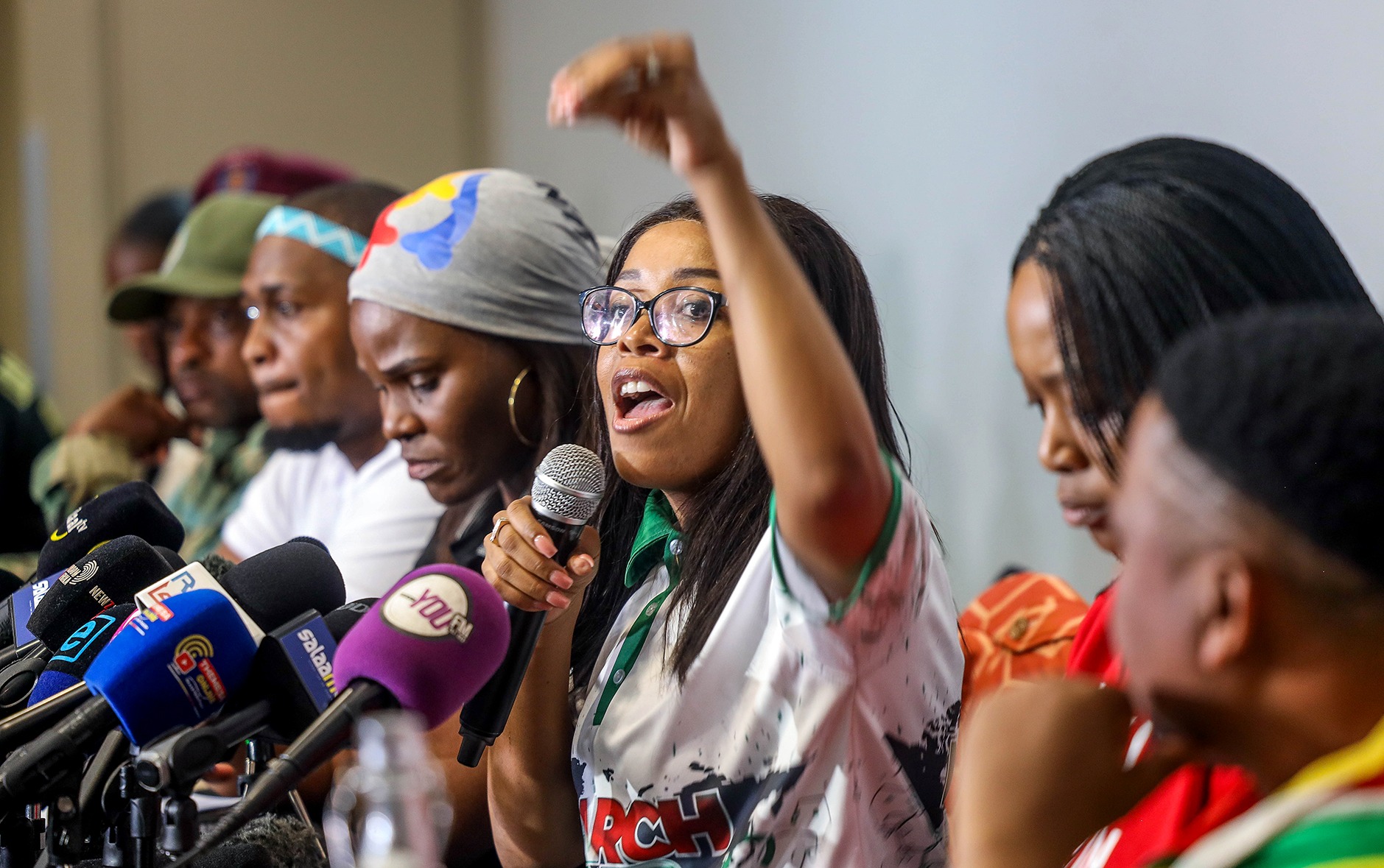
 March and March leader Jacinta Ngobese-Zuma (centre) and other members of anti-foreigner groups briefed the media on 24 June in Midrand ahead of protests against illegal migrants on 30 June. (Photo: Sharon Seretlo / Gallo Images)
“Whose responsibility is it to protect the country? Is it us? It’s definitely not our responsibility. You can’t place that on us,” said March and March leader Jacinta Ngobese-Zuma alongside 27 civic organisations at a press conference at the Protea Hotel in Midrand on Wednesday, 24 June.
The collective reiterated that 30 June is the deadline for undocumented migrants to “self-deport” and confirmed that applications had been made to obtain permits for countrywide demonstrations. The 30 June deadline has not been endorsed by the government.
/file/attachments/orphans/ED_613483_171241.jpg "March and March leader Jacinta Ngobese-Zuma and members of other groups during the press conference at the Protea Hotel on Wednesday, 24 June. (Photo: Sharon Seretlo / Gallo Images)")
The group, which included the Kwanele Foundation, South Africans for Constitutional Reform, the United Truck Drivers of South Africa, and Progressive Forces of South Africa, stated their demands for the government to tighten security at national borders, increase funding to the Border Management Association and Home Affairs, reserve the township economy for South Africans, and increase deportations of undocumented migrants.
They insisted that the movement is a peaceful one that rejects any form of violence and looting. However, the declaration rings hollow amid several reports of violence linked to anti-migration tensions. Earlier this month, hundreds of migrants fled their homes in an informal settlement in Mossel Bay after anti-migrant mobs destroyed 55 shacks. The SA Police Service confirmed that two Mozambican nationals were killed during the unrest.
In another incident, on 23 June, 1,700 Malawians fled their homes in KwaZulu-Natal after a mob allegedly beat a 29-year-old Malawian man to death in connection with the wave of anti-migration protests.
Videos showing migrants being harassed while trying to show their papers or assaulted by a mob in the presence of media personality Ngizwe Mchunu, who is affiliated with the March and March movement, have also been posted to social media. In it, Mchunu can be seen yelling, “Voetsek, kwerekwere, voetsek [Go away foreigners, go away]”, along with the crowd. (Warning: the content of the linked videos may be distressing for some readers.)
/file/attachments/orphans/ED_613480_193158.jpg "March and March leader Jacinta Ngobese-Zuma addresses the media on 24 June. (Photo: Sharon Seretlo / Gallo Images)")
/file/attachments/orphans/ED_613487_142729.jpg "The media and civil organisation representatives at the Protea Hotel on 24 June. (Photo: Sharon Seretlo / Gallo Images)")
Ngobese-Zuma said that while they would take precautions to prevent violence on 30 June, it was ultimately the responsibility of the police to ensure the law was followed.
“If the government is going to be spending R600-million, then it must work for it. They must show us that they can be able to protect the country,” said Ngobese-Zuma.
“If anyone wants to point a finger at someone who must take responsibility, start with those who allowed illegal immigration in the first place. Those are the ones who must take responsibility for anything that happens on the 30th. Don’t point the finger at us. We’ve done our due diligence. If there’s anyone who must shoulder any blame for the 30th, it’s the government.”
R600m policing operation
One of the issues that came up repeatedly during the presser was the reported R600-million budget set aside for the 30 June demonstrations, with the collective insisting the money would be better spent on deportations. This amount was confirmed earlier this week by Acting Police Minister Firoz Cachalia, who said the SAPS would be out “in full force” and no police officer would be allowed to take leave.
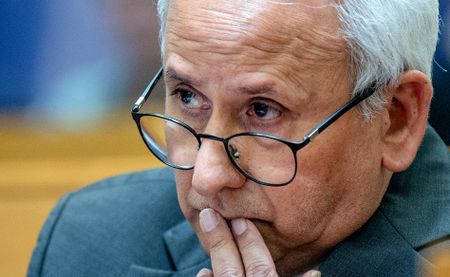
On Wednesday, Cachalia confirmed that the SAPS would collaborate with private security companies to increase manpower and prevent a repeat of the July 2021 unrest that left dozens of businesses looted and more than 300 people dead.
“I want to assure all South Africans that the SAPS, working closely with other law enforcement agencies, including the metro and private security, are fully prepared for the planned demonstrations on 30 June,” said Cachalia.
“Operational plans have been finalised. Resources have been mobilised. Communications channels between SAPS, Psira [Private Security Industry Regulatory Authority], private security companies, and other stakeholders have been strengthened.
“We will protect lawful and peaceful demonstrations as provided for in our Constitution. At the same time, we will act decisively against any group or individual that seeks to engage in criminal conduct.”
/file/attachments/orphans/ED_5853321_438894.jpg "Acting Police Minister Firoz Cachalia says that the police are ready for the 30 June 2026 anti-foreigner protests. (Photo: Brenton Geach / Gallo Images)")
Pressure is mounting on the South African government to respond to the wave of anti-migration protests across the country.
The Siyafana Sonke Action Campaign, a broad coalition representing 160 civil society organisations, has called for an urgent meeting with the Presidency to demand the immediate cessation of violence and displacement, the provision of humanitarian aid to affected communities, and the arrest of March and March and Operation Dudula leaders for inciting violence, including former Operation Dudula leader and current member of ActionSA Zandile Dabula, Ngobese-Zuma, Nkosikhona Ndabandaba (known as Phakel’umthakathi), and Mchunu.
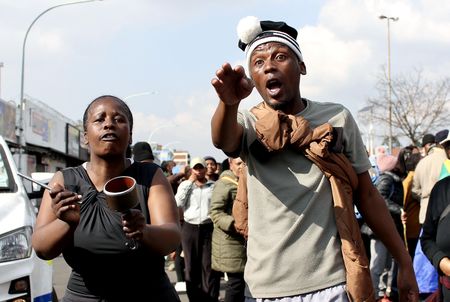
Meanwhile, the South African Human Rights Commission has warned of a “possible human rights crisis” as tensions continue to soar ahead of the 30 June deadline.
In May, Cachalia warned against South African citizens taking the law into their own hands by attempting to conduct citizen’s arrests.
“That’s the responsibility of the police, so there is no such thing as a citizen’s arrest. We cannot respond to lawlessness with lawlessness and create an environment of anarchy in the country. That’s not acceptable,” he said. DM
MIGRATION IN NUMBERS
Population
The Stats SA Report on Migration Statistics based on the 2022/23 Income and Expenditure Survey (IES) showed that the number of international migrants was 3.1 million, around 5.1% of South Africa’s total population. Around 56.2% of immigrants are male, and 43.8% are female.
Most immigrants come from SADC countries, which make up 63.4% of the immigrant population. About 25.4% came from the rest of Africa, and 11.4% came from outside Africa. Gauteng has the highest population of immigrants at 51.2%, followed by Western Cape at 13.3%, and KwaZulu-Natal at 7%.
Basic education
According to the Department of Basic Education, in 2025, there were 253,618 foreign-born schoolchildren and 3,240 foreign-born school teachers in South Africa. The total number of children recorded on the Learner Unit Record Information and Tracking System for the year was 13,596,869, meaning foreign-born children represented just 1.87% of total public school enrollment.
The IES 2022/2023 showed migrant children were less likely to be enrolled in educational programmes. About 52.1% of immigrant children were not enrolled in an early childhood development programme, compared to 32.9% of the South African-born population. Among immigrants, 23.4% did not attend educational institutions compared to just 5.3% of South Africans.
Higher education
In 2023, the total number of foreign students enrolled in higher education institutions was 39,843, representing 3.7% of the total enrolment, which stood at 1,071,715 according to statistics from the Department of Higher Education and Training (DHET). More than a third of international students were from Zimbabwe (35.5%), followed by Democratic Republic of the Congo (6.7%), and Namibia (6.06%).
There were slightly more international students enrolled in private higher education institutions — 15,965, representing 5.6% of total student enrolment.
In a parliamentary reply published in February 2026, the DHET confirmed that foreign staff made up 7.74% of the total post-school education workforce, according to 2024 figures. Approximately 82.89% of these staff members served as instructional or research professionals, while the remainder were in technical, support and administrative positions. Section 38 of the Immigration Act (Act 13 of 2002) prohibits institutions from hiring undocumented workers.
Employment
The most recent Stats SA data on immigrant employment rates is in its 2023 Migration Profile Report for South Africa. In 2022, the unemployment rate for immigrants in the third quarter was 18.2%, their labour force absorption was 64%, and their labour force participation rate was 78.3%. Immigrants made up 8.9% of the total workforce, up from 6% in the third quarter of 2012.
In comparison, the national unemployment rate for the same time period was 32.9%, the labour force absorption rate was 39.1%, and the labour force participation rate was 58.3%.
The majority of immigrant workers were working in private households (18.4%), followed by construction (17.2%) and retail (13.6%).
Prison population
Prisons in South Africa remain overcrowded. The national approved bed space in prisons is 107,346. Yet, in a September 2025 parliamentary reply to Build One South Africa, the department stated that the total prison population was 167,000, with 107,456 in total being sentenced and a further 59,887 awaiting sentences.
According to 2024 figures by the Department of Correctional Services, the population of sentenced and unsentenced foreign nationals in prisons was 18,000, approximately 11% of the incarcerated population. According to 2025 figures, foreign nationals made up 12.4% of the total sentenced prisoner population, equating to 12,676 people.
Spaza shop ownership
Exact figures on spaza shop owners are difficult to find owing to the number of unregistered shops. A 2023 study into spaza shop ownership demographics found that the majority of owners were Somali nationals, at 58%, followed by Ethiopian nationals at 25%. South Africans comprised just 8% of spaza shop owners.
Following widespread reports of contaminated food being sold in spaza shops, the Department of Cooperative Governance launched nationwide spaza shop registration campaigns. Between July 2024 and January 2025, municipalities nationwide received 82,924 spaza shop registration applications, of which 30,617 (approximately 37%) were submitted by foreign nationals. Out of the 15,528 applications approved during the period under review, 2,586 (17%) were granted to foreign nationals.
15 million illegal immigrants?
There are no reliable figures on the number of irregular or illegal immigrants residing in South Africa owing to difficulties in tracking irregular movement and collecting reliable data. However, several political parties, including ActionSA, have claimed that up to 15 million people are living in the country illegally. This was a misrepresentation of available data, which ActionSA leader Herman Mashaba has since publicly acknowledged.
The fact-checking organisation Africa Check has since debunked the claim, tracing its origin to 2018 data from the World Bank. However, this World Bank data looked at all people in South Africa who lack legal identity documents and includes South African citizens. The Department of Home Affairs has also distanced itself from the claim. DM
— By Naledi Mashishi
Comments
Scroll down to load comments...