




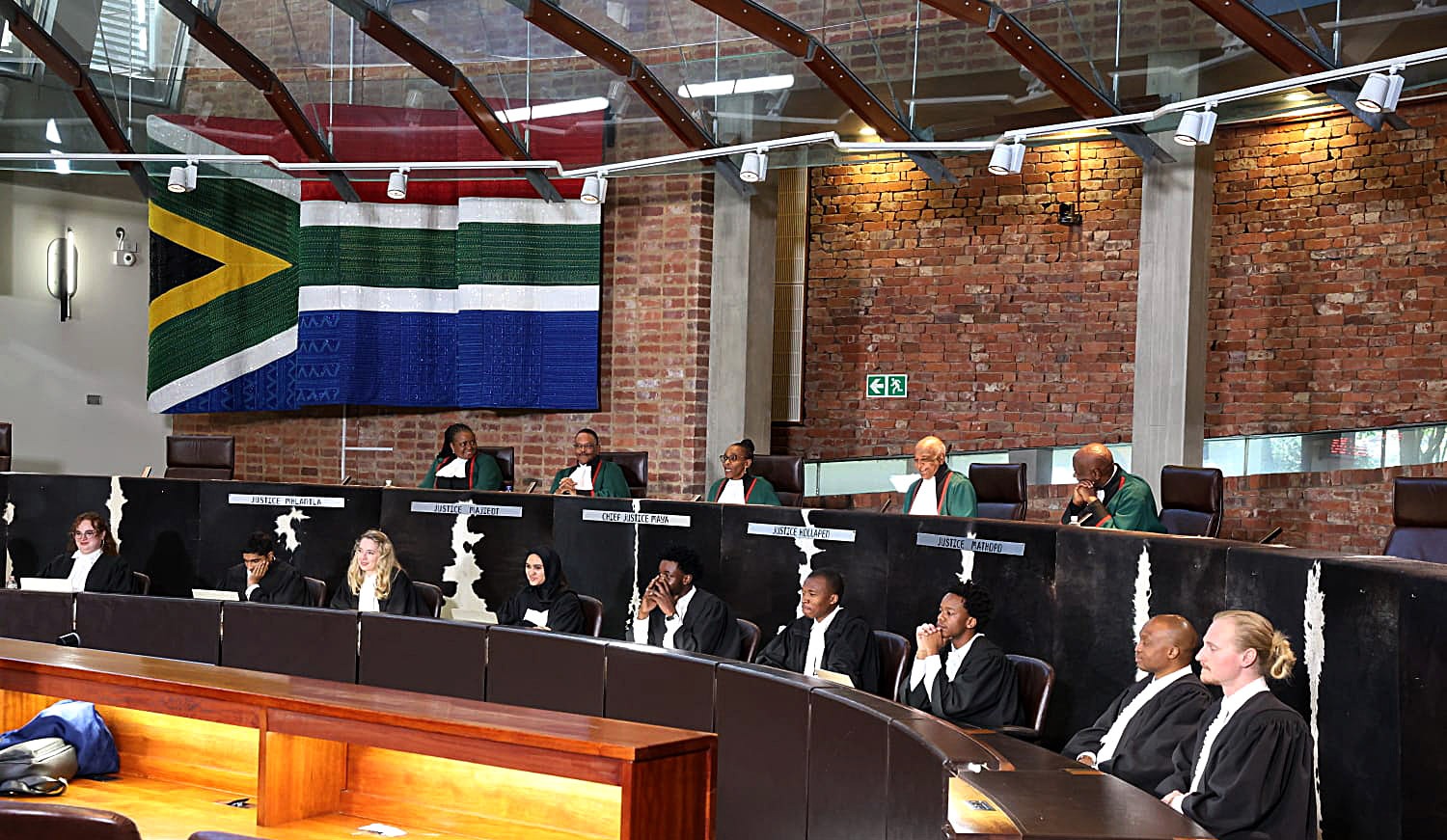
 South Africa’s apex court, the Constitutional Court, delivered a ruling on Tuesday that affirmed the rights of asylum seekers. (Photo: Luba Lesolle / Gallo Images)
 A landmark Constitutional Court judgment will ensure that asylum seekers and their children are no longer barred from lodging an asylum application or excluded from refugee status altogether because of procedural failures.
The judgment, handed down by Justice Steven Majiedt on Tuesday, 7 July, found that the current procedure outlined under the Refugees Act “does not pass constitutional muster”. Majiedt ruled that the Department of Home Affairs could not deny asylum seekers refugee status on the basis of procedural non-compliance and must consider applications on their merits.
The Act stipulated that asylum seekers must enter South Africa through a designated port of entry, where they will receive an asylum transit visa, valid for five days. Within that period, they must present themselves at one of the five designated Refugee Reception Offices (RROs).
If applicants failed to meet these conditions, they had to provide immigration officers with a valid reason and show “good cause” for lacking the required visa. If the officer was unsatisfied with the explanation, they could issue an adverse immigration status, preventing the individual from lodging an application or leading to an outright denial.
Furthermore, a child’s legal status was tied directly to that of their parents. Consequently, if parents were barred from applying for asylum, their children were excluded as well.

Systemic flaws and international law violations
The case was initiated by the Scalabrini Centre of Cape Town and supported by several organisations, including the Helen Suzman Foundation (HSF), Amnesty International, the Global Strategic Litigation Council for Refugee Rights, the International Detention Centre, and the United Nations High Commissioner for Refugee Rights.
The coalition argued that the law failed to provide officials with guidelines on what constitutes a “valid reason” or “good cause”. This lack of clarity led to inconsistent decision-making and caused applicants to be excluded without a merit-based assessment.
The organisations stated that this practice violates the international principle of non-refoulement, which prohibits states from returning asylum seekers to countries where they face “irreparable harm”, such as persecution, torture or serious human rights violations.
“The legislative scheme is further complicated by multiple, confusing and inconsistent thresholds, and these overlapping standards, governing essentially the same inquiry, provide no meaningful guidance as to their content or application,” the judgment reads.
/file/attachments/orphans/ED_614029_605418.jpg "Children play among luggage at the Epping Home Affairs Repatriation Centre in Cape Town on 29 June. (Photo: Brenton Geach / Gallo Images)")
Ruling ‘significant for children’
According to the United Nations Refugee Agency, South Africa currently hosts around 167,000 refugees and asylum seekers. This is significantly fewer than some other African host nations, including Uganda, which hosts more than 1.5 million refugees, Sudan (1.1 million), and Ethiopia (800,000).
Previously, any person who reported to an RRO could lodge an application and have that application assessed on its merit, regardless of how long they had been in the country. But this was changed when the Refugees Act was amended in 2020, allowing delays to be used as a reason to deny an application.
The situation worsened after the Covid-19 pandemic, which saw RROs across the country shut down during lockdown. By 2022, these offices had still not been reopened, leaving many asylum seekers shut out and struggling to access or use the online application systems. Long queues at RROs can further contribute to applicant delays.
/file/attachments/2994/GroundUp-immigrants-Musinamain_482160.jpeg "Immigrants wait outside the Department of Home Affairs offices in Musina on 2 July for repatriation processing. (Photo: Thembi Siaga)</p>
<p>")
A senior researcher at the HSF, Chanel van der Linde, told Daily Maverick that the foundation participated out of concern for what the legal provisions meant for the children of refugees. She added that the judgment was particularly significant for them.
“Previously, children could effectively be excluded from refugee protection because of the actions or omissions of their parents, despite having no control over those circumstances. As HSF argued before the court, this exposed children to a ‘double harm’ and they could be denied access to the asylum system because of conduct they were not responsible for and could subsequently face deportation without the merits of the asylum claim or their individual circumstances being properly considered,” she said.
“The judgment therefore means that children will no longer face exclusion from refugee protection as a result of their parents’ procedural non-compliance in entering South Africa or accessing the asylum system.”
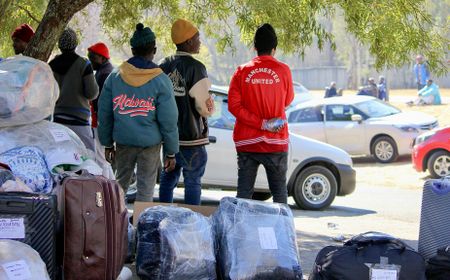
The apex court recognised that those fleeing conflict, persecution, and other humanitarian crises may face hurdles in obtaining the necessary documents or complying with procedural requirements.
“In addition, section 21(1B) is unconstitutional when considered with, and without, the now-invalid regulations as interpreted by this court’s previous jurisprudence. It forms part of a legislative framework preventing asylum seekers from entering the asylum process and obtaining a determination on the merits of their claims,” the judgment reads.
The Department of Home Affairs was ordered to pay costs for what Majiedt ruled was “exceptionally poor litigation” that relied on sweeping and unsupported statements about Afghan and Bangladeshi nationals’ involvement in human trafficking.
Daily Maverick asked the Department of Home Affairs for comment and will update this story if it is received. DM
Comments
Scroll down to load comments...