



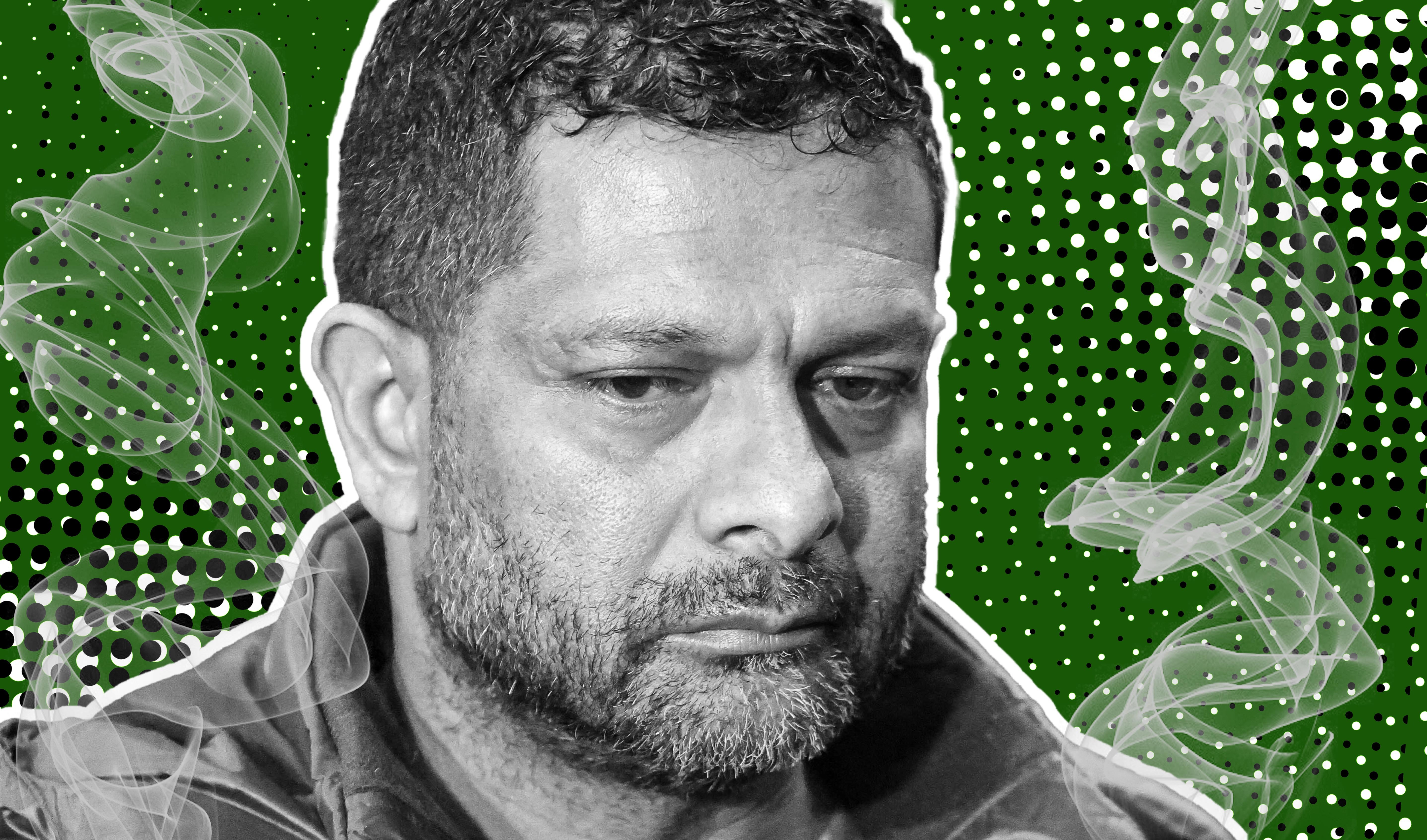
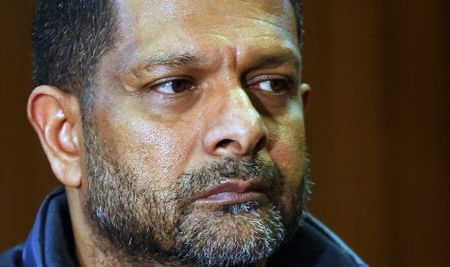
 Suspended Crime Intelligence officer Major General Feroz Khan. (Photo: Gallo Images / OJ Koloti)
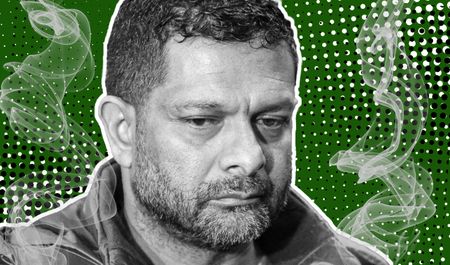
Suspended Crime Intelligence officer Major General Feroz Khan was due to appear before the Madlanga Commission on Tuesday, 1 September 2026, to answer a raft of allegations that have emerged during its hearings, but his testimony has repeatedly been delayed on medical grounds.
On Tuesday, the commission heard that he had been readmitted to a Johannesburg hospital over the weekend. His legal representative, Muhammed Vally, opposed the commission’s push for an independent medical assessment, arguing that subjecting Khan to another examination could worsen his condition.
Khan was injured in a shooting on 28 June 2026 in Johannesburg, days before he was expected to testify at the commission on 1 July.
After more than two hours of argument from evidence leader Adila Hassim SC and Vally, commission chair Justice Mbuyiseli Madlanga ruled that Khan’s medical condition may be disclosed, but that details of his diagnosis, treatment and family circumstances must remain private.
/file/attachments/orphans/ED_5995001_405754.jpg "Businessman Carrim Suliman testifies at Madlanga Commission Of Inquiry at Brigette Mabandla Judicial College on March 10, 2026 in Pretoria, South Africa. President Cyril Ramaphosa established the commission to investigate and report on the veracity, scope, and extent of the allegations made on 6 July 2025 by KwaZulu-Natal (KZN) Police Commissioner Lieutenant-General Nhlanhla Mkhwanazi that South Africa’s criminal justice system was compromised. (Photo: Gallo Images / Frennie Shivambu)")
Madlanga further ruled that Khan must appear before the inquiry on 28 September unless he voluntarily submits to an independent medical assessment and the medical specialist confirms that he is unable to testify. The chair drew on the approach adopted previously in the matter involving businessman Suliman Carrim, making clear that the commission would not forcibly subject Khan to a medical examination.
Questions for Khan
Khan’s medical battle with the commission is only the latest chapter in an inquiry in which his name has repeatedly surfaced.
His relationship with former Investigating Directorate Against Corruption (Idac) head Andrea Johnson has come under intense scrutiny, including the disclosure of intimate messages exchanged between the pair.
/file/attachments/orphans/ED_616665_848213.jpg "Former Independent Directorate Against Corruption Head Advocate Andrea Johnson testifies at the Madlanga Commission of Inquiry at Brigette Mabandla Judicial College on July 28, 2026 in Pretoria, South Africa. President Cyril Ramaphosa established the commission to investigate and report on the veracity, scope, and extent of the allegations made on 6 July 2025 by KwaZulu-Natal (KZN) Police Commissioner Lieutenant-General Nhlanhla Mkhwanazi that South Africa’s criminal justice system was compromised. (Photo: Gallo Images / Frennie Shivambu)")
Khan was also drawn into the commission’s examination of the R286-million cocaine consignment intercepted in Aeroton, Johannesburg, in 2021.
In May, Warrant Officer Steve Phakula gave contradictory evidence about the cocaine interception before revealing that stories had circulated within police circles alleging that the drugs belonged to none other than Khan.
Khan had previously faced internal disciplinary action over his presence at the cocaine interception, but was cleared.
His legal troubles did not end there.
In May 2026, Khan, Durban businessman Tariq Downes and Gauteng Hawks head Major General Ebrahim Kadwa were granted R20,000 bail each in the Kempton Park Magistrates’ Court after being arrested over charges including contraventions of the Precious Metals Act and defeating or obstructing the course of justice.
The charges stem from an incident on 5 May 2021, when Downes was allegedly found at OR Tambo International Airport in possession of 75.9 grams of unwrought gold, valued at about R62,836.
On Monday, 31 August, Khan failed in his urgent bid to overturn a disciplinary process that recommended his dismissal from the police. The Labour Court struck Khan’s application off the roll, with Judge Connie Prinsloo finding that the court had no jurisdiction to hear it and that Khan had, in any event, failed to establish any urgency.
When he testifies, Khan will also probably face questions over his links to Carnilinx tobacco manufacturer Mohammed “Mo” Sayed and his partner, Adriano Mazzotti.
Test or testify
While the Madlanga Commission postponed Khan’s testimony to 28 September 2026, it made clear that he would be expected to appear in person unless an independent medical specialist confirmed that he was unable to testify.
Under the ruling, Khan must voluntarily undergo an independent medical evaluation by a specialist agreed on by his legal representatives and the commission’s evidence leaders by 8 September.
The specialist must submit a medical report to the commission by 15 September, confirming whether Khan is medically unable to testify on 28 September.
If Khan’s legal team and the evidence leaders cannot agree on a specialist, the evaluation will instead be conducted by a medical professional nominated by the chairperson of the South African Society of Psychiatrists.
The ruling also requires Khan, subject to the independent medical report, to submit by 18 September a statement responding to Regulation 10(6) notices issued to him by the commission on 5 June and 5 August.
‘Eyes wide open’
Madlanga questioned Khan’s lawyer, Vally, over the medical evidence supporting his opposition to an independent assessment.
Madlanga asked Vally where Khan’s treating doctor had said that subjecting him to another medical examination would negatively affect his condition. Vally conceded that the doctor had not said this.
“That is our submission,” Vally said, explaining that it was based on his legal team’s interpretation of the expert report.
/file/attachments/orphans/ED_620165_957232.jpg "Justice Mbuyiseli Madlanga at the Madlanga Commission of Inquiry at Brigette Mabandla Judicial College on August 24, 2026 in Pretoria, South Africa. President Cyril Ramaphosa established the commission to investigate and report on the veracity, scope, and extent of the allegations made on 6 July 2025 by KwaZulu-Natal (KZN) Police Commissioner Lieutenant-General Nhlanhla Mkhwanazi that South Africa’s criminal justice system was compromised. (Photo: Gallo Images / Frennie Shivambu)")
The doctor had found Khan medically unfit for activities requiring prolonged periods in public spaces, including appearing before the commission. Vally argued that the report indicated the probable consequences if Khan were forced to testify.
Commissioner Sesi Baloyi SC pushed back, saying the report did not support the proposition that an independent assessment would harm Khan.
“Why must we accept a submission from you that requiring Khan to participate in an independent assessment would have negative consequences on him?” Baloyi asked.
/file/attachments/orphans/ED_619884_820100.jpg "Sesi Baloyi SC at the Madlanga Commission of Inquiry.(Photo: Gallo Images / Frennie Shivambu)")
Vally said there was a trigger-and-response relationship and that appearing before the commission was one such trigger. Baloyi interrupted – the issue was not Khan appearing before the commission, but why he should not undergo an independent medical assessment.
Madlanga then questioned why Khan’s postponement application had not addressed the possibility of an independent assessment, particularly since Vally knew about the commission’s earlier ruling in the Suliman Carrim matter.
The chair said the commission could not now be expected to wait for Khan’s doctors to supplement the application.
“If this debate leads to that kind of ruling, we will make that ruling without giving General Khan another opportunity to supplement his papers,” Madlanga said.
“He made his application with his eyes wide open,” Madlanga remarked.
Vally corrected him, saying Khan had not made the application; he had deposed to the affidavit on his client’s behalf.
Vally maintained that the objective was not to keep Khan away from the commission, but to ensure he had the best possible opportunity to testify when medically fit.
Madlanga was unconvinced.
“I don’t see how that meets the very direct point” about introducing another doctor, he said.
The backdating question
The commission also scrutinised Khan’s medical certificates, which led to a crucial question: where did SAPS instruct Khan or his doctor to backdate the documents?
While Khan was shot on 28 June, he had initially been booked on leave from 18 May, although there was no clear reason he’d taken sick leave in May. In August, Khan’s doctor backdated his sick note to cover that period.
Vally argued that SAPS had required changes to the sick notes because they lacked end dates and diagnoses. He referred to correspondence with Khan’s personal assistant and SAPS.
Another piece of correspondence, dated 27 July 2026, stated that SAPS had received Khan’s incapacity application, but required further information and that the sick note had to be redone.
“Where does it say it must be backdated?” commissioner Sandile Khumalo SC asked.
He pressed Vally further: where, in the July correspondence, was there any instruction to put a date from May 2026 on a document?
After repeated questioning, Vally conceded that the SAPS request did not say the medical certificate had to be backdated.
Khumalo illustrated the problem by putting a hypothetical scenario to the commission.
A doctor could prepare a report in August stating that he had seen the patient in May and provide the relevant medical details. But, Khumalo argued, if an August report was then backdated and made to appear as though it had been issued on 18 May, that would create an entirely different problem.
“Once you backdated an August report and put the date of 18 May 2026, that is a problem,” Khumalo said. DM
What next?
The commission continues on Wednesday, but will be in recess from 3-11 September to ensure two commissioners honour commitments they made when the inquiry was meant to wrap up its work by 31 August. It now has a final report deadline of 16 November.
Comments
Scroll down to load comments...