



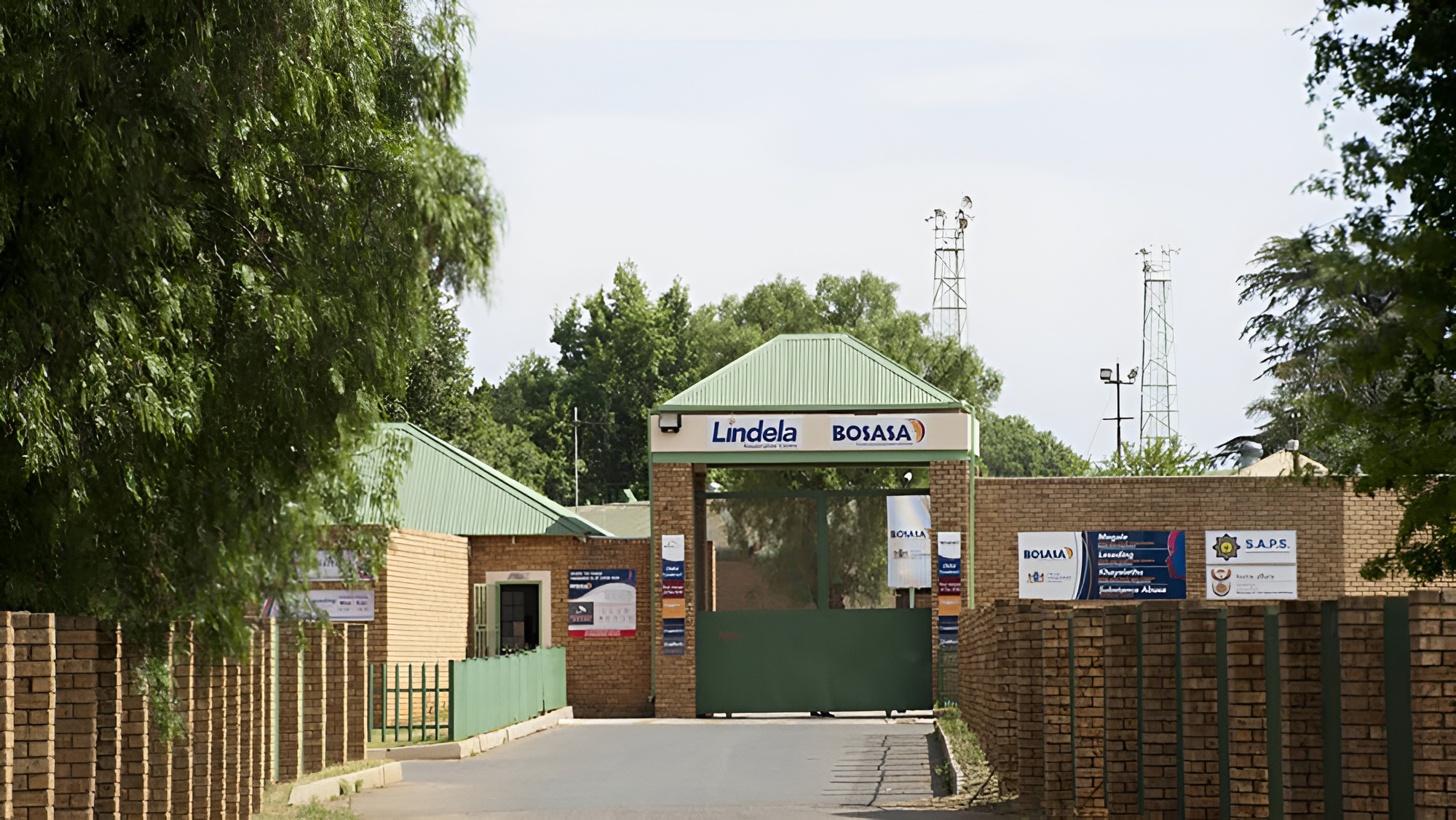
 The Lindela Repatriation Centre outside Krugersdorp. (Photo: Supplied)
 The humanitarian consequences of South Africa’s recent anti-foreigner unrest are becoming increasingly visible as repatriation facilities struggle to cope with the growing number of foreign nationals seeking to return home.
Weeks of demonstrations, intimidation and vigilante activity have displaced thousands of people. At the same time, many businesses have been forced to close, and reports of threats, assaults and looting have emerged from communities across the country.
Thousands of foreign nationals continue to flee their homes, citing intimidation, threats and fears for their safety. Among the nationwide repatriation efforts under way following the recent unrest, Malawian nationals have been transferred from the Malawi Consulate in Woodmead to the Lindela Repatriation Centre in Krugersdorp, then to the Musina Temporary Repatriation Centre in Limpopo for onward travel across the border.
Malawian national Mary Banda*, who had been living in the Slovo Park informal settlement in Johannesburg since 2017, is among hundreds of foreign nationals who have recently fled SA amid recent unrest.
Reports from Lindela
Banda was transferred from the consulate to the repatriation centre on 7 July. Community volunteer Caroline Bauthier, who has been involved in humanitarian relief efforts at the consulate for weeks, received a frantic call hours after Banda’s bus departed from the consulate. Banda called seeking assistance getting out of Lindela, stating that she wished to return to the consulate.
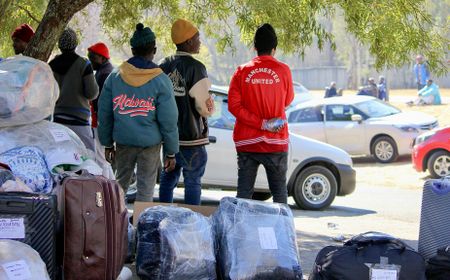
/file/attachments/orphans/2283590373_138444.jpg "Malawian nationals wait outside the Malawian Consulate on 27 June 2026 in Johannesburg. (Photo: Per-Anders Pettersson / Getty Images)")
Daily Maverick reached Banda telephonically the following day. She said she was being held with a large group of Malawian women, some of whom had young children, who were awaiting repatriation. Banda complained of hunger and said the group was receiving insufficient food. She also said several repatriates were suffering from gastroenteritis.
The media is currently not permitted access to the Lindela Repatriation Centre. Last week, Daily Maverick spoke to three men at the facility, who said they were there to visit a friend. Their friend was an Ethiopian national who had been at the centre for roughly three months after allegedly being found without valid documentation to be in SA.
The three men carried several bags of groceries, including bread, food, amasi and cold drinks. It was not their first visit. They said visitors were required to present identification, undergo a frisk search and have all items inspected before entering. Certain goods, including canned food, were not permitted. Visitors were not permitted to enter with a cellphone. Security guards monitored visits that took place through a fenced barrier.
Daily Maverick later received confirmation that those seeking voluntary repatriation following the recent unrest were being kept separate from immigration detainees. It is understood that repatriates were not allowed visitors or permitted to receive food brought to the facility on their behalf.
Banda said disputes had broken out among some Malawian nationals over limited resources, including food. Her account was consistent with reports describing hunger and a facility that appeared under-resourced and under strain, rather than intentionally punitive.
After three days at Lindela, Banda’s journey home continued. She was among a group of repatriates who returned to Malawi on Sunday night.
“I don’t have a house here, so I am not happy,” she said.
Banda, who used to work as a hairdresser in Crosby, told Daily Maverick that she had previously entered SA using a valid passport, which she recently lost. She also admitted that she had previously used “fake asylum”, understood to refer either to asylum applications based on fabricated claims or to fraudulent asylum documents produced and sold through syndicates involving corrupt officials.
“They, [the vigilantes], said all Malawians must go home. That’s why I ran,” Banda said, adding that she struggled to access basic necessities such as food while trying to return home.
“They said that if I don’t go home, they will burn my house,” she explained, recounting the recent experiences that prompted her to leave SA.
Home Affairs responds
The Department of Home Affairs confirmed that two buses carrying Malawian nationals seeking repatriation assistance were turned away from Lindela on Monday, 6 July, because the centre was too full.
“No prior arrangements were made with the facility by the Malawian Embassy. The admissions to the Lindela Repatriation Centre take place during working hours, and no police officers or immigration officers were available until the following day.
“Furthermore, the Malawian embassy was not involved to confirm the nationality of those transported to the centre,” the department’s chief director of communications, Ndileka Cola, told Daily Maverick.
Despite reports of poor conditions, the department said that Lindela was well managed.
“It offers all necessary amenities for persons in its care, contributing to the wellbeing, dignity, and humane treatment of individuals,” said Cola, adding that the centre was also subject to significant oversight from human rights organisations that ensured transparency, accountability and ongoing evaluation of the facility’s practices.
Growing humanitarian crisis
While some undocumented migrants have chosen to return voluntarily, others fleeing include refugees and documented foreign nationals who say they no longer feel safe in SA.
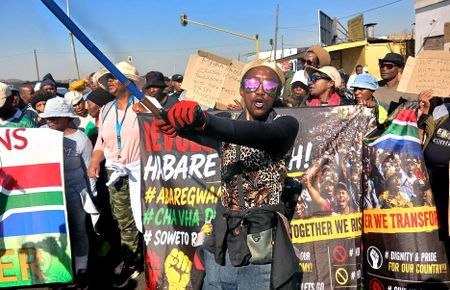
This follows anti-foreigner demonstrations and vigilante activity around the country, with groups including March and March vowing to continue demonstrations every Thursday after their self-imposed 30 June deadline for foreign nationals to leave SA.
Daily Maverick visited the Malawian Consulate last week, where hundreds of Malawian nationals had gathered seeking assistance with repatriation. Community volunteers and activists described poor coordination between South African and Malawian authorities, leaving many people uncertain about transport arrangements and the repatriation process.
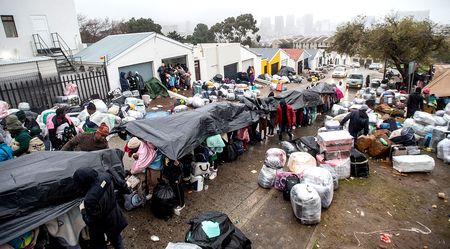
Director of the think tank Rivonia Circle, Tessa Dooms, who was helping with the relief effort, also alleged that support from some local government structures had been limited despite repeated requests for assistance. The Malawian Consulate reportedly remained closed for much of the recent unrest, forcing many repatriates to sleep outside the premises while awaiting assistance.
Bauthier said that hundreds of foreign nationals continued to arrive at the consulate seeking assistance. She was informed that the consulate could expect roughly six buses with 75 foreign nationals from Cape Town, Parys and Vereeniging to arrive in the late afternoon on Monday, 13 July. Among the group were several pregnant women.
/file/attachments/orphans/ED_613915_406867.jpg "Malawian nationals outside the Malawian Consulate seeking repatriation on 29 June in Johannesburg, South Africa. (Photo: Gallo Images / Sharon Seretlo)")
Another volunteer raised concerns about the growing number of foreign nationals heading toward the consulate in a WhatsApp exchange with Bauthier.
“Another 500 people will be pretty catastrophic here. People already here haven’t eaten and are pretty irritable... if food arrives that can only feed 500, and there are 1,000 here, there may honestly be a riot,” read the text.
Bauthier told Daily Maverick that nine buses organised by the SA Council of Churches left the consulate on Sunday evening, 12 July.
“We still had close to 400 overnight in the cold, and people are streaming in. Now all these people from Cape Town, Parys, etc. were sent to Woodmead. It has become utter chaos. I have been there for two weeks, often only going home for two to four hours,” she said.
Bauthier also claimed that there were a group of refugees, mainly from Democratic Republic of Congo, who had been stuck in Lindela since 2019.
“Some fear for their lives. Some of them were attacked in the xenophobic uprising in 2018. As they have refugee status, they are allowed out of Lindela during the day… so they are not prisoners. They are the forgotten people,” said Bauthier.
Health concerns at Musina
While many migrants have been bused from Johannesburg and other parts of the country to the Musina Temporary Repatriation Centre, near the border with Zimbabwe, relief organisations have continued to raise the alarm.
Médecins Sans Frontières (MSF) has joined groups such as Gift of the Givers to provide help to the thousands of migrants passing through the centre.
“As of today, MSF is the only medical humanitarian organisation treating patients in Musina as [the International Organization for Migration] is no longer running medical operations,” MSF’s Kate Stegeman told Daily Maverick on 13 July.
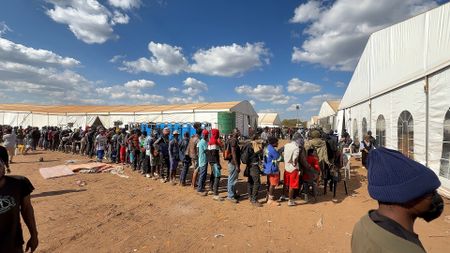
“The number of displaced people at the Musina site has clearly increased since this weekend, when it was in the hundreds. Today 4,000 people who arrived overnight have been registered, compared to other busy days last week, when the numbers were closer to 3,000.”
Stegeman said the processing time at the repatriation centre was approximately 24 hours, raising concerns over consulting patients, follow-up care and getting chronic medication to patients.
“We are seeing people with TB and HIV who have run out of medication. Very worryingly, some of them now have drug-resistant TB/HIV and have told MSF that they have not had access to those life-saving medications for a few months after they were turned away from clinics in SA because they are migrants.
“This is absolutely unacceptable and an issue that MSF has been very vocal about and resorted to taking legal action on last year.”
On Sunday, Justice and Constitutional Development Minister Mmamoloko Kubayi said the government was meeting its humanitarian obligations in line with the Constitution in regards to the Musina repatriation centre. DM
*Mary Banda is a pseudonym used to protect the source’s identity.
Additional reporting by Kyran Blaauw.