




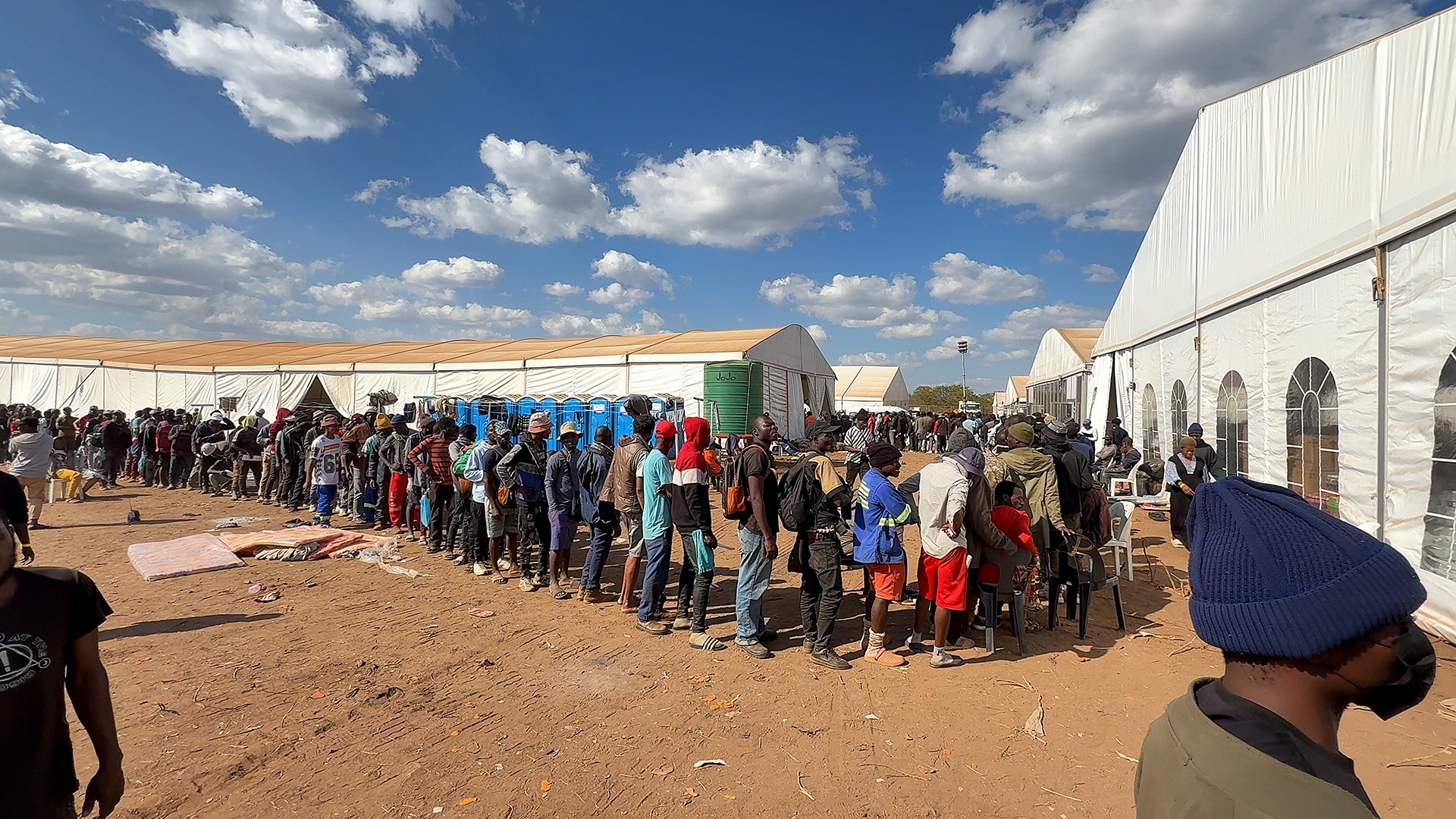
 Thousands of migrants queue for processing at the Musina Temporary Repatriation Centre. (Photo: Catherine White)
“Musina was a bad place. No food. No toilet. No water,” says Abrahim Kandulu, a Malawian national waiting to return home.
Before the temporary repatriation centre opened about 20km outside Musina on 1 July, Kandulu had been sleeping in the town with hundreds of other migrants who had little or no shelter.
“Here it is better. At least we sleep properly. Before, we slept sitting down. Most people were crying.”
Kandulu is one of thousands of migrants who have passed through the centre after weeks of anti-immigrant unrest.
/file/attachments/orphans/Image16_265837.jpg "Inside an accommodation tent at the Musina Temporary Repatriation Centre, designated for Zimbabwean women and children. The tent can accommodate up to 4,000 people. Families are separated by gender and nationality while awaiting processing and repatriation. (Photo: Catherine White)")
/file/attachments/orphans/Image321_736500.jpg "Buses never stop moving. Food queues continue to grow. Thousands of migrants wait outside the Musina Temporary Repatriation Centre, where many have spent days awaiting processing. (Photo: Catherine White)")
As temporary repatriation centres in other parts of the country closed, migrants from across South Africa were transported here. The facility, located just kilometres from the Beitbridge border with Zimbabwe, became the country’s central processing point, where immigration officials verified identities, took fingerprints and issued the documents required for people to leave South Africa.
Humanitarian organisations scramble to provide food, drinking water and other essentials to people who, in many cases, have lost almost everything.
No running water
Established on government-owned farmland, the temporary repatriation centre consists of large canvas tents erected on temporary flooring laid over the dusty ground. To streamline processing and onward travel, migrants are grouped by nationality, with separate tents designated for men, and women and children.
The site includes a small medical tent, portable toilets, JoJo water tanks and registration areas where immigration officials process each person before they are permitted to leave South Africa.
Although the centre provides shelter, there is no running water or shower facilities. People rely on JoJo tanks for washing, often bathing in the open, while humanitarian organisations supply drinking water. During Daily Maverick’s visit, the Zimbabwean tent for women and children was heavily overcrowded, with sanitation and waste management posing ongoing challenges.
/file/attachments/orphans/Image9_929619.jpg "Migrants collect water from JoJo tanks installed at the temporary repatriation centre. (Photo: Catherine White)")
/file/attachments/orphans/Image5_452100.jpg "A medical tent at the Musina Temporary Repatriation Centre, where healthcare workers assess migrants requiring treatment. (Photo: Catherine White)")
The consolidation of repatriation operations in Musina resulted in a surge of arrivals in the first few days after the camp opened. Aid organisations reported that the facility was under immense pressure as a steady stream of buses arrived from across the country, transferring migrants from recently closed shelters and repatriation sites.
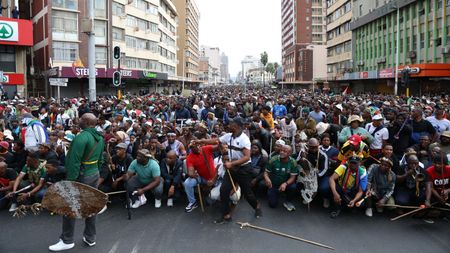
The temporary repatriation centre was established after weeks of heightened anti-immigrant tensions in South Africa. Community-led protests calling for the removal of undocumented foreign nationals, including demonstrations linked to groups such as March and March, coincided with reports of intimidation, attacks and the looting of foreign-owned businesses.
Government officials repeatedly stated that immigration enforcement remains the responsibility of the state. President Cyril Ramaphosa said only authorised law enforcement officials may request a person’s identity or immigration documents, warning against individuals taking the law into their own hands.
At the same time, the Department of Home Affairs announced plans to recruit an additional 301 immigration officers, increasing its enforcement capacity by about 35%, as part of efforts to strengthen immigration control and border management.
‘Hoping to keep disease at bay’
Despite the efforts of humanitarian organisations, sanitation remained a major concern. Gift of the Givers’ programme manager Nithaam Bawa warned that overcrowding could create a public health emergency.
“The sanitation here is not great. You see these JoJo tanks all over the camp providing water. There’s no showers. Toilet facilities are hopelessly inadequate. We are providing soap and wipes and drinking water just hoping to keep disease at bay,” he said.
According to Bawa, the camp had reached what the organisation considered its maximum operating capacity during the initial surge of arrivals.
/file/attachments/orphans/Image71_867302.jpg "A woman washes her child inside a temporary shelter where families are staying while awaiting processing. (Photo: Catherine White)")
Although conditions had improved by Tuesday (one week after opening) as more buses departed and the volume of arrivals became more manageable, Bawa said the flow of people remained constant.
“We try to make them comfortable. We’ve given them soap, facecloths, baby wipes and diapers. That’s a very big need, just so they can clean themselves and their children.”
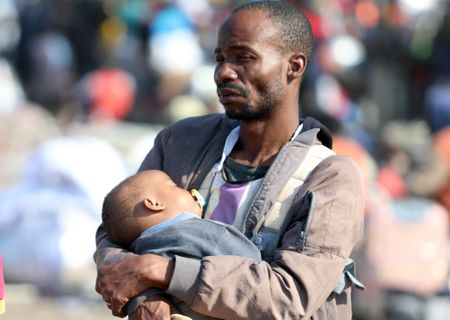
Among the humanitarian challenges confronting officials was the case of a three-month-old baby. Gift of the Givers said the Department of Health had asked for infant formula after the infant reportedly stopped feeding. The baby’s mother, who had recently been discharged from a psychiatric facility, was scheduled to return to Malawi.
The formula was delivered before departure. However, humanitarian workers questioned how it would be prepared safely during the journey, given the lack of access to hot water on the bus.
Relief effort
Throughout the day, the rhythm of the camp remained constant. As one bus departed for the Beitbridge border, another pulled in carrying men, women and children from repatriation centres and shelters across the country. Buses arrived throughout the day and into the early hours of the morning, some as late as 2am. Even then, someone would be in the aid tent to ensure those arriving would get something to eat.
Officials from the Department of Home Affairs worked alongside the Border Management Authority, the SAPS and health workers to process hundreds of people at a time. By late afternoon, many were visibly exhausted after hours spent registering arrivals, taking fingerprints and preparing buses for departure.
Humanitarian organisations had become an essential part of the operation. Gift of the Givers supplied cooked meals, drinking water and necessities to migrants waiting to return home, while also providing food and refreshments to frontline personnel, including SAPS officers and other officials working long shifts at the site.
/file/attachments/orphans/Image10_179148.jpg "Humanitarian organisations distribute food parcels to migrants at the temporary repatriation centre. (Photo: Catherine White)")
Gift of the Givers said it was serving about 25,000 meals a day. Medical teams from the Department of Health operated a small field clinic inside the camp, while organisations including Médecins Sans Frontières provided additional humanitarian support.
Bawa said the organisation would remain at the camp until the operation was complete. “We will be here until the very end,” he said.
‘I am suffering’
Before the temporary centre opened on 1 July, many migrants had been sleeping in Musina town, with no shelter.
Zimbabwean national Beauty Chidha, who travelled with her 18-month-old child, said she had spent days waiting to be processed before finally receiving the documents allowing her to return home.
She has since confirmed that the journey home was difficult.
“The journey home was not good because we were tired and our legs were painful,” she said.
While in SA, she said she looked forward to returning home.
“There it’s comfortable. You walk freely. You speak your language freely. Nobody questions you.”
/file/attachments/orphans/Image81_351153.jpg "Migrants wait with paperwork outside the processing tents before continuing through the repatriation process. (Photo: Catherine White)")
/file/attachments/orphans/Image11_109470.jpg "A road sign pointing to the Musina Temporary Repatriation Centre. (Photo: Catherine White)")
Among those waiting to leave South Africa was a Malawian man who said he had spent 16 days moving between four temporary shelters before arriving in Musina.
“I am suffering,” he told Daily Maverick, explaining that he had fallen ill during the journey.
His account reflected the uncertainty facing many migrants who had already spent days travelling across South Africa before reaching Musina, where some waited several more days to be processed before crossing the border.
He said he had developed a sore throat and was struggling to breathe. As dust swirled around the temporary camp, he said the conditions were making his illness harder to endure.
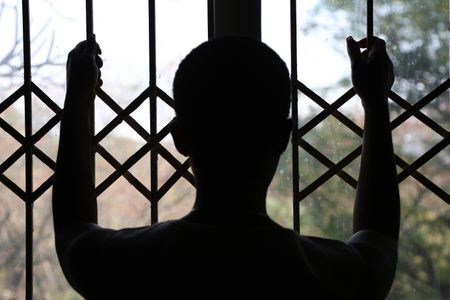
The vulnerability of those travelling was underscored when a Malawian national reportedly died on a bus before reaching the border after complaining of illness. Authorities said the man collapsed during the journey. DM
Catherine White is an independent investigative journalist and video correspondent specialising in cross-border investigations, migration, organised crime, governance and human rights. Her work combines in-depth reporting with visual storytelling from the field. The Gift of the Givers Foundation supported her travel to Musina.
Comments
Scroll down to load comments...