




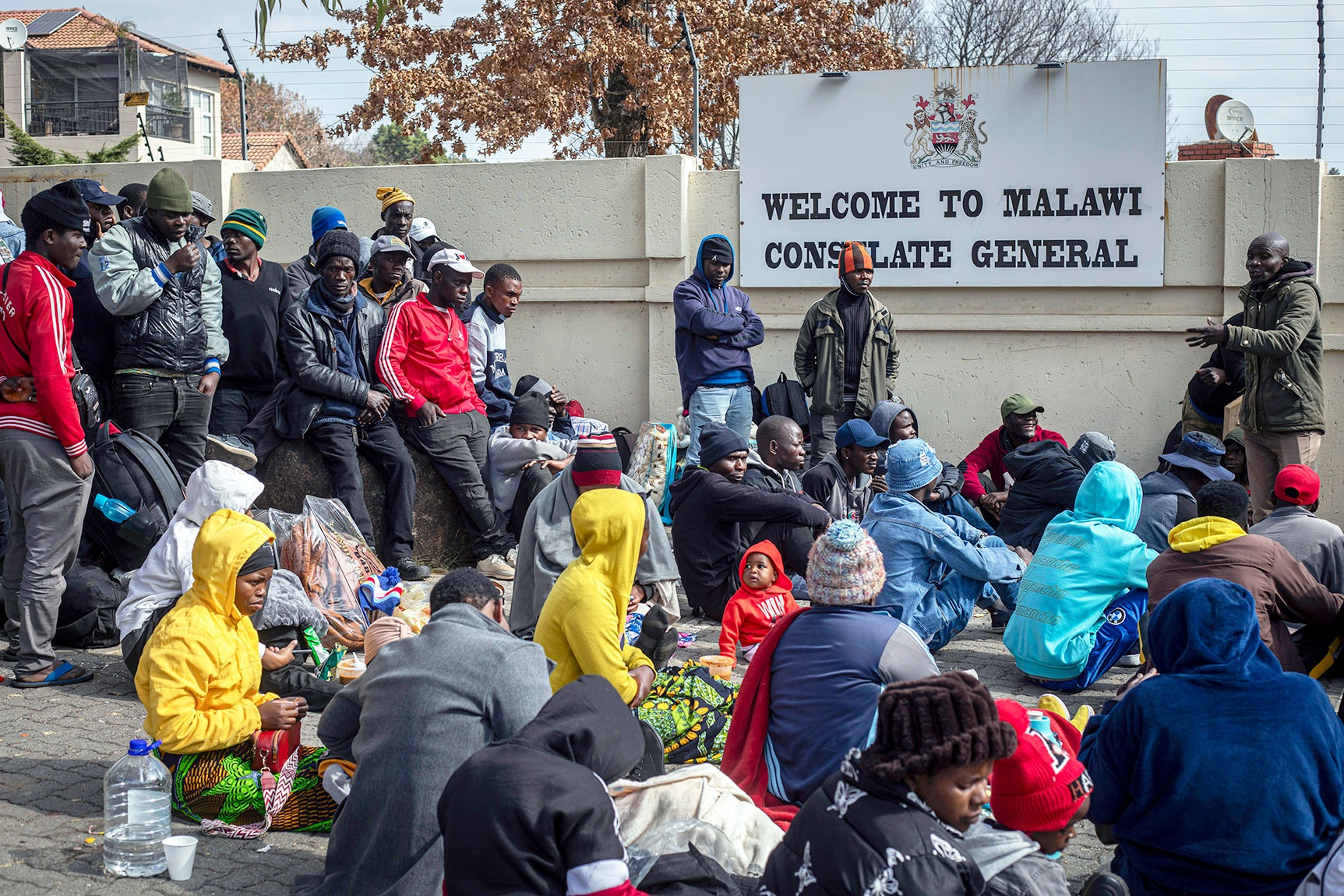
 Malawian nationals wait outside the Malawi Consulate General in Johannesburg on 27 June 2026 to escape a violent wave of xenophobia and secure emergency transport home. (Photo: Per-Anders Pettersson / Getty Images)
Médecins Sans Frontières (MSF) is concerned that foreign nationals displaced by the xenophobic unrest are finding it harder to access healthcare, medication and shelter.
The warning from MSF comes as the government says it is providing humanitarian assistance and continues to implement its migration management plan following weeks of heightened tensions over undocumented foreign nationals.
Briefing the media on Sunday, Justice and Constitutional Development Minister Mmamoloko Kubayi, who chairs the Inter-Ministerial Committee on Migration (IMC), acknowledged concerns about conditions at the Musina Temporary Repatriation Processing Centre, but insisted that government was meeting its humanitarian obligations in line with the Constitution.
“We have noted some concerns from various quarters regarding the humanitarian situation, especially at the Musina Temporary Repatriation Centre. The IMC emphasises that government’s approach is both firm and humane,” said Kubayi.
“Emergency relief remains a civil mandate, and the State has an obligation relating to the right to life, access to healthcare, food, water and social security, and the protection of children. We can confirm that this temporary transit arrangement does provide appropriate shelter, water, sanitation, food, dignity packs, security, child protection and coordinated transport support where required,” the minister said.
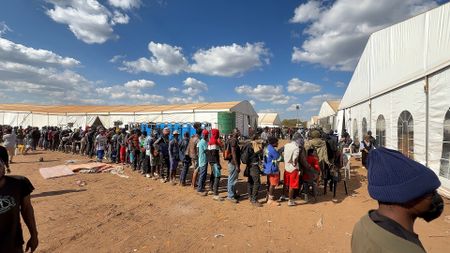
In Musina, MSF is “urgently scaling up operations to respond to the medical needs of people gathered close to the border”.
The international medical humanitarian organisation said it had launched an emergency response across Gauteng, KwaZulu-Natal, the Western Cape and the South Africa-Zimbabwe border after a surge in violence displaced migrants and disrupted essential health services.
“We are deeply saddened to see people fleeing harassment and violence, and we stand in solidarity with affected communities who have had their rights to health and dignity undermined,” said Claire Waterhouse, MSF’s emergency coordinator.
“Our priority is to address disrupted access to healthcare for those most at risk, regardless of who they are or where they come from. It’s not over; we are very concerned that this situation is escalating into a humanitarian crisis.”
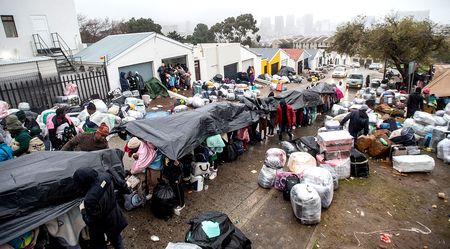
People had sought refuge in parks, churches, foreign consulates and other temporary locations after anti-migration groups issued a public ultimatum demanding that undocumented migrants leave South Africa by 30 June, MSF said.
‘Threats, intimidation and violence’
Although organisers said they were targeting undocumented migrants, MSF said many of its patients who were refugees, asylum seekers and documented migrants had also reported threats, intimidation and violence.
MSF said one of its biggest concerns was the interruption of treatment for people living with chronic illnesses.
“MSF is particularly concerned about continuity of care for people living with chronic diseases such as diabetes, hypertension, mental health, HIV and TB where lack of treatment or medication interruptions can lead to serious health complications,” said MSF nurse Phumla Tsotetsi.
“Additionally, we are prioritising the immediate needs of young children, pregnant women and survivors of violence. We have also treated women who have recently given birth, some with C-section wounds from a few days before the protests, that have yet to heal.”
Immigration courts fast-track deportations
Kubayi said dedicated immigration courts at Sherwood in KwaZulu-Natal had been established to speed up the processing of deportation cases.
She said seven courts had been set up in eThekwini, while an additional virtual court linked to Sherwood was also processing deportation matters.
Between 1 June 2026 and 9 July 2026, KwaZulu-Natal courts finalised 2,640 immigration cases for deportation, with the dedicated eThekwini courts accounting for 2,173 of those cases.
She said the re-establishment of a court at the Lindela Repatriation Centre would further accelerate deportations. Work to provide additional office space for the court was at an advanced stage and was expected to be completed within a month.
Kubayi said plans to establish another court to deal with immigration matters, among other cases, at an airport were also progressing. The Airports Company South Africa (Acsa) had made space available, and the court was expected to be operational within three months.
“Government commends communities that exercised their constitutional rights peacefully, while reminding all members of the public that freedom of expression and assembly must always be exercised within the law and must never be used to promote violence, discrimination or hatred.
“The IMC urges the public to report criminal activity, threats, intimidation, extortion, incitement or attacks on the law enforcement authorities and to refrain from sharing unverified information that may fuel fear or tension,” Kubayi said.
Man wanted in UK for
triple murder to face extradition
Kubayi confirmed that Mkanyisi Ndodana Tshuma, wanted by British authorities in connection with the alleged murder of his wife and two children, will face extradition to the United Kingdom after she signed the extradition request.
The minister said Tshuma arrived at OR Tambo International Airport from the UK on 5 July 2026.
“He arrived according to our movement control system at OR Tambo International Airport on 5 July 2026 from Britain. Once we … received the alert from Interpol, we acted swiftly from a multi-disciplinary team conducting tracing and the suspect was arrested in Kensington, Johannesburg. At the time he went through OR Tambo, he had not been flagged by British authorities. He will be extradited to the UK once I have signed off on the extradition request,” Kubayi said.
Police confirmed on Friday that Tshuma had been arrested in Kensington during an operation involving the SAPS Interpol National Central Bureau, Crime Intelligence and the Organised Crime Investigation Unit.
“This arrest demonstrates that South Africa is not a safe haven for fugitives. Anyone who believes they can evade justice by fleeing to our country should know that SAPS will work tirelessly with international law enforcement partners to trace, locate and arrest them,” said acting National Police Commissioner Puleng Dimpane. DM
Comments
Scroll down to load comments...