



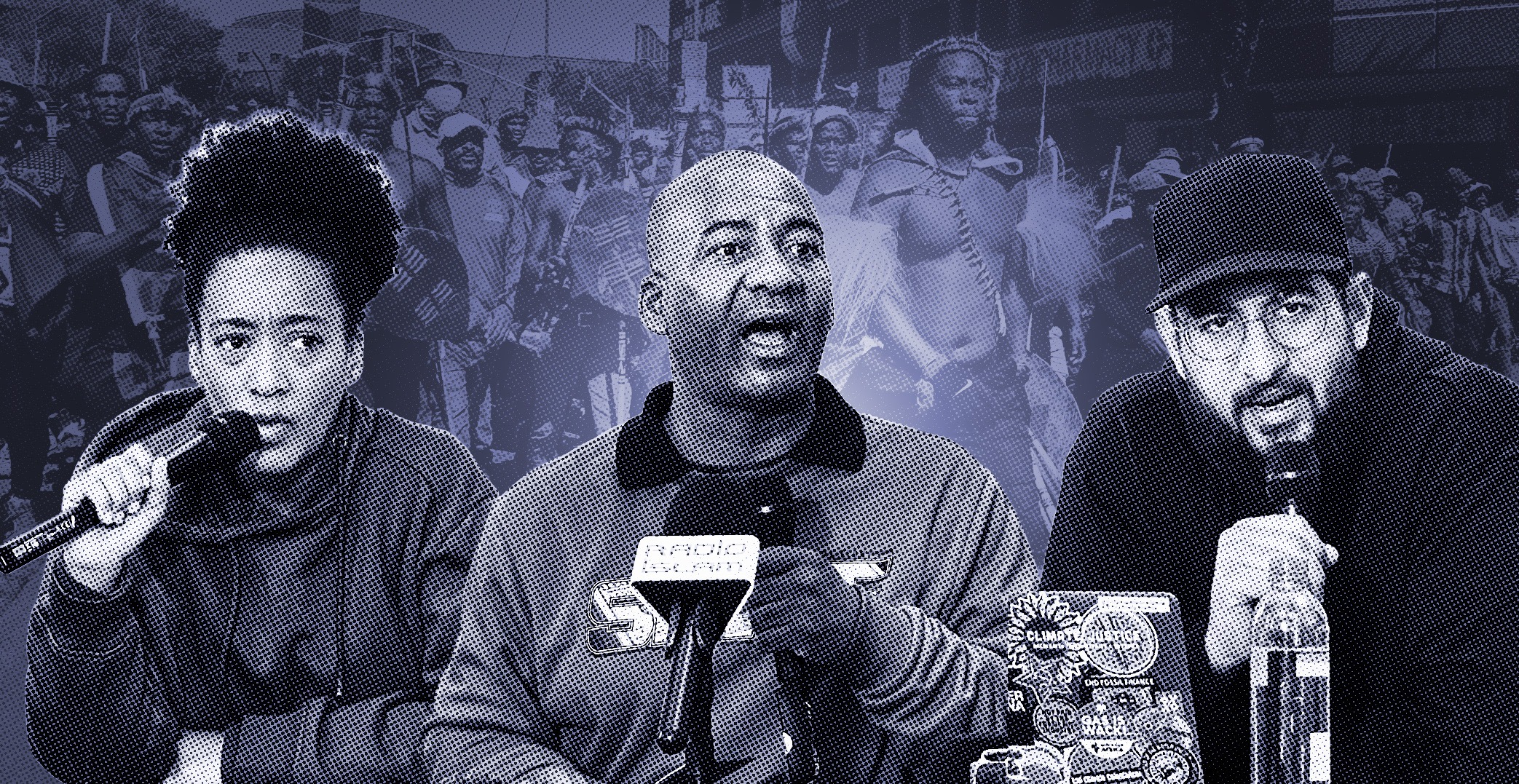
 Illustrative image | A march against illegal immigration. (Photo: Luba Lesolle / Gallo Images) | Tessa Dooms from Siyafana Sonke. (Photo: Naledi Mashishi) | President of General Industries Workers Union of South Africa Mametlwe Sebei. (Photo: Naledi Mashishi) | Zaki Mamdoo from the Workers and Socialist Party. (Photo: Naledi Mashishi)
An increasing number of South Africans are rejecting the call for undocumented migrants to leave the country by 30 June and speaking out against xenophobia, Afrophobia and tribalism. Civil society organisations, academics, religious leaders, traditional leaders and grassroots organisations are calling for calm ahead of Tuesday, 30 June, when mass demonstrations are expected to take place across the country against illegal immigration.
At Constitutional Hill on Monday, 29 June, Siyafana Sonke, a coalition representing 160 organisations, including civil society organisations and trade unions, called on the government to recognise the growing tide of anti-migrant sentiment and violence as a humanitarian crisis. The coalition urged South Africans to direct their anger over the unemployment crisis, inequality and service delivery failures at the government rather than at migrants, and for community organisers to advocate for peace.
“We are saying that this cannot go on,” said Mametlwe Sebei, the president of the General Industries Workers Union of South Africa (Giwusa).
“We cannot have a situation where people are being assaulted, people are being killed. The state has a responsibility to make sure that every single person in this country — migrant or South African, documented or not — they are safeguarded.”
/file/dailymaverick/wp-content/uploads/2025/01/20V5486.jpg "Mametlwe Sebei addresses community members at the entrance to the Stilfontein mine on 14 January 2025. (Photo: Felix Dlangamandla)")
Targeted harassment
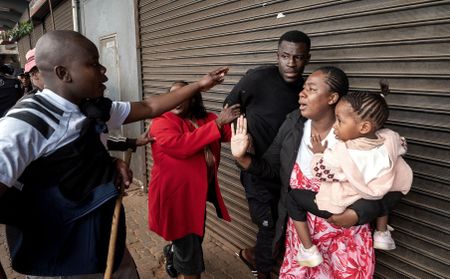
The coalition referred to reports of migrants facing targeted harassment, including being dispossessed of their homes and businesses, ahead of Tuesday’s so-called deadline for undocumented migrants to leave the country, which was imposed by anti-immigrant groups, including March and March, and not endorsed by the government.
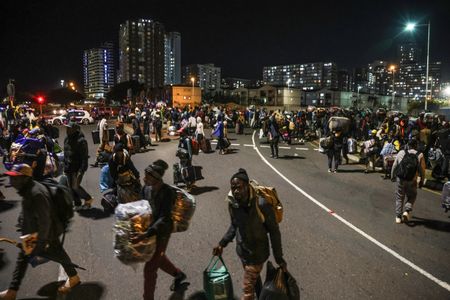
In the weeks leading up to the deadline, thousands of migrants have been displaced, and at least two Mozambican men and one Malawian man have been killed. Although March and March has officially condemned any violence and unlawful actions, Sebei argues that they are using “coded language” to mask that their political ends cannot be achieved without violence.
“One thing that is very clear is that most likely tomorrow in the demonstrations, you’re not likely to see that violence in the official demonstration. What you are not likely to see is what happens in townships, in villages, after the official demonstration,” he said.
“You see, what March and March leaders say is, after the march, their people should go into their communities and enforce the law. That is a coded language. They know what they are doing because they know that without that violence, they cannot achieve anything.”
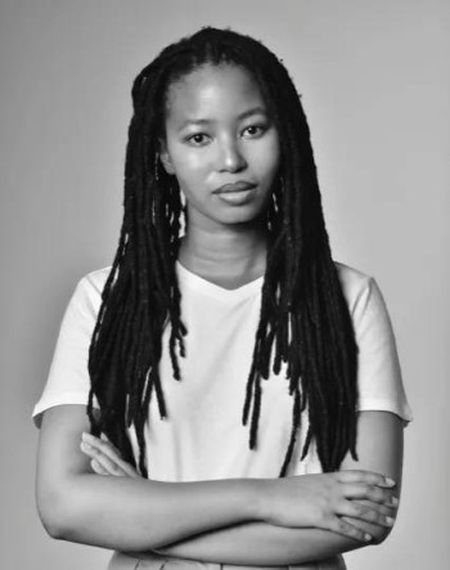
Tessa Dooms, director of the think tank Rivonia Circle, said her team visited areas where displaced migrants are sheltering and received widespread reports of threats and intimidation. Some displaced women have been forced to give birth on pavements.
Outside the Malawian consulate in Johannesburg, where nearly 400 people hoping to be repatriated are sleeping rough, the organisation counted at least 55 young children. Dooms added that hostile groups have been gathering to harass the displaced, in one instance congregating at 3am outside a shelter housing mostly women and children.
She said that people were latching onto the anti-migration protests to get their voices heard.
/file/dailymaverick/wp-content/uploads/2023/05/Tessa-Dooms.jpg "Tessa Dooms, director of Rivonia Circle. (Photo: Supplied)")
“The fact that they are getting government attention, they are getting the media’s attention, makes them a platform for people and their issues. And so where the government listens, that’s where people go to be heard,” she said.
The coalition is demanding that the government take stronger intervention and hold the leaders of anti-migration movements accountable, and for sustainable, non-violent solutions to unemployment, service delivery crises and crime.
Church leaders speak out
Leaders from the South African Council of Churches have called for South Africans to refrain from violence during demonstrations on Tuesday, 30 June.
In a statement published on 29 June, the council stated that while there is legitimate anger around high unemployment, crime and poor service delivery, migrants should not be the targets.
“We urge our communities not to direct their anger towards those who are themselves vulnerable. Violence against migrants will not create jobs. Intimidation will not restore public services. Hatred will not make our communities safer,” the statement reads.
The council affirmed that churches remain a refuge for those displaced. However, Dooms warned that an increasing number of churches and schools had told her organisation that they fear they will be targeted by anti-migrant groups if they shelter displaced migrants. Meanwhile, Home Affairs has been overwhelmed by the volume of people trying to be repatriated.
“I have spoken to Home Affairs officials in the last seven days and realised that they are overwhelmed. On a normal day, Lindela [a repatriation centre in Krugersdorp, west of Johannesburg] has 3,000 people at it. And those are detainees. So when you start seeing tens of thousands of people, Home Affairs is never going to do this,” she said, calling on the Department of International Relations and Cooperation to put pressure on embassies to assist with repatriation efforts.
Professors and traditional leaders call for calm
A group of social science professors from Wits University have added their voices to the calls for calm. They argue that the current situation is a result of longstanding unresolved political and economic problems and a reflection of growing global sentiment against migration.
“We also recognise that the rise in anti-immigrant sentiment is part of the global rise of a particular kind of politics that is racist, anti-intellectual and ethno-nationalist. Those who have always looked for ways to other and silence people who do not look like them have turned longstanding and legitimate grievances into a weapon against vulnerable migrants in precarious conditions.
“Therefore, this latest wave of anti-immigrant protests and pogroms, against poor and working-class African migrants in particular, is a vicious brand of discrimination that is being normalised in different societies across the globe,” they said.
President Cyril Ramaphosa has repeatedly called for calm and for people to protest peacefully. Ramaphosa met with traditional leaders on Sunday, 28 June, and urged them to speak out against intolerance and instability.
At least one monarch has already used his platform to do so. Over the weekend, the reigning Zulu monarch, King Misuzulu kaZwelithini, urged protesters to demonstrate peacefully and for his regiments to ensure foreign nationals are not harmed.
/file/dailymaverick/wp-content/uploads/2024/10/ED_514642.jpg "King Misuzulu kaZwelithini has called for 30 June protests to be peaceful. (Photo: Darren Stewart / Gallo Images)")
Grassroots leaders protecting migrants
Some communities have actively distanced themselves from the anti-migrant sentiment. In Thembelihle, south of Johannesburg, community organisers have mobilised to protect migrants and foreign-owned businesses.
Thembelihle Crisis Committee (TCC) spokesperson Siphiwe Segodi said criminal elements were exploiting the tension.
“Within the community, what we have observed is that already, with this atmosphere, some youngsters are taking advantage of that and beginning to attack foreign nationals when they come from work or are going to work — taking their belongings, stabbing them. So that has escalated,” he said.
“As the Thembelihle Crisis Committee, we have a longstanding position against xenophobia. What is happening nationally, in the country, is termed as [against] illegal migrants. We are concerned that the way it unfolds does not necessarily guarantee that those that are documented are safe.”
The organisation has vowed to protect migrants and foreign-owned businesses in the area.
The government has allocated R600-million to boost the resources and manpower of the South African Police Service (SAPS) ahead of the planned protests, including through partnerships with the private sector.
Nevertheless, migrants across South Africa live in fear and uncertainty ahead of the scheduled demonstrations. DM
Additional reporting by Lillian Roberts.
Comments
Scroll down to load comments...