




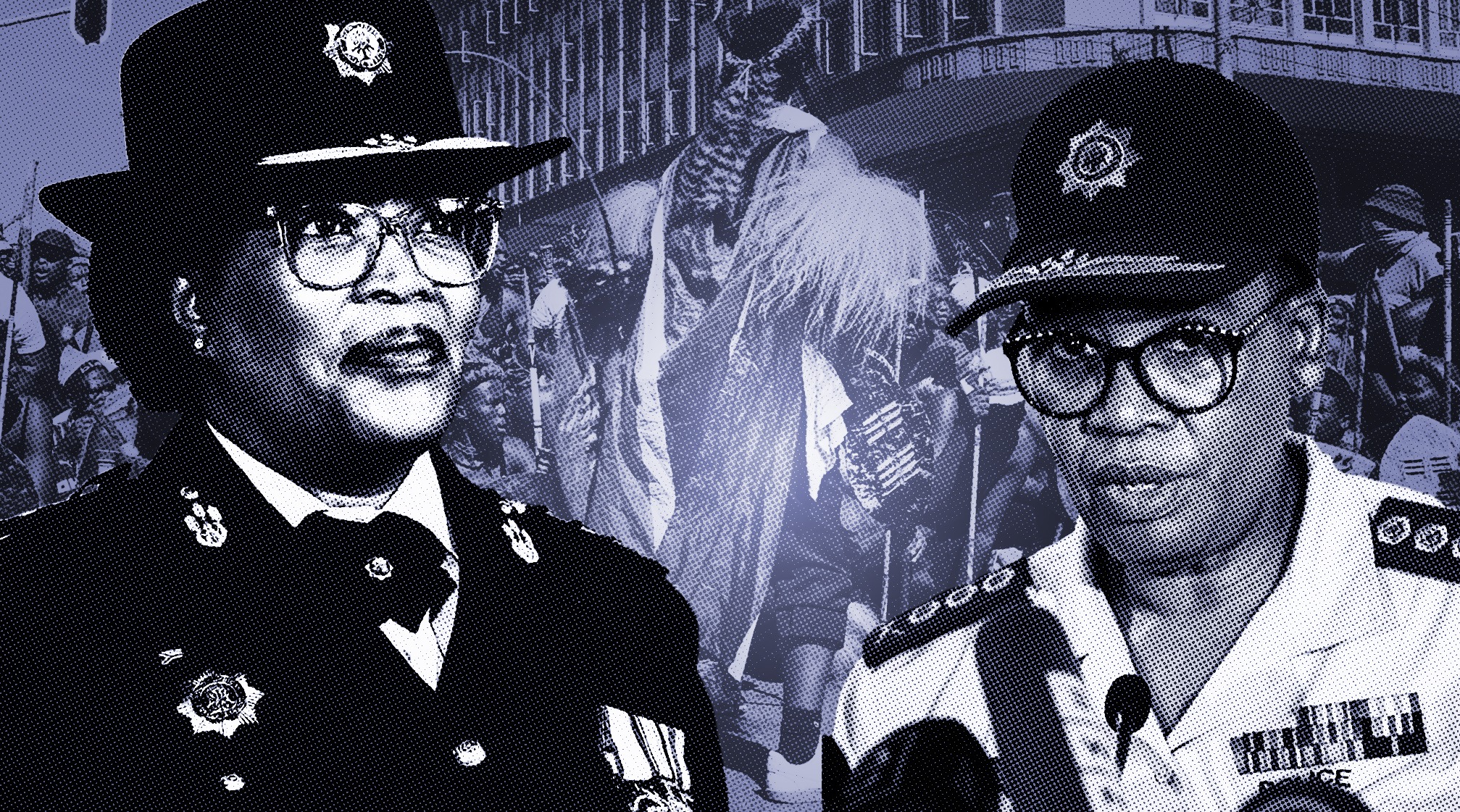
 Illustrative image: Marchers at the protest against illegal immigration at Mary Fitzgerald Square in Johannesburg on 29 April 2026. (Photo: Gallo Images / Luba Lesolle) | Lieutenant General Puleng Dimpane. (Photo: Frennie Shivambu / Gallo Images) | Lieutenant General Tebello Mosikili. (Photo: Gallo Images / Lee Warren)
The National Joint Operational and Intelligence Structure (NatJoints) has drawn a hard line against anti-foreigner mobs, warning that no individual or movement has the right to enforce immigration laws outside the framework of South Africa’s Constitution.
This comes after three people, including two Mozambicans and a South African, were killed in Mossel Bay, Western Cape, at the weekend, when xenophobic violence erupted against foreign nationals in the area. The violence led to the torching of dozens of homes and the displacement of hundreds of families.
The Mozambican government on Wednesday announced that it planned to repatriate 1,000 Mozambican citizens in response to the violence. Mozambique is the latest country to announce repatriations as anti-immigrant marches gather pace and politicians continue to utter xenophobic and Afrophobic rhetoric as a way to attract votes ahead of the 2026 polls.
The recurring reports of violence, racism and xenophobia against migrants in South Africa come on the back of a surge in anti-immigrant protests led or inspired by the anti-foreigner movement March and March, led by Jacinta Ngobese-Zuma.
On Saturday, GroundUp reported that hundreds of people staged a protest in Kleinmond, Western Cape, demanding that foreign nationals leave the area.
On Tuesday, News24 reported protesters in Ekurhuleni, Gauteng, targeted foreign nationals’ homes in Cloverdene and Chief Albert Luthuli. Meanwhile, in Ladysmith, KwaZulu-Natal, hundreds of protesters marched through the streets and visited shops, calling on the government to act against illegal migration.
‘Violence is not activism’
At a press conference in George, Western Cape, on Wednesday, 3 June, Acting National Commissioner of the South African Police Service (SAPS), Lieutenant General Puleng Dimpane, and NatJoints chairperson Lieutenant General Tebello Mosikili, sought to reassure the public that the government remained “firmly in control” of South Africa’s security environment.
“Ladies and gentlemen, South Africa is governed by the Constitution and the rule of law, not by intimidation, violence, ultimatums or mob justice.
“Therefore, no individual, movement, organisation or grouping has the authority to take the law into its own hands, conduct unlawful operations, intimidate communities, target individuals based on their nationality, or seek to enforce immigration laws outside the framework of the law.
“The responsibility for maintaining public order, combating crime and enforcing immigration legislation rests exclusively with duly authorised law enforcement agencies acting within the confines of the Constitution and the law,” said Mosikili. She further condemned the violence associated with anti-foreigner demonstrations in Mossel Bay.
/file/dailymaverick/wp-content/uploads/2024/08/DSC_4493-copy.jpg "NatJoints chairperson Lieutenant General Tebello Mosikili (left) and Eastern Cape Commissioner Nomthetheleli Mene. (Photo: Deon Ferreira)")
Mosikili said in the Free State, 166 individuals had been arrested for offences linked to public violence and related criminal activities, while in the Western Cape, five suspects had been arrested in connection with incidents of violence and intimidation.
She said that Natjoints was “actively identifying, tracing and investigating individuals and networks” responsible for incitement, criminal mobilisation and acts of violence.
“We will not tolerate any attempt to destabilise communities, threaten national stability, disrupt economic activity or challenge the authority of the democratic state … These arrests send a clear message that those who incite violence, encourage vigilantism, threaten communities, destroy property or undermine public order will face the full consequences of the law,” Mosikili said.
She further emphasised that there is “no grievance, concern, frustration or cause” that can justify illegal actions such as murder, assault, arson, intimidation, looting or xenophobic attacks.
“Violence is not activism. Intimidation is not community protection. Criminal conduct remains criminal conduct, regardless of the cause in whose name it is committed,” said Mosikili.
According to Mosikili, NatJoints intelligence structures have increased monitoring and threat assessments in areas identified as potential hotspots for unrest.
“This includes the monitoring of individuals and groups suspected of mobilising communities towards unlawful conduct, inciting violence, spreading misinformation or encouraging attacks against foreign nationals and businesses,” she said.
She outlined an operational plan that focused on five key areas: enhanced visibility and rapid deployment capabilities; online intelligence-led operations; targeted crime-combating operations; community engagement and conflict prevention; and protection of critical infrastructure and vulnerable communities.
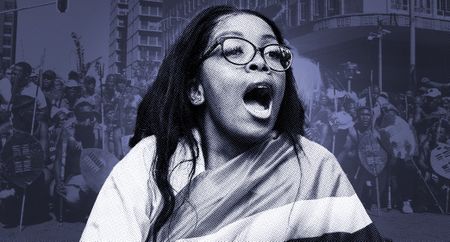
While Section 16 of the Constitution protects freedom of expression, Mosikili warned that it did not protect those who incited violence, advocated for hatred that constituted incitement to cause harm, or threatened the rights and safety of others.
“Those who believe they can hide behind social media platforms, anonymous messaging groups or community meetings to incite violence should know that law enforcement agencies are actively monitoring criminal conduct and will act where evidence exists,” she said.
Mosikili and Dimpane’s statements on Wednesday are ostensibly the strongest rebuke yet by South African authorities to those inciting xenophobic violence across South Africa, and follow calls from human rights organisations and migration experts for the government to toughen its response to those manufacturing an immigration crisis.
‘It’s gangsterism’
The government’s own data shows that migrants constitute about just 5% of South Africa’s population.
The Institute for Security Studies (ISS) has previously debunked beliefs that migrants are to blame for the country’s many crises – whether in healthcare, housing or public safety. These crises are the result of structural failures, not demographic pressures.
Professor at Wits University’s African Centre for Migration and Society, Loren Landau, said in an interview with Daily Maverick last week that the government’s response to the recent unrest should include holding those responsible for inciting the violence accountable and also creating a different narrative that ceased to link migrants with South Africa’s societal ills.
“What we need to do is shift two things: the first is to hold accountable those who are leading the violence, not because it’s against migrants, but because it’s gangsterism; it’s robbing the police and the government of their sovereignty over neighbourhoods and townships.
“If you hold those people accountable, you also make it less profitable to mobilise in this way,” said Landau, adding that one of the lessons learnt from the 2008 xenophobic attacks was that xenophobia and xenophobic violence paid.
‘Impunity is oxygen for violence’
The second approach, Landau said, was that authorities needed to change the narrative from one that continued to link migrants with issues such as crime, unemployment and the provision of services.
In their condemnation of the tactics of anti-foreigner mobs on Wednesday, Mosikili and Dimpane also sought to reiterate that the South African government was, at the same time, “not turning a blind eye to illegal immigration”.
Mosikili said that more than 5,000 illegal immigrants had been arrested for contravening the Immigration Act in the past three weeks.
President Cyril Ramaphosa also pledged a tough response to illegal immigration in the House on Tuesday, reiterating his previous statements about how illegal immigration was putting “pressure on our public services” and undermining government’s “efforts to create decent work”.
According to Landau, Ramaphosa’s speeches have continued to condemn the violence on one hand and legitimise beliefs that migrants are behind the country’s social ills on the other.
/file/attachments/orphans/ED_606554_393779.jpg "Marchers during the protest against illegal immigration at Mary Fitzgerald Square in Johannesburg on 29 April 2026. The March and March group demands tighter immigration controls. (Photo: Gallo Images / Luba Lesolle)")
This language is empowering to populist figures such as ActionSA leader Herman Mashaba and Patriotic Alliance leader Gayton McKenzie, and movements such as March and March, which have built platforms on xenophobic conspiracy theories.
“These groups like March and March are just building an electoral platform on xenophobia. They are turning this strict intimidation into a campaign; positioning themselves as the defenders of poor communities against a manufactured migrant threat. These upcoming elections have given them a stage to pivot from protest to political legitimacy,” said Mike Ndlovu from Kopanang Africa Against Xenophobia.
“What makes it so dangerous is how it interacts with the mainstream political discourse. When parties are desperate for votes, there’s a very powerful incentive to echo that migrants are a problem narrative.”
The scapegoating of migrants by politicians for service delivery problems, Ndlovu said, “creates a permission structure”, which groups such as March and March exploit.
He said those calling for the expulsion of migrants from SA by 30 June must face legal consequences, adding that “impunity is oxygen for this violence”. DM
Comments
Scroll down to load comments...