




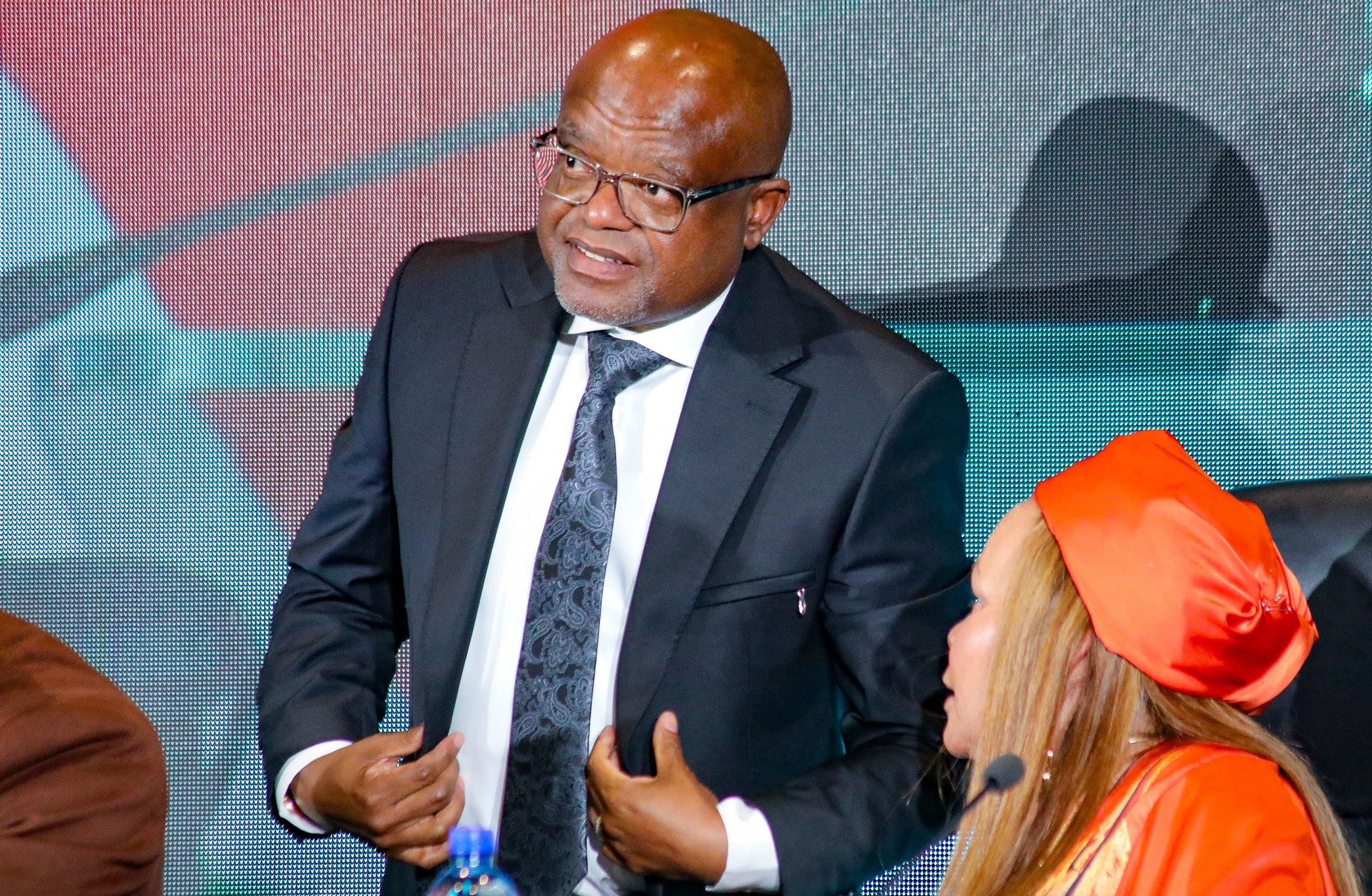
 Johannesburg's executive mayor, Dada Morero at the State of the City Address at St Mary's Cathedral on 20 May. (Photo: Fani Mahuntsi / Gallo Images)
The City of Johannesburg is broke. From leaked letters from the minister of finance to Eskom’s threats to turn off the power, it’s clear there is a financial management issue in the City. However, wading through the hundreds of pages of the Joburg budget in a bid to pinpoint exactly where the wheels are coming off is a daunting task.
While it is the city council’s responsibility to debate and amend or push back against the executive’s proposals and not pass an unfunded budget, the City’s ruling coalition will probably push through the unfunded budget that was tabled on Wednesday, 27 May. Civil society and watchdog organisations must step in to hold these officials accountable.
/file/attachments/orphans/ED_610382_237068.jpg "Joburg Executive Deputy Mayor Loyiso Masuku during the City of Johannesburg's presentation of the 2026/27 Budget Speech at the Connie Bapela Council Chamber on 27 May. (Photo: Lubabalo Lesolle / Gallo Images)")
An unfunded budget means that there is not enough money to pay for all of the operations or projects proposed by the City. The executive mayor, Dada Morero, in his very upbeat State of the City Address (Soca), categorically stated the budget is funded, but our analysis shows otherwise.
The draft integrated development plan and budget set a revenue collection target of 91%, despite the City’s own draft 2026/27 financial measures showing that collections dropped to 86% in 2024/25 and were as low as 40% in some regions. Despite annual plans to improve revenue collection, targets are consistently missed. The resulting cash shortfall makes budget adjustments inevitable, routinely forcing the City to cancel service delivery operations.
Instead of budgeting based on realistic, proven collection rates — and adjusting upwards only if revenues actually improve — the City is doing the opposite. In fact, its own budget forecasts that money owed to the City, or impaired debt, will spike by 41% over the next three years. This makes any hopes of increased revenue completely unrealistic.
Further evidence of a City in denial of its financial reality is evident in what the money is actually being spent on. The core mandate of a municipality is to provide services — water in the taps, electricity and paved roads that promote an environment that supports residents and businesses.
Staff costs
While turnaround strategies were approved to improve the service delivery entities City Power and Joburg Water, the operational money outlined to fund these strategies is only half of what is needed. Instead, Joburg spends almost 30% of the over R90-billion budget on staff costs.
The City appears to be paying heads of entities above the remuneration limits that apply to municipal managers and managers who report directly to municipal managers. The maximum remuneration for a municipal manager is R3,665,914, while the maximum for managers reporting directly to the municipal manager is R2,757,853.
The City has budgeted to pay the city manager R2,774,127, which is within the limit. However, the remuneration of the executive director of economic development is budgeted at R2,807,000, which is above the limit. The pay packages of the secretary to the council, at R2,768,606, and the ombud, at R2,670,000, are also above the limit.

Twelve of the heads of the City’s 13 entities are paid above the limit. The highest-paid is the Joburg Property Company CEO, at R5,497,553, a sharp 60% increase this year alone. Apparently, this is to attract highly skilled people away from the private sector, but these executive officers have largely been promoted from within, and the payments are definitely not in line with a failing business’s financial actions, as would be seen in the private sector.
Joburg simply cannot afford these salaries, bonuses and perks, but continues to raise the number of senior managers and board members without acknowledging this fact. The draft 2026/27 budget also shows a sharp increase in senior managers over two years, from 330 to 1,025, and board members from 70 to 385.
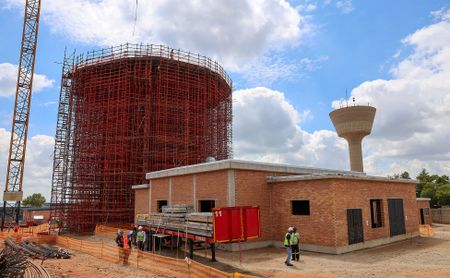
Inevitably, when revenue cannot support a bloated administration, it turns to loans to fill the gap, with a massive R3.8-billion KfW Development Bank loan approved just this week to apparently fund City Power, which is to be repaid over the next 15 years. A loan of R92-million intended for the Erand Water Tower project in Midrand was triumphantly announced last year, but the project has stalled at 99% as the budget has been blown. The oversight and long-term ramifications of such debt on the future of the City are being ignored.
The buck should stop with the accounting officer of the city and the city manager, Floyd Brink, and with oversight from councillors, the Department of Cooperative Governance and Traditional Affairs, Gauteng province and the National Treasury.
/file/dailymaverick/wp-content/uploads/2023/11/nonnku-floydbrink-main-2.jpg "Johannesburg's city manager, Floyd Brink. (Photo Sharon Seretlo / Gallo Images)")
Despite worrying letters and intergovernmental agreements to ringfence revenue and keep the lights on brokered by the electricity ministry, there is no accountability. Civil society and residents must act now.
If the budget passes in its current unfunded form, legal action must be taken against every councillor and administrator who allowed this to happen, and the National Treasury must impose penalties that affect the office-bearers directly. Until the ramifications are personal, all the figures are just monopoly money.
The City has a service delivery satisfaction rating of just 60%, showing that while commas are shifted and zeros are added, the reality on the ground is that delivery is missing. It is the residents who are left behind in an unfunded budget. DM
Julia Fish is the executive director of JoburgCAN.
Comments
Scroll down to load comments...