



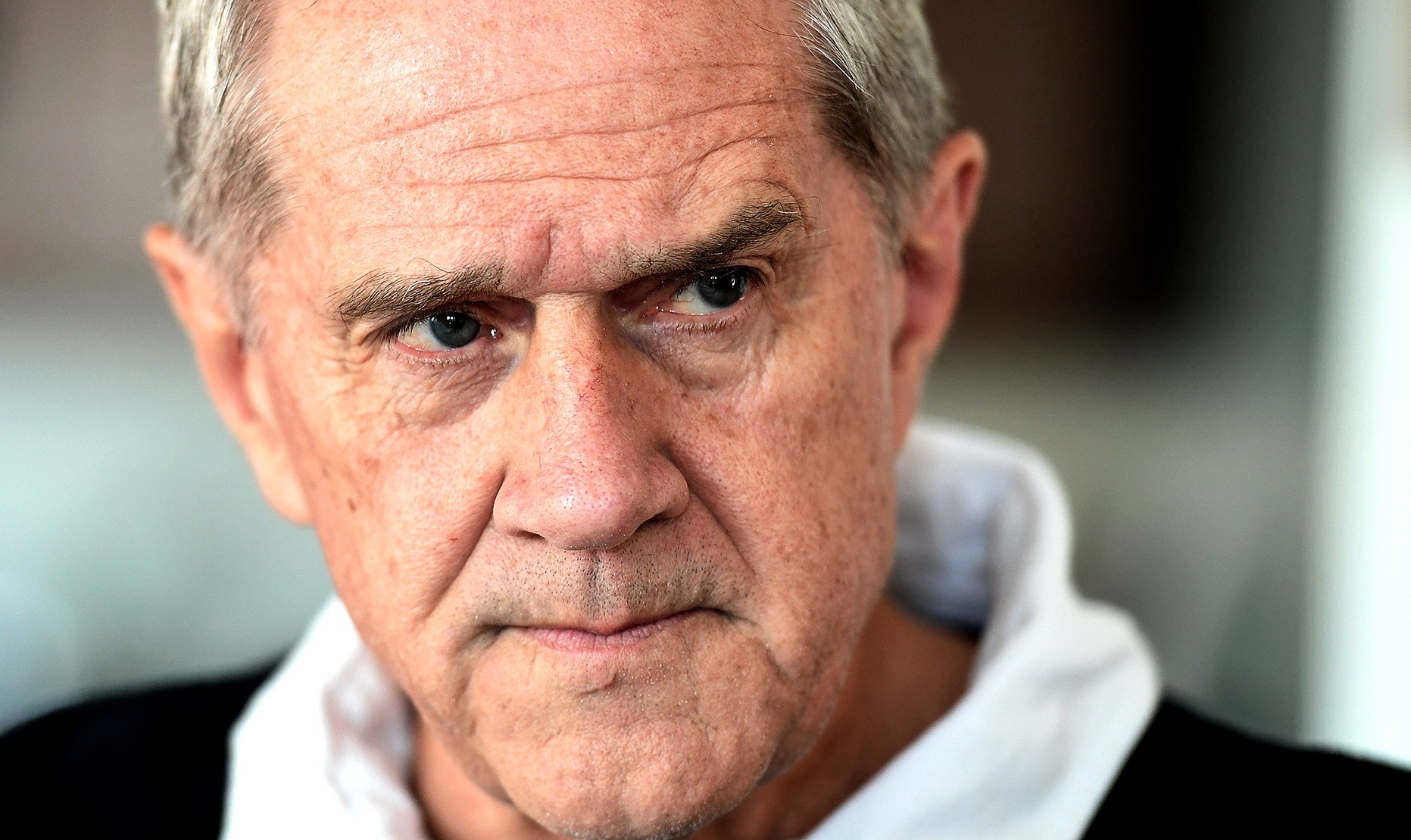
 Roelf Meyer, South Africa’s new ambassador to the United States. (Photo: Gallo Images / Netwerk24 / Felix Dlangamadla)
Veteran political negotiator Roelf Meyer presented his credentials to President Donald Trump on Thursday, making him the new South African ambassador to the US at a time when political relations between the two countries have been frosty.
Meyer (78) replaces Ebrahim Rasool after more than a year of tension between Pretoria and Washington that followed Trump’s return to the White House. Rasool was expelled after insinuating in a public webinar that Trump was a white supremacist.
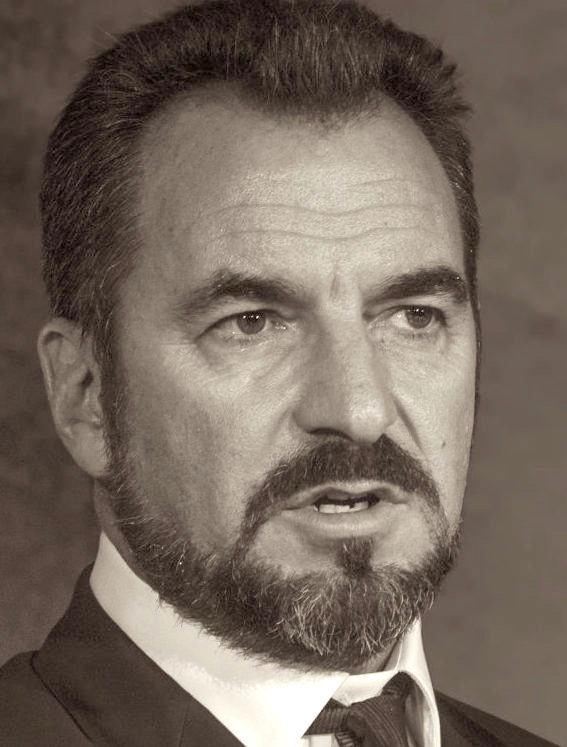
Meyer is regarded as one of the foremost architects of South Africa’s democratic transition and, before his appointment to the US, served as director of the Transformation Initiative, which engages in peace initiatives around the world and negotiates complex processes in South Africa.
Speaking to the SABC’s Oliver Dickson after presenting his credentials to the US President, Meyer said: “We were, altogether, 12 ambassadors from different countries who were received today, and we handed our credentials, on behalf of our respective heads of state, to President Trump personally.”
Pressed by Dickson for details of the ceremony, Meyer added: “He [Trump] did ask whether I’m playing golf, which unfortunately [I am] not, but I promised that I would walk with him if he’s prepared to take me along.
“But it was a pleasant experience, it was very cordial, it was warm, and I think it established a basis from where we can start to work.”
WATCH | South Africa’s Ambassador to the United States, Roelf Meyer, says he received an excellent reception at the White House and is looking forward to representing South Africa and its people. His remarks come after presenting his credentials to US authorities today. pic.twitter.com/ZgBUX10fUc
— SABC News (@SABCNews) May 21, 2026
He said that after initial “preparatory work” over the next fortnight, he would report back to the SA government on his “current assessment of the situation”. He told Dickson that the most pressing issue was improving trade relations between the two countries.
“If there are inhibitors to get to that position, in other words, to get success as far as [trade relations] is concerned, we have to address them one by one. There were the so-called ‘five asks’ that came about when [US] Ambassador [Brent] Bozell arrived in South Africa. We’ll have to make an assessment [on] what is the current status on those five asks,” said Meyer.
Meyer’s tough task
Meyer faces the difficult task of trying to negotiate a resolution to the five asks – the issues the Trump administration has with some of SA’s domestic policies. These are black economic empowerment (BEE), expropriation without compensation, the Kill the Boer struggle song, and violent crimes against white farmers. It is not clear if the fifth ask is SA’s foreign policy, its friendship with US foes such as China, Russia and Iran, or if it is the Trump administration’s active policy of granting refugee status to white Afrikaners.
It’s also not clear if there has been any progress in closing the gaps between the two sides on these issues. The most likely compromise could be on BEE, as exceptions to the requirement for foreign investors to cede 30% of their equity to black South Africans already exist in some industries, such as automobile manufacturing. Some big foreign automobile firms have negotiated agreements to donate to a transformation fund instead.
On the issue of the Trump administration treating white Afrikaners as victims of persecution, violence and even “genocide” as the issue is sometimes described – and therefore needing asylum in the US – Pretoria vehemently disagrees that white Afrikaners are victims of persecution. But after some initial resistance to the refugee programme, the SA government seems resigned to it and seems to be allowing it to proceed unhindered.
In a recent interview with the SA Jewish Report, Ambassador Bozell said Washington was mainly focused on three issues: rural violence and farm murders; economic “roadblocks” to American investment in SA; and the country’s abandonment of its non-aligned stance.
“The government knows we have to have some kind of a restart on this issue before we can say things are back on the right track. And until these things are resolved to the satisfaction of the president of the United States, we are at an impasse,” the publication quoted Bozell as saying.
/file/attachments/orphans/IMG_8759_239952.jpg "United States Ambassador to South Africa Leo Brent Bozell lll. (Photo: Jairus Mmutle / GCIS)")
Earlier this week, Associated Press reported that the Trump administration plans to increase its intake of Afrikaner refugees in the coming months, raising the annual refugee limit for this group from 7,500 to 17,500.
A State Department report on the US Refugee Admissions programme indicated that admissions between October 2025 and 30 April 2026 totalled 6,069, according to a News24 report. The publication reported that, barring three refugees from Afghanistan, the remainder of those who arrived in America under this programme were from South Africa.
On Thursday night, Meyer told Dickson that his team needed “to find out why President Trump has increased” the number of Afrikaner refugees to the US.
“What is the level of information about that subject that informs that decision? I can’t answer that yet,” he said.
‘A positive signal’
International Relations and Cooperation Minister Ronald Lamola confirmed to Daily Maverick earlier this week that Meyer had arrived in the US and would present his credentials to Trump.
Asked by Daily Maverick if things were looking up in the US-SA relationship, Lamola said: “We think that there is a positive signal, including the process of him presenting his credentials. And you are aware we’ve also accepted the accreditation of the ambassador here in South Africa.
“[There] is some positive engagement also happening with our DTIC,” he added, referring to ongoing negotiations on tariffs by South Africa’s Department of Trade, Industry and Competition (DTIC) with its US counterpart.
“The line of engagement continues. So there is a positive signal. So we’ll see how it goes,” Lamola said.
Meyer is a skilled and seasoned negotiator who, in partnership with Ramaphosa, was the main person responsible for negotiating the passage from apartheid to the current democratic dispensation. Ramaphosa seems to have chosen him because of their relationship forged in those critical negotiations more than 30 years ago.
/file/dailymaverick/wp-content/uploads/2024/06/AV_00070868.jpg "Roelf Meyer (National Party) and Cyril Ramaphosa (ANC) during the Codesa talks on 21 November 1993. (Photo: Gallo Images / Tiso Blackstar Group)")
It certainly doesn’t hurt that Meyer is a white Afrikaner. Apart from being a living refutation of Trump’s contention that white Afrikaners are being persecuted, he will probably also undercut the implicit assumption of the likes of AfriForum, Solidarity and the Freedom Front Plus that they are the exclusive voice of white Afrikanerdom in the US.
The essentially domestic issues form a separate category from the more orthodox trade disputes, which are being negotiated mainly by South Africa’s DTIC with the US Trade Representative’s Office. It is not clear where those now stand. They began with efforts by South Africa to reduce the 30% tariff which Trump imposed across the board on South African imports last year.
This was one of the heavy tariffs that Trump slapped on many nations under the International Emergency Economic Powers Act, but in February this year, the US Supreme Court struck down these tariffs.
Trump replaced them with a universal 10% tariff under different legislation, but this has also been challenged in court.
It now seems that it is the US that is making the demands, trying to persuade South Africa to sign a bilateral trade deal. But with the big stick of potential higher tariffs in its hands, Washington seems to be having some difficulty. DM
Comments
Scroll down to load comments...