



Today, Thursday, 21 May, marks both the first anniversary of US President Donald Trump’s “ambush” (as described by the Financial Times) of President Cyril Ramaphosa in the White House, and, ironically, the day on which Roelf Meyer is set to present his credentials to President Trump as the South African Ambassador to Washington.
/file/dailymaverick/wp-content/uploads/2025/06/13068549.jpg "US President Donald Trump meets with South Africa's President Cyril Ramaphosa in the Oval Office of the White House in Washington, DC, USA, 21 May 2025. (Photo: EPA-EFE/JIM LO SCALZO / POOL)")
South Africa has been without any recognised diplomatic representation in Washington since 14 March, 2025, when US Secretary of State Marco Rubio declared our former ambassador to be persona non grata.
That infamous White House meeting one year ago, I wrote soon after in the Sunday Times, “left an unfortunate global impression that South Africa is a violent and dangerous, if not genocidal, country”.
“What was not communicated at the White House,” I said then, “is that South Africa is the most sophisticated and largest economy on the African continent.”
A changed world
That explosive meeting was evidence of a simple truth: the old assumptions underpinning the relationship between our countries no longer held. The world itself had changed. We are now in an age of culture wars, grievance politics and ideological theatre in which narratives about race, “western civilisation”, ethnic nationalism and religion are symbolic of struggles in both countries.
In the aftermath, a section of South Africa’s politicians seemed to want to turn their backs on the US. They fail to understand both the breadth and depth of, and ongoing momentum behind the Maga movement in the US, and the undeniable market power and global importance of corporate America.
Of the top 100 largest publicly listed companies in the world, more than 60 come from the US, controlling an overwhelming 75% of the total market value of the global top 100 listed companies.
Disengagement is foolhardy
There, of course, is nothing wrong with the idea of distributing our international relations widely, among many nations and powers, including the EU, BRICS and China. But, to disengage with the US, the world’s most powerful nation, and pretend these distributed relations will compensate for the loss of relations with the US, is, plainly, foolhardy.
The bottom line, with which our President seems to concur, is that disengagement is no strategy. The pragmatic reality remains that South Africa relies on capital markets, investment flows, trade and institutional relationships at the centre of which lies the US as a global superpower.
Indeed, to solve many of our core structural problems, in particular our almost two-decade-long low economic growth trap and sky-high and rising unemployment, we need, among other remedies, to fix our relations with the US.
Indeed, nations operate on interests, not sentiment, and must do what serves their strategic goals. As Henry Kissinger famously said, “America has no permanent friends or enemies, only interests”. America has since no doubt lurched rightwards, become more transactional and less patient, even with its own allies. Yet, our relationship is too important to fail.
South Africa, with a GDP of less than half a trillion dollars, even if Africa’s largest economy, cannot ignore the world’s largest economy, with $32-trillion, which also boasts the world’s most powerful military and the world’s leading technological, educational and research institutions, and largest companies.
Over my career, I have seen first hand the formidable power of America’s financial institutions, its Ivy League universities, its think-tanks and lobbying institutions in both New York and Washington.
It is into these corporate and institutional networks, and the political power brokers on Capitol Hill, that our Government’s strategy of economic and political diplomacy must now focus, in competition, one might add, with many nations vying for attention and favour in Washington.
Cause for celebration
The good news, therefore, that must be celebrated, is that today our diplomatic channel will finally be formally restored.
/file/attachments/orphans/PeterTori-Roelf-Ambassador_104985.jpg "File photo of Roelf Meyer during an interview at his home in Pretoria. (Photo: Felix Dlangamandla/Netwerk24)")
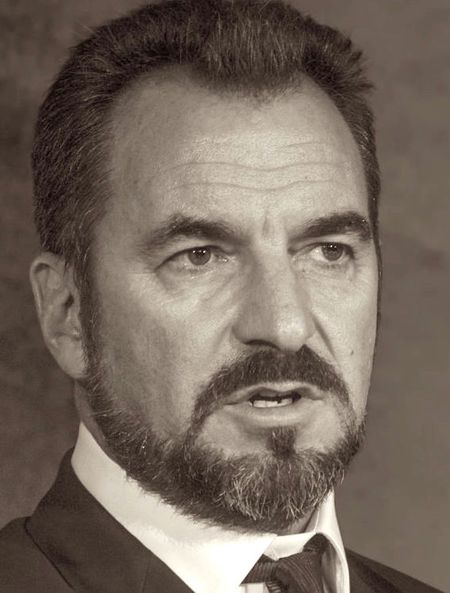
Only a fortnight back, I was able to meet privately and separately, within days of each other, with Ambassador Roelf Meyer and US Ambassador to South Africa L Brent Bozell III.
Given the undeniable tension in our relationship, the task for the two ambassadors is no less than to calm the waters, reset relations and find common ground when many profound differences seem insurmountable.
I have known Roelf Meyer well, since working with him in South Africa’s transition and constitutional negotiations. I have always found Roelf to be an honourable patriot. Roelf, whose political identity is inseparable from compromise itself, of all people, understands the need to find balanced solutions among parties that profoundly disagree with each other, even when doing so resulted in him being accused of betrayal.
Compromise
Forging compromises is not to subordinate one to the other; it is to rise above the conflict to break through to a higher order of outcomes, for the greater good.
/file/attachments/orphans/HDNYvg7WkAEBNRB_977177_554746.jpg "Brent Bozell. (Photo: Europa.com / X)")
This was my first meeting with Ambassador Bozell, who, while clearly an unapologetic and enthusiastic Trump supporter, clearly wishes to steward the relationship on to a firmer footing, and seek constructive solutions, even where difficulties may lie, in the common interest. As he will not dilute his positions for diplomatic niceties, he will look for genuine movement from South Africa on key interests his principals have expressed.
I impressed on each my belief that in the face of bitter disagreements in a changed global world, by focusing on structured dialogue, in particular on the security and economic cluster of issues, that one may unlock both short and long-term progress and open the path to solving many narrow points of conflict.
I suggest two structured partnerships be established, one on the economy, the other on security.
The economy
First, on the economy. I reminded the ambassadors of the precedent of the 1994 Gore-Mbeki bi-national commission, whose mission and scope were broad, but the core focus was: Business Development, Trade, and Investment: facilitating economic growth, resolving corporate disputes, promoting job creation and connecting American companies to the post-apartheid South African economy.
This describes perfectly the essence of the challenges for economic relations: driving growth, resolving disputes and connecting our companies. I would love to see the two countries re-establish some version of this commission, with leading CEOs from both sides, along with respective government representatives.
While empowerment regulations, property rights, land reform, a freeze in USAid, tariffs and Agoa access have been hotly contested flashpoints in the relations, a commission of this type can provide a common platform, or canvas, on which to discuss and explore common interests, and act as a constructive backdrop against which such contested issues can be navigated.
Topics on which negotiations can ensue on economic interests would inevitably include tariff concessions and preferential market access, ways in which hurdles to foreign direct investment can be identified and overcome, while promoting collaboration on investment into critical minerals, tourism, technology, trade, healthcare, automotive manufacturing, agriculture and green energy infrastructure, among other ventures.
The issue of critical minerals is a singular example where the nations share common interests: South Africa to attract capital, technology, management and development financial institutional backing to extract, develop and process Africa’s critical minerals, and the US’s need for its own share of processed critical mineral resources to feed its strategic and economic needs.
There is, in summary, plenty of “meat on the bone” for the proposed economic commission to get its teeth into.
Economic diplomacy
South Africa would be smart, in parallel, to mount a campaign of economic diplomacy, individually targeting every one of the 60 top 100 global listed companies based in the US, and ask them what can be done for each of those companies to increase their investment footprint in South Africa, and on the continent.
We should aim to negotiate investment agreements with each of these powerful companies and ask what policy, regulatory and investment package of incentives we can offer to attract them. Therein will lie the answers to the economic reforms needed to unlock the trillions of investment dollars President Ramaphosa is seeking.
Security
Second, concerning the proposed partnership on security issues focusing on such matters as organised crime, farm murders and broader security challenges, it must be noted that the US has established precedent partnerships with various countries (Mexico, Caribbean, Central America and Brazil are examples) that could be drawn on.
In Brazil, for example, the partnership focuses on “direct intelligence sharing to combat South American narcotics trafficking networks, illegal mining and regional money laundering”.
A similar structured partnership between the US and South Africa, a US-SA partnership on crime and security, perhaps, could begin by simply sharing technology, grow into intelligence sharing and then design and implement more ambitious programmes aiming to defeat the various organised crime networks in South Africa, that grow more powerful by the day. A joint campaign aimed at defeating organised crime in South Africa could only be welcomed by all South Africans.
There will be those in South Africa who will warn against collaboration on security matters, or sharing intelligence with the US, because they are deeply concerned about the loss of sovereignty, or control over sensitive strategic matters and assets. Fair enough. Then, design the partnership to mitigate such risks.
There are others in our power structures that may be concerned that those elites already compromised, or corrupted, will be exposed by such cooperation. It is these interests that will be loudest, shouting populist slogans and attempting to frustrate such an initiative, to protect themselves and their own. They must not be allowed to succeed.
Expert aid
At the same time, whether it is lessons from policing in cities like New York to make our cities safer, lessons from other countries in countering organised crime, political extremism, drug and human trafficking, cyber warfare, illegal mining and other criminal economic activities, to prevent organised illicit economic actors from crowding out private sector investment, there are many levels on which such co-operation can be highly effective in the fight to arrest and reverse the hold of criminals on our country.
Given the perilous state of our police force, as revealed by the Madlanga Commission, expert assistance to restructure the police service institutions could be of great value.
The relationship between rising unemployment, inequality and crime on the one hand, and the high cost of crime on our economic growth trajectory on the other, is plain for all to see.
This vicious cycle, the greatest threat to South Africa’s democratic project, must be broken. These two structured partnerships, with one of the world’s leading superpowers, may act to dislodge the unease between our nations and help to pivot the relationship for both on to the positive side of the ledger.
We can then all hope for less grandstanding, less noise on flashpoints such as “refugees”, and more focus on those issues which underpin our joint and several long-term interests.
Problem positions
The thorny issue of South Africa’s relations with Iran, the countries’ respective positioning on the wars in Gaza and Ukraine, the BRICS, G20 and other international questions will pose a challenge of both principle and interests on both sides, whichever administration may be in power in Washington now, and in the longer term. Yet, cool heads must prevail. South Africa cannot afford reflexive anti-Americanism.
Equally, America cannot expect durable partnerships while publicly caricaturing South Africa or our African counterparts.
As Roelf Meyer is confirmed as our representative in Washington, let’s hope that this milestone marks a turning point towards constructive progress on our nations’ joint objectives and interests. The noise will probably not disappear, but hopefully the gentle humming sounds of work among and between government officials, intellectuals, business people, community organisations, and artists from our two great countries seeking solutions will drown out the inevitable occasional shrieks of disagreement among our nations.
The ambassadors’ work lies at the heart of the strategic diplomacy that can now help South Africans fight back to win investment, jobs, security and growth for our people, and restore dignity and our pride of place among the world of nations.
Deep below the surface of the oceans between us runs the tide of the South African miracle – the belief that bitter adversaries can step back from catastrophe and construct a shared future, based on constitutionalism and persuasion, instead of rage and humiliation, in our joint national interests. DM
Comments
Scroll down to load comments...