




/file/dailymaverick/wp-content/uploads/2025/09/label-Opinion.jpg)
This Youth Month marks 50 years since the 1976 youth uprising. The state and its social partners will rightfully commemorate that pivotal moment. It remains permanently etched in South Africa’s history – a time when many young people lost their lives, and many more had their futures brutally stripped away by violence and repressive laws. Their lives and memories deserve to be deeply honoured.
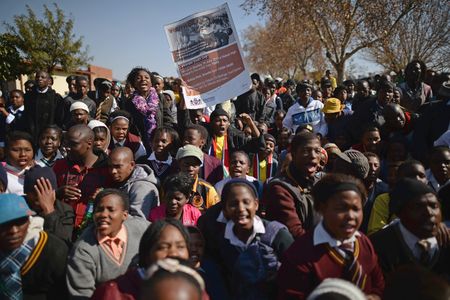
However, the young people of today are becoming part of what may well be another historic youth movement. This modern struggle is not about the language of instruction or apartheid laws, but rather the precarious socioeconomic reality they face daily.
South Africa’s young people are trapped in an economy that does not work for them, leaving them stranded on the sidelines of economic participation. This fuels a growing desperation as they confront the triple challenges of unemployment, deepening social tensions and economic stagnation, compounded by an education system failing to equip them for a meaningful future.
This Youth Month, the government and civil society must heed the warning signs. These red flags are clearly visible in the mass attendance at public service strikes, the staggering queues for limited job opportunities, and the worrying data showing a rise in violent criminal activities among the youth.
Several critical areas necessitate urgent, systemic intervention.
1. Education and economic alignment
Various data points show that our young people are not being sufficiently equipped to participate in the economy as it is currently structured. Yearly international reports consistently indicate that our Grade 4 learners cannot read for meaning when compared to their global counterparts.
Furthermore, high dropout levels occur annually from Grade 9 onwards. Those who do manage to finish matric face severely limited spaces in institutions of higher learning, while the few who secure access continue to struggle financially to see their qualifications through to completion.
2. The unemployment crisis
A youth unemployment rate exceeding 60% is not normal. While the rest of the world speaks of a “youth demographic dividend”, South Africa stands on the cusp of a youth catastrophe.
A closer analysis reveals a plethora of systemic failures stemming from this high joblessness. For instance, Johannesburg’s capital expenditure dropped from over 16% of its budget in 2010 to roughly 6% in the current fiscal year.
Furthermore, the growth of micro, small, and medium enterprises (SMMEs), often touted as an economic panacea, is severely hamstrung. A significant portion of local business income depends on a populace that relies heavily on social grants. This limited spending power stunts business growth and stifles potential employment creation.
3. Social ills and state investment
Social ills like crime are directly mitigated by poverty reduction, liveable wages and broad access to quality healthcare and education. The state has a fundamental responsibility to drive this necessary growth.
Investment in industrial production will catalyse both economic growth and private sector confidence. Gross Fixed Capital Formation, the key measure of total investment, must keep pace with inflation and population growth. Instead, between 2018 and 2025, real per capita Gross Fixed Capital Investment (GFCI) collapsed by 22.7%. As a percentage of Gross Domestic Product, GFCI dropped from 16.2% to just 13.9%.
Austerity measures and rigid economic policies – implemented with the hollow hope that Foreign Direct Investment will solve our problems – are proving completely ineffective in growing the economy enough to absorb our latent labour force.
4. Social tensions, crime, and xenophobia
These deteriorating conditions have manifested in a deeply fractured society. We are witnessing the inhumane treatment of women, evidenced by staggering gender-based violence (GBV) statistics. Extortion rings target small business owners, while criminal syndicates prey on recently retired senior citizens and grieving families waiting for insurance and policy payouts. Tragically, many of these gruesome, opportunistic acts are committed predominantly by young people trapped in despair.
Furthermore, the country must reach a point where the volatile protests against foreign nationals can be isolated strictly to the legal possession of documentation. Currently, these conflicts are fuelled by these exact same layered frustrations over crime, the degradation of central business districts, and the gnawing pain of joblessness.
The ultimate legacy
One of the most defining indicators of this administration’s legacy will be whether it fostered an economy and a society where young people, the future leaders of this country, were actively enabled and supported through meaningful, structural change.
Decision-makers must hear these pleas and implement immediate, concrete plans to curb this downward spiral. DM