



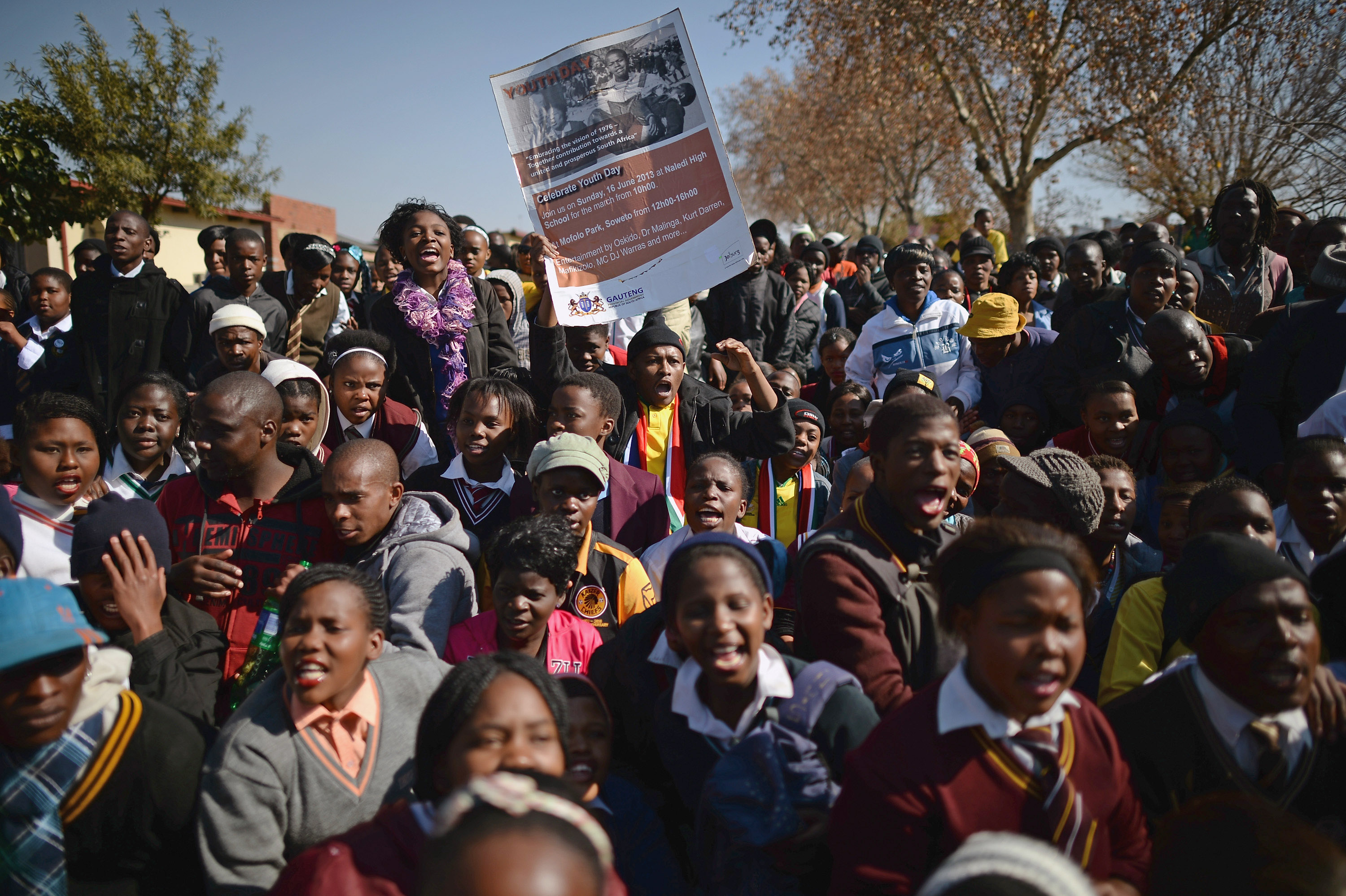
 Young people participate in a march to commemorate Youth Day in Soweto on 16 June 2013 in Johannesburg. (Photo: Jeff J Mitchell / Getty Images
On 16 June 1976, thousands of black students walked out of schools all over Soweto and into history. What followed – police gunfire, scores of deaths and an uprising that spread across South Africa – was the product not of a spontaneous moment of rage, but of months of organised resistance against the apartheid government’s imposition of Afrikaans as a compulsory medium of instruction and the Bantu Education system designed to keep black children’s futures deliberately small.
According to Professor Noor Nieftagodien, head of the History Workshop at the University of the Witwatersrand, students in Alexandra, the East Rand and Cape Town mobilised solidarity action with their Soweto comrades, producing the first national anti-apartheid movement since the early 1960s.
Fifty years later, South Africa is a democracy. But for its young people, the terrain of struggle has shifted rather than disappeared.
A different struggle
Fifty years on, the drivers of inequality in young South Africans’ lives remain stubbornly familiar. According to Leandi Erasmus, writing in the Journal of Human Rights and Social Work, those drivers are poverty, rurality, gender-based violence and race, and the dimensions most severely affected are education, healthcare, service delivery and unemployment.
Statistics South Africa’s Quarterly Labour Force Survey for the first quarter of this year puts youth unemployment among those aged 15 to 24 at 60.9%, up from 36.9% for the broader 15-to-34 age group a decade ago.
The struggle has not ended. It has changed shape. Writing in the journal Conflict Trends, researchers note that youth activism has evolved from a key pillar of the anti-apartheid struggle to a critical movement challenging failures in democracy, governance and socioeconomic equity. Today’s youth-led movements increasingly grapple with unemployment, inequality and political marginalisation.
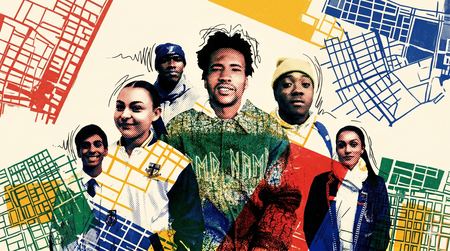
The class of 1976 marched because the system was designed against them. Fifty years later, these six young South Africans suggest the feeling is not entirely unfamiliar, even in a democracy.
/file/attachments/2993/07SitharaGovenderPhoto_Supplied_234322.jpg "Sithara Govender (23), bookseller
<br>")
Sithara Govender (23), bookseller
In 1976 they marched for justice. They marched to protest the oppressive Bantu Education Act that limited their learning and therefore their future opportunities. They marched because their potential was stifled before it even had a chance to ignite.
In 2026 we march for equity, we march for feminism, we march for fair and equal treatment for people across all walks of life. We march against gender-based violence. We march to change the world for the better.
/file/attachments/2993/07MirriamKunenePhoto_Supplied_131168.jpg "Mirriam Kunene (23), development practitioner
<br>")
Mirriam Kunene (23), development practitioner
The youth of 1976 fought against the injustices of the apartheid regime and in opposition to the Bantu Education system, which provided black learners with poor-quality and underfunded education, and the government’s decision to enforce Afrikaans as a medium of instruction. At its core, their fight was for human dignity, equality and the right to a better future.
The youth of today are primarily engaged in the struggle for economic emancipation. Although South Africa is now a democracy, many young people face high levels of unemployment, limited job opportunities, unequal access to quality education, student debt, gender-based violence, corruption and persistent socioeconomic inequality.
/file/attachments/2993/07PascalePotgieterPhoto_Supplied_993159.jpg "Pascalé Potgieter (25), English master’s degree student")
Pascalé Potgieter (25), English master’s degree student
In 1976 they marched for equal education and the undoing of Afrikaans as the only language and medium of instruction. In 2026 we march for an end to gender-based violence, equal opportunities to study, lower student rent and more accessibility to mental health support systems.
/file/attachments/2993/07TendaniTshauambeaPhoto_Supplied_648042.jpg "Tendani Tshauambea (26), administrative intern
<br>")
Tendani Tshauambea (26), administrative intern
In 1976 they marched against an oppressive regime which denied them their right to self-determination, using language to further deepen the undignified and unjust outcomes of colonial apartheid.
In 2026 we march for the promise that was made in 1994 to address the injustices of the past, a promise that has been betrayed time and again. We march for the realisation of our right to self-determination and to take our rightful place in steering the future of this country.
/file/attachments/2993/07JenniferJennaLioulPhoto_Supplied_957137.jpg "Jenna Lioul (22), marketing professional")
Jenna Lioul (22), marketing professional
In 1976 they marched for access to knowledge and against a system that limited their potential.
In 2026 we march for the opportunity to turn that potential into progress. Young South Africans are not short of ideas, talent or ambition. What we need are pathways to participate, contribute and thrive. We don’t want to inherit a better future; we want the chance to help build it.
/file/attachments/2993/07MischkeLucindaMalgasPhoto_Supplied_224752.jpg "Mischké Malgas (23), BCom economics and finance student")
Mischké Malgas (23), BCom economics and finance student
When I think about Youth Day in 1976, I think about freedom, students who were brave, with courage, finally standing up for themselves, united.
In 2026 we march for change in a world of so many challenges, but also so many opportunities and dreams. We march with hope for the next generations and to show that, united, we can make a difference. This world is not going to change if we don’t change it. DM
This story first appeared in our weekly DM168 newspaper, available countrywide for R35.
/file/attachments/2993/DM-120626_491550.jpg)
Comments
Scroll down to load comments...