



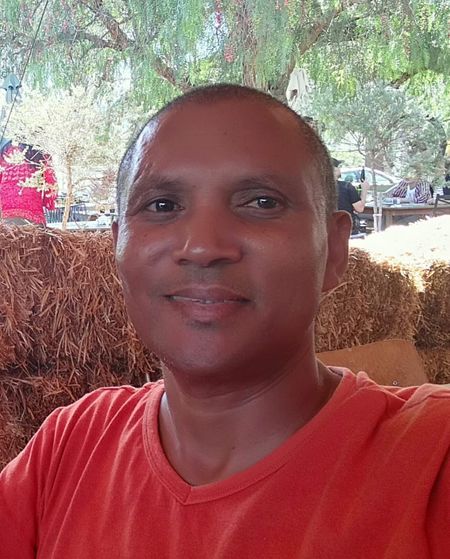
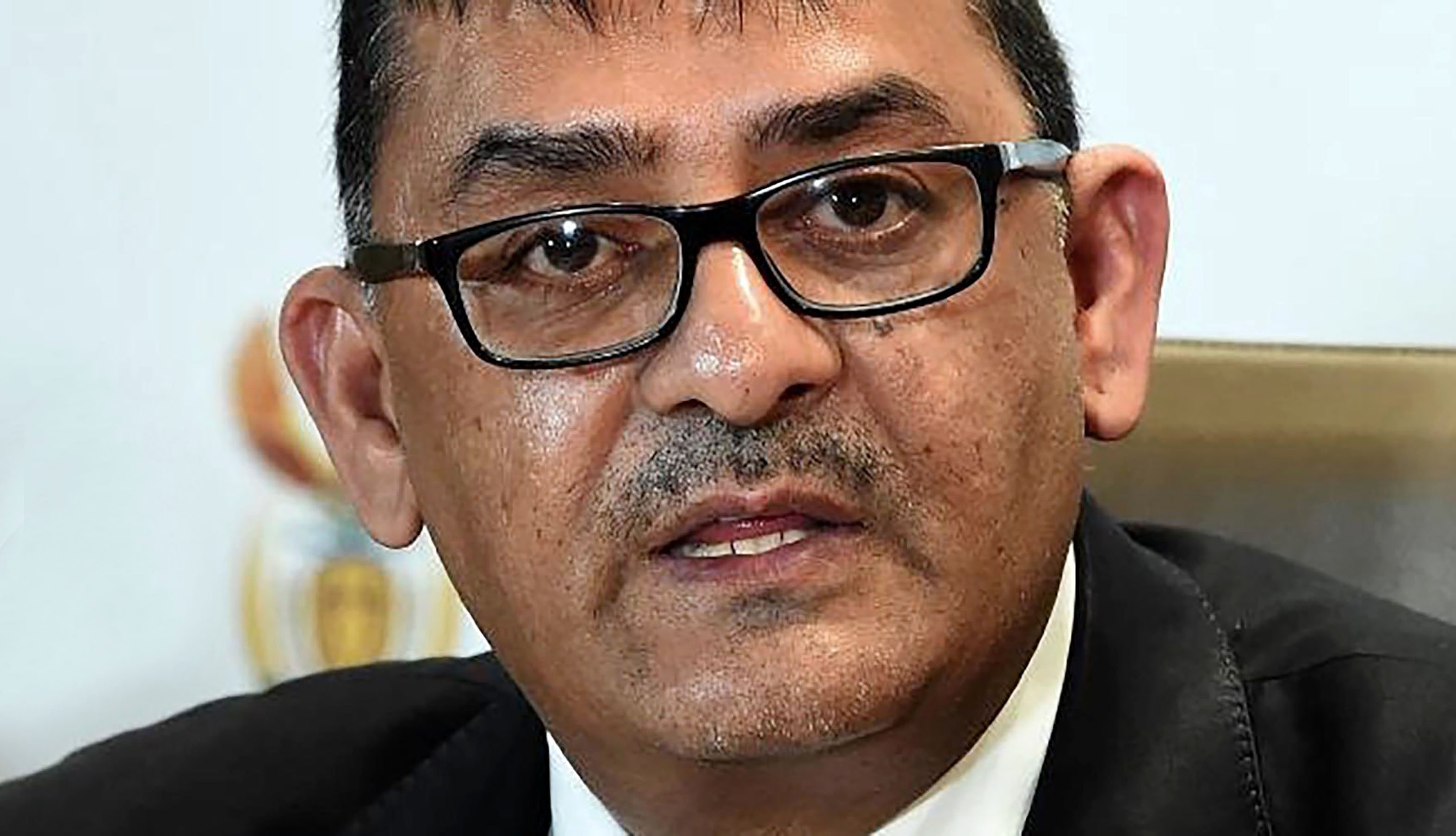
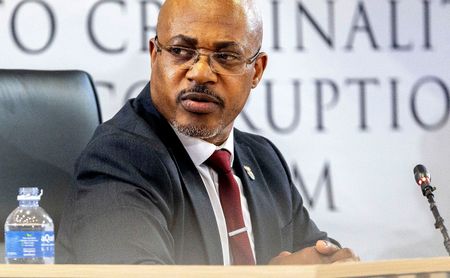
 Suspended Inspector-General of Intelligence Imtiaz Ahmed Fazel. (Photo: Twitter / @SAgovnews)
On Friday, 27 November, Suspended Inspector-General of Intelligence (IGI) Imtiaz Fazel took the stand at the Madlanga Commission, where his evidence was primarily directed at the reforms needed to strengthen the nation’s intelligence oversight and the legislative framework governing those services.
Evidence leader advocate Matthew Chaskalson SC emphasised that the commission would not interrogate Fazel on the factual merits of matters currently under investigation, but would instead focus on his views and recommendations for reform.
The commission’s broader terms of reference are to examine whether criminal syndicates have infiltrated or exerted undue influence over law enforcement agencies, the nature and extent of that infiltration, and the role of senior law enforcement officials and members of the national executive in either facilitating criminal activity or failing to act on credible intelligence and internal warnings.
Against this backdrop, Part A of Fazel’s evidence required him to detail instances in which his independence as IGI had allegedly been interfered with, identify those responsible, explain the consequences for his work and outline the steps he had taken to address such interference.
The commission’s secretary, in a notice issued under Regulation 10(6) of its regulations, specifically referred to questions arising from the testimony of Dr Ntandazo Sifolo, acting coordinator of the National Intelligence Coordinating Committee (Nicoc), concerning access to information, the resolution of disputes between intelligence structures and security clearance arrangements.
Fazel was also required to account for vacant posts in the Office of the Inspector-General of Intelligence before his suspension, explain how the vacancies affected the office’s ability to fulfil its mandate and detail what steps he had taken to fill them.
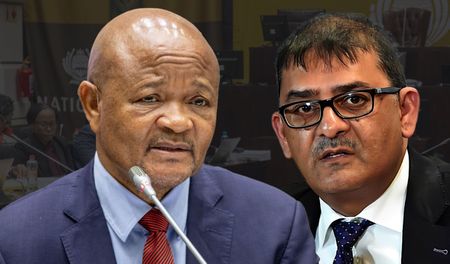
His appearance before the commission came against the backdrop of his suspension by President Cyril Ramaphosa, placing him alongside Police Minister Senzo Mchunu, who was also sidelined amid the parliamentary ad hoc committee’s investigation into allegations of corruption within SAPS.
Background
Suspended Inspector-General of Intelligence (IGI) Imtiaz Fazel was due to testify at the ad hoc committee in March 2026, but at a housekeeping meeting, evidence leader advocate Norman Arendse revealed that his testimony would not be heard as President Cyril Ramaphosa and Acting Police Minister Firoz Cachalia had not permitted him to appear.
In July 2026, Investigative journalism organisation Amabhungane reported that a high court application by Fazel confirmed how central former police minister Senzo Mchunu’s office was to the series of investigations and leaks that led both to the Madlanga Commission and to the unprocedural and likely unconstitutional suspension of the IGI.
Read more: Intelligence trap: Explosive affidavit exposes how Inspector-General was sidelined
Fazel links complaints against him to Mkhwanazi’s explosive allegations
Returning to KwaZulu-Natal police commissioner Lieutenant General Nhlanhla Mkhwanazi’s July 2025 briefing, Fazel told the commission that Mkhwanazi had also alleged that a member of SAPS Crime Intelligence leaked classified documents to a member of Parliament.
These allegedly included the vetting records of a senior general and information relating to covert properties.
Fazel said Mkhwanazi had further referred to arrests arising from the appointment of a brigadier and criticised the handling of a senior general’s security clearance.
Significantly, these were the very matters that sidelined Police Minister Senzo Mchunu had previously designated to Fazel for investigation.
The allegations against Fazel subsequently took a new turn.
On 22 July 2025, the Joint Standing Committee on Intelligence (JSCI) informed him that three complaints against him were under investigation. They included complaints from Nicoc and Defence Intelligence, as well as a complaint concerning the disclosure of information about a Durban property procured by SAPS Crime Intelligence.
“The JSCI gave no particulars of allegations. I now know, from the record in the review application, that the complaints of SAPS CI and Defence Intelligence to the JSCI concerned the scope of my statutory oversight,” Fazel told the commission.
He said SAPS Crime Intelligence regarded his demands for intelligence and operational reports in the investigation designated by Mchunu as an intrusion into its operational space.
Defence Intelligence, meanwhile, complained that he had exceeded his mandate by investigating the docking of the Russian vessel Lady R in Simon’s Town in December 2022.
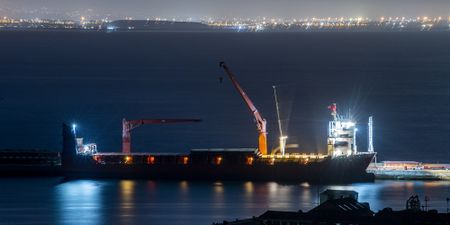
But Fazel offered an important counterpoint: Defence Intelligence was apparently unaware that President Cyril Ramaphosa himself had requested him to investigate the events surrounding the vessel’s docking at Simon’s Town.
Fazel’s JSCI appearance preceded withdrawal of his security clearance
On 5 August 2025, Fazel appeared before the Joint Standing Committee on Intelligence (JSCI), where he was questioned about his engagements with private investigator Paul O’Sullivan and former MP Fadiel Adams.

Fazel told the commission that he had explained to the JSCI that National Coloured Congress leader Fadiel Adams had lodged a complaint with the Office of the Inspector-General of Intelligence (OIGI), which the office had investigated.
He also clarified that an OIGI official had met Paul O’Sullivan solely to receive information that the private investigator claimed to possess.
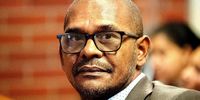
Less than seven weeks later, on 23 September 2025, Fazel’s security clearance was withdrawn pending the outcome of a formal investigation.
The Acting Director-General of State Security cited “reported leaks and political interference” relating to the Inspector-General of Intelligence.
According to Fazel, the Acting DG argued that these allegations pointed to “potential weaknesses” in the OIGI’s information security protocols and provided “a credible basis” to consider whether a breach of those protocols had occurred.
But Fazel disputed the basis for the decision.
In a letter issued on the same day, the Acting DG relied on the JSCI investigation, yet, Fazel argued, identified no leak, political interference or breach of security protocols and put no specific allegations to him.
Fazel said the Acting DG provided reasons only on 27 November 2025, after he had lodged an appeal.
Those reasons, he told the commission, differed from the original justification for withdrawing his clearance. The November letter made no reference to political interference or any investigation into his conduct.
Nicoc twice sought counter-intelligence investigation into Fazel
Fazel also revealed that Nicoc had twice asked the Acting DG to launch a counter-intelligence investigation into him, based on the same complaints.
He said this emerged from the record in his review application.
The commission also heard that on 11 August 2026, almost a year after his security clearance had been withdrawn, Investigating Directorate Against Corruption (Idac) prosecutor Drushanta Ramsy testified that Mchunu had arranged for a report to reach Idac outside the prescribed channels.
“I now know, from the record in my review application, that Nicoc twice asked the Acting DG to conduct a counter-intelligence investigation into me on the basis of the same complaint,” Fazel said.
Fazel’s review application exposes deepening rift with intelligence services
Evidence leader Matthew Chaskalson SC questioned Fazel about the review application he launched last year and the relief he was seeking from the court.
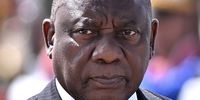
Fazel explained that he initially sought to review and set aside two decisions: the Acting Director-General of State Security’s decision on 23 September 2025 to withdraw his security clearance, and President Cyril Ramaphosa’s decision on 14 October 2025 to suspend him.
He said he had since amended his application to include the Acting Director-General’s subsequent decision not to reinstate his security clearance, as well as the President’s decision to keep him on suspension.
But Fazel’s evidence went beyond the legal challenge, exposing an increasingly strained relationship between the OIGI and the intelligence services before his security clearance was withdrawn.
He told the commission that the OIGI and the services did not always share the same understanding of what effective oversight required, with the office’s work frequently encountering resistance.
This included reluctance across the services to provide access to intelligence activities and products, delays, postponements, complaints of “oversight fatigue” and accusations of leaking information.
‘Fabricated WhatsApp messages’
Defence Intelligence, he said, had resisted oversight of its 2022/23 financial year, while the Chief of Intelligence had allegedly presented him with fabricated WhatsApp messages purporting to be intercepted communications.
Fazel said the messages sought to portray a conspiracy involving a former inspector-general, the media and members of the legal profession, suggesting that he was seeking information not for oversight purposes, but to share with unauthorised recipients.
He said he had reported the matter to the President, the Joint Standing Committee on Intelligence (JSCI) and the police.
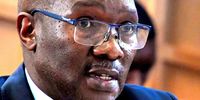
He also told the commission that on 22 November 2024, SAPS divisional commissioner Lieutenant General Dumisani Khumalo refused the OIGI access to the docket of a former major general.
In a further escalation, Fazel alleged that from 4 September 2025, the State Security Agency (SSA) effectively suspended oversight of itself by raising what he regarded as spurious concerns about the OIGI’s information security protocols – protocols the SSA had itself helped develop.
Fazel also outlined how he had assigned three sensitive matters to the parliamentary police committee on 7 January 2025, bypassing Police Minister Senzo Mchunu.
These concerned whether a SAPS Crime Intelligence major general held a valid security clearance, whether Crime Intelligence had complied with procurement prescripts when acquiring covert properties through the Secret Services Account, and the appointment of a brigadier to a senior position. DM
Comments
Scroll down to load comments...