


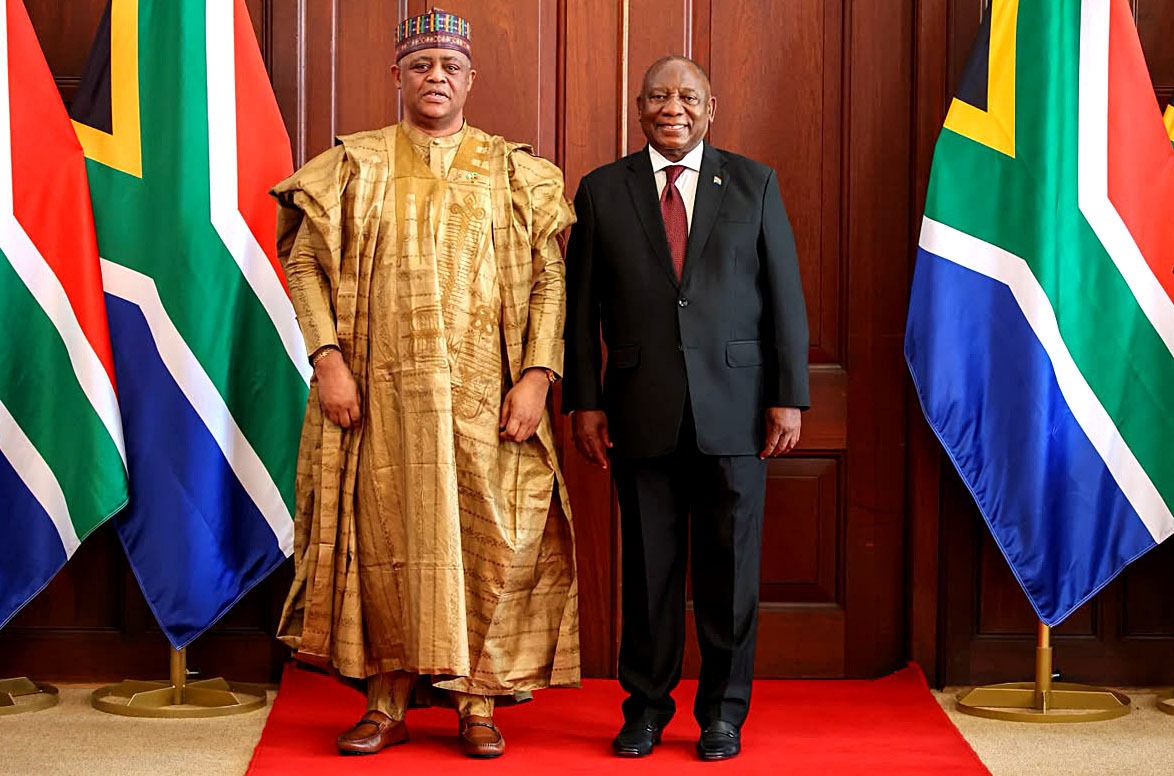
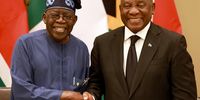
 Nigeria’s new high commissioner to SA, Femi Fani-Kayode, presents his credentials to President Cyril Ramaphosa at the Union Buildings on 14 October. (Photo: The Presidency)
South Africa’s chronic problem of xenophobia is hampering the considerable potential of its ties with Nigeria, according to Abuja’s deputy high commissioner to SA, Alexander Ajayi.
Bilateral trade between the two countries topped $2-billion last year, with more than R100-billion invested across both economies.
Yet Nigeria and Ghana have also been the most outspoken critics of anti-migrant – or Afrophobic – violence, a fault line that has soured diplomatic relations.
We spoke to Ajayi while he was still acting high commissioner, well before the arrival of the new high commissioner, Chief Femi Fani-Kayode. Fani-Kayode ran into immediate trouble after publicly clashing with the Presidency over his claim that his remarks at his credentialing ceremony with President Cyril Ramaphosa had been deliberately excluded from the broadcast.
Perhaps surprisingly, in the circumstances, Ajayi said in the earlier interview that relations between Nigeria and South Africa are “quite cordial and excellent because there has been a very good rapport at the level of government-to-government relations”.
Yet he also made it clear that the xenophobia issue is not going away.
“From February to date we have recorded about eight to 10 extrajudicial killings [of Nigerians], with about four of them happening in direct contact with security personnel,” he claimed.
“We have sent notes to Dirco on all those deaths, with some being acknowledged and assurances given that they were being investigated and updates would be given after the completion of investigations. However, we are still waiting for such updates.”
Two of the cases were mentioned in May by Nigerian Foreign Minister Bianca Odumegwu-Ojukwu in an Instagram post.
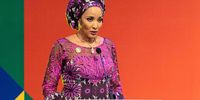
Ajayi also noted that the Nigerian government had so far repatriated about 2,200 of its nationals from South Africa.
Anti-migrant protests
Following a surge in anti-migrant protests and violence in June, Ramaphosa sent International Relations and Cooperation Minister Ronald Lamola to Nigeria’s capital, Abuja, where he met Nigerian Deputy Foreign Minister Sola Enikanolaiye on 27 July.
Lamola outlined three specific areas of concern to South Africa.
One was when a Nigerian resident named Solomon Ogbonna Eziko was crowned “king” of the Nigerian Igbo people on 14 March in KuGompo City (formerly East London). The “coronation” angered some locals, who saw it as a challenge to local traditional leaders, said Lamola. It sparked protests and the torching of vehicles.
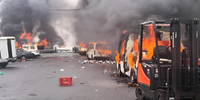
Lamola also raised concerns about the involvement of Nigerian citizens in “organised crime, illicit drug trafficking, and financial fraud”, saying that as of 7 July, more than 500 Nigerian nationals had been processed through the South African criminal justice system for various offences.
He expressed concern about the involvement of Nigerians in hijacked residential and commercial properties in urban centres such as Hillbrow, Johannesburg, and Sunnyside, Pretoria. He added that this had “fuelled negative perceptions” about Nigerians living in South Africa.
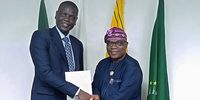
Ajayi said that at the meeting in Abuja, the two countries had agreed to work together to address the legal issues involving Nigerians in South Africa.
“We have always made it clear that Nigeria is a law-abiding state. And we have always encouraged our citizens to respect your laws and customs.”
If any Nigerians were involved in crime, they should be subjected to the normal judicial process, he said.
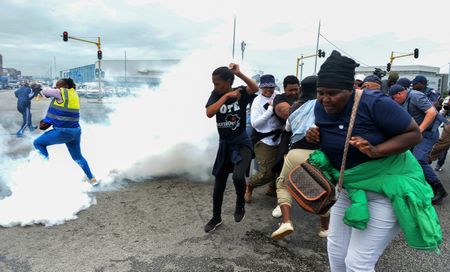
Stereotyping and scapegoating
But he added that his government opposed the stereotyping and scapegoating of Nigerians as all being involved in drug trafficking and other crimes.
On the “Igbo king” controversy, Ajayi said he had moved quickly to de-escalate tensions by visiting AmaRharhabe King Jonguxolo Vululwandle Sandile in KuGompo and presenting him with three cows on behalf of the Nigerian federal government to atone for the fake coronation. This was accepted.
Daily Maverick asked him to respond to a perception in the SA government that Nigeria was quick to attribute crimes against Nigerians to xenophobia when it was often just ordinary crime, or even crime committed by other Nigerians.
He said Nigeria was not going out of its way to “name and shame” South Africa.
“Our concern stems from the fact that this has been recurrent. If you look at the history of this anti-migrant violence in South Africa, it’s been there since 1998 or so. And we expect there will have been a solution by now.”
The recurrence suggested that “maybe there’s need for an extranational solution to this – a common African solution to the issue”.
Ajayi made it clear that like Ghana, Nigeria wanted that “extranational solution” to be found in a discussion by the African Union about South African xenophobia as a pan-African problem.
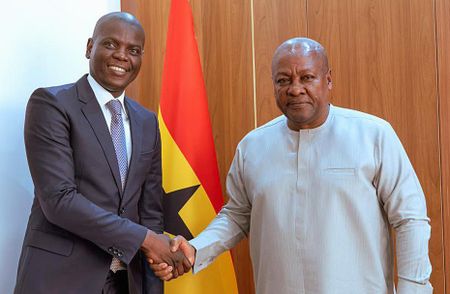
In July, Ghana’s President John Dramani Mahama posted on X that he had “secured a commitment from AU Commission Chairperson Mahmoud Ali Youssouf to place the ongoing xenophobic attacks in South Africa on the agenda of the next AU Summit.”
This would give South Africa “a fair platform to respond and gives us all a chance to find lasting solutions together”.
Ajayi noted that Nigerian Vice-President Kashim Shettima had likewise delivered a message on behalf of Nigerian President Bola Tinubu to an extraordinary summit of the AU in Luanda on 30 August, also calling on the AU to place xenophobia in South Africa on the agenda of the AU summit in January, “for consideration and appropriate action”.
Ajayi said Nigeria believed that at the AU summit in January, African leaders would find an “ingenious, innovative” way to solve the problem permanently.
But Pretoria has rejected being singled out in this way and wants the AU to instead discuss migration across the continent and not just in South Africa. This would address “the push and pull factors, the root causes of illegal migration – climate change, the economy, peace and stability, democracy – in a comprehensive manner”, Lamola told a press conference in August.
In other words, Pretoria wants the AU to discuss, among other things, the responsibility that sending countries bear for creating the poor conditions that persuade their people to flee to countries like SA.
Ajayi said Nigeria was not averse to discussing the issue of development and migration.
“Every country has a certain element of push and pull factors. But what we should look at is, what are the advantages of migration? How does it benefit both the supply countries as well as the recipient countries? How can we make migration to be regular, to be orderly and to be dignified ?”
He cited the example of the US offering refugee status to Afrikaners as being an example of even South Africa having push and pull elements.
Ajayi said the generally good relations between Nigeria and South Africa dated back to before the start of South African democracy in 1994 when Nigeria supported the liberation struggle.
Trading partners
Today, South Africa is one of Nigeria’s largest trading partners, particularly because of large South African imports of Nigerian oil. Total trade in goods and services in 2025 was worth $2.042-billion, comprising $442.72-million in SA exports to Nigeria and $1.6-billion in SA imports from Nigeria – leaving a $1.1572-billion deficit for SA.
A massive $1.54-billion – more than 96% – of SA’s imports were of oil and refined fuel in 2025. So, without fuel, SA would have registered a huge trade surplus, Ajayi pointed out.
He added that almost 200 South African companies are operating in Nigeria. South Africa’s cumulative investment, including direct and portfolio investment, totals R83.28-billion, while total Nigerian investment in South Africa is about R22.063-billion.
Among the biggest South African investors in Nigeria are MTN, Standard Bank, FirstRand Bank, Absa, SanlamAllianz insurance and financial services, SAA and Spur restaurants, he said.
The biggest Nigerian investment in South Africa is Dangote Cement’s 64% controlling stake in Sephaku Cement, owned by the Nigerian billionaire Aliko Dangote. Other major Nigerian investors include Access Bank; payment platforms Flutterwave and Paystack; aluminium can manufacturer GZ Industries; and Oando Energy Resources.
Mining giants
Ajayi added that Nigeria was trying to diversify its economy away from oil and gas into critical and other minerals, hoping to attract South African mining giants.
He recalled that for the past two years, Nigeria and SA had held roadshows on mining and Nigeria had held a big investment show on the sidelines of SA’s G20 summit in Johannesburg in November last year.
He said 10 Nigerian state governors, led by Vice-President Shettima, had visited SA last year on a business-seeking mission. Nigeria had also held side events at the last few African mining indabas in Cape Town and intended to do so again in February 2027.
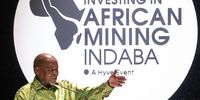
He added that had it not been for the xenophobia controversy, Nigeria would have held another mining investment summit this year “to bring partners and stakeholders together for deal-making and partnerships”.
Conversely, many Nigerian companies wanted to invest in SA. He noted, for example, that Gold Treane Nigeria Limited was doing deals with South African companies to supply heavy mining machinery to small and mid-size mining sites in Nigeria. Dangote also wanted to increase its investment in South Africa, and many other large players were ready to “make it big” here, said Ajayi.
The main mechanism the two governments use to boost trade and investment is the biennial Nigeria-South Africa Bi-National Commission, which last met in Cape Town in December 2024, co-chaired by Tinubu and Ramaphosa. Ajayi noted that Ramaphosa had made a “very important pronouncement that he wanted to see many more Nigerian products on the shelves of South African shops”.
The two leaders had also said that “if South Africa and Nigeria could get it right, the entire continent would definitely get it right”.
Yet Ajayi also said Nigerian businesses faced “perennial” and “bureaucratic” challenges, including difficulties securing licences to operate in South Africa.
Nigeria would like to see such obstacles removed and tax and customs procedures streamlined and clarified.
Elections
Domestically, Ajayi confirmed that Tinubu would be running again for a second term as president in January 2027.
Though voter turnout was only 26.71% for the last elections in February 2023, Ajayi said he expected it to be good this time “because of the political maturity and high level of political awareness of Nigerians”.
Tinubu, though, is facing considerable popular resistance to his reforms, most notably his cutting of fuel subsidies and floating of the naira, both of which have sharply increased costs for ordinary Nigerians.
Ajayi explained that Tinubu was a reformist and that his reforms had been acknowledged as necessary by the World Bank, the International Monetary Fund, the International Finance Corporation and other multilateral financial institutions. But such critical reforms inevitably brought “some kind of inconveniences here and there”.
However, he said, the reforms were beginning to yield good dividends such as increased investment. In the meantime, the government had introduced palliatives to help people deal with some of those inconveniences.
Since 2002, Nigeria has been trying to counter the threat of the Boko Haram violent Islamist extremists in the far north of the country.
Ajayi said the Tinubu government’s handling of the threat had improved security substantially, as evidenced by the increase in direct investment in Nigeria. DM
Comments
Scroll down to load comments...