



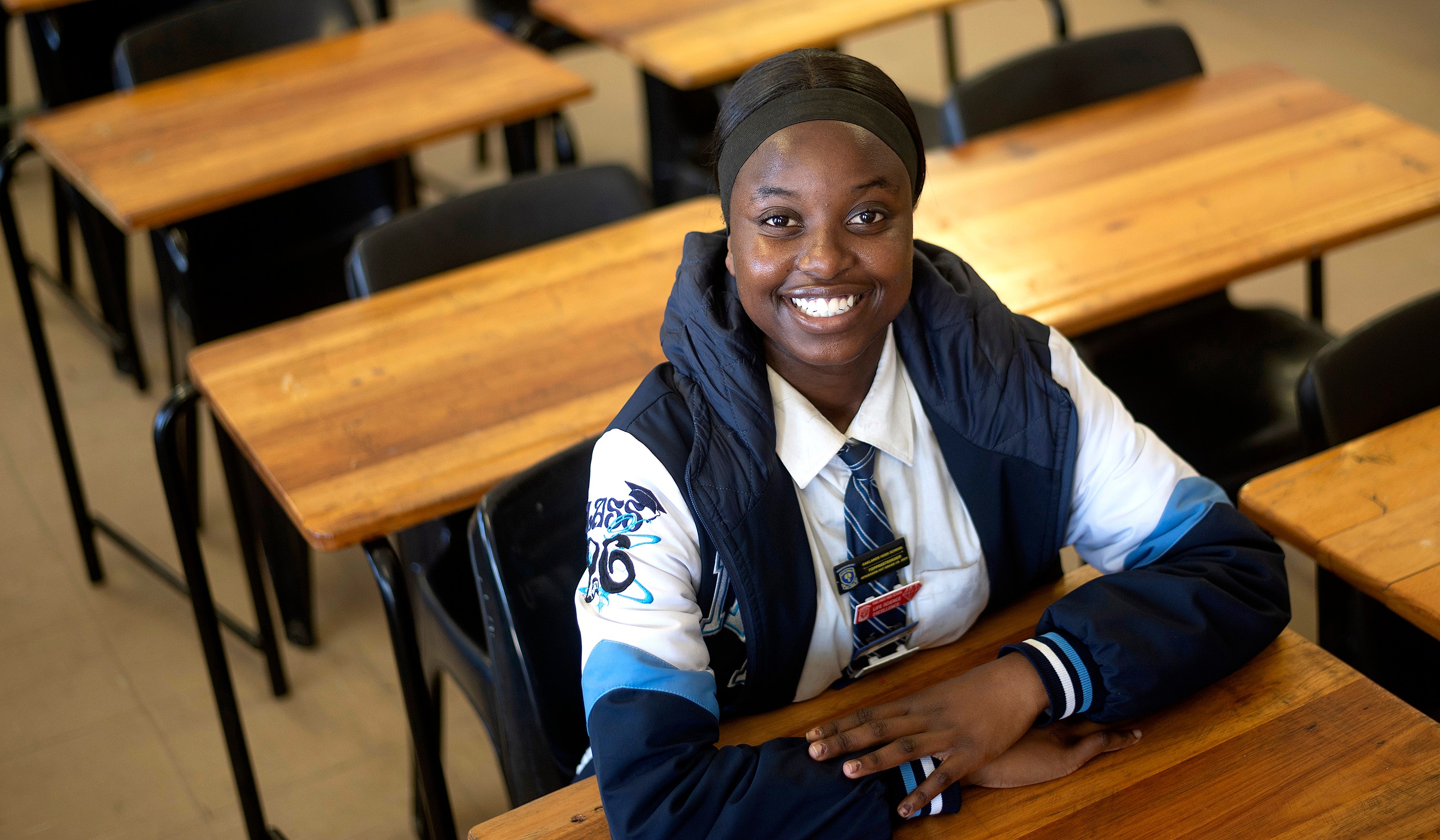
 Mufaro Marufu is writing her matric exams, and believes she will do well, thanks to the support of her father and her geography teacher. Undocumented learners like Marufu face an uncertain future, however, as the obstacles to proceeding from school to higher education in South Africa are legion, to say nothing of employment. (Photo: Brenton Geach / EdDesk)
On June 1, when a mob went door to door hunting migrants in Masakhane in the Overberg region of the Western Cape, Blessing Kachere was separated from his parents. At sunset, he still had not found them, so he slept the night alongside the R43, setting off on a dawn march towards the one place he felt he would be safe – his school.
His Malawian parents were unable to enrol him in Gansbaai Academia, the only high school in town. The school they eventually found for him was nearly 50km away. Blessing is not sure how far he walked before he was offered a lift, but his legs hurt, and he had started to worry he would miss that afternoon’s mid-year isiXhosa exam.
He made it, wrote the exam, and afterwards told a teacher what had happened. It wasn’t long before staff from a humanitarian organisation and a district social worker located his parents and reunited the family, but the Kacheres never returned to their shack in Masakhane, and Blessing did not return to his school.
The following Sunday, they boarded one of the buses organised by the Overstrand Municipality to repatriate Malawian nationals, and returned to the family seat in Limbe, near Blantyre. In a WhatsApp message, Blessing’s father, Wisdom Kachere, said he had spoken to the Malawian Embassy about his son’s predicament but had been told that unless Blessing returned to his school to write exams, there was nothing they could do.
The family will not be returning. They cannot afford the journey, and even if they could, it appears that Blessing has been de-registered from his school due to absenteeism.
Blessing is not the only learner to have been wrenched out of Grade 12 by the surge in xenophobic violence that has shaken the country this year.
In July, the Zimbabwe Exemption Permit Coordinating Committee provided both the Embassy of the Republic of Zimbabwe and South Africa’s Department of Basic Education (DBE) with a list of 99 learners who had made contact, saying they feared they would not be able to write exams, due to anti-migrant unrest. In a response to EdDesk, the department confirmed that 76 of the learners on the list were registered for the National Senior Certificate, and that all “will write the NSC examinations at the centres at which they are registered, and where they have completed their School-Based Assessment”.
But the permit coordinating committee claims that many learners have not been assisted and face the prospect of never attaining their National Senior Certificate.
Learners who miss exams due to circumstances beyond their control must make an affidavit at their nearest police station and take it to their school principal, who must help the learner notify the Department of Basic Education and for arrangements to be made to write that exam at a later date, advises Liesl Fourie, a human rights attorney at the Nelson Mandela University’s Refugee Rights Centre.
Whether the department will accept displacement due to violence as a valid justification to write supplementary exams in June 2027 – or even to re-register for the 2027 National Senior Certificate – is, as she notes, “something that still needs to be tested”.
Frenzied efforts to secure documents
Several learners told EdDesk they would be unable to register for the National Senior Certificate without a valid immigration document, or at the very least a passport and birth certificate.
Mufaro Marufu, a Grade 12 learner at a Cape Town school, said this was “a seriously big deal”, because her parents immigrated to South Africa when she was very young, and she had never left.
“Now all of a sudden I must go back to Zimbabwe, a place I have never been, and I must go alone because my father is an Uber driver, and can’t afford the time off,” she said.
What was supposed to be a fairly short trip to apply for documents was drawn out by processing delays, causing Marufu to miss most of a school term.
“It was surreal knowing that my matric year was progressing, yet here I am in this unfamiliar place,” says Marufu, whose mid-year results suffered as a consequence, although she was able to catch up with the help of her father and an empathetic geography teacher, and believes she will do well in her final exams.
Her friend Michael Bakili (not his real name) is less confident. He left with his family for the Democratic Republic of Congo (DRC) at the beginning of the year, fearing being targeted by anti-migrant thugs. After the family returned to South Africa, his school said he needed a birth certificate to register for his National Senior Certificate, so he travelled back to the DRC to apply for one.
“It cost so much, both time and money,” he said, adding: “I am not gonna lie, I have struggled to sit down and concentrate this year, even after my parents took away my gadget [cellphone].”
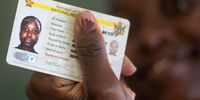
There is nothing untoward about schools requesting documents – they are required to do so by the Admission of Learners to Public Schools Regulations – but making such requests of Grade 12 learners without emphasising that they can still register for and write their National Senior Certificate without producing documents is problematic, according to Zeenat Sujee, the Head of the Education Rights Programme at SECTION27.
“For most of South Africa’s democratic period, undocumented learners in their final year of school have been told that the law requires that they possess documentation. However, since the so-called Phakamisa judgment of 2019 [Centre for Child Law and Others v Minister of Basic Education and Others], learners have been permitted to enrol at schools and to write their matric exams,” she said.
The Department of Basic Education has since confirmed that undocumented learners cannot be prevented from registering and writing the National Senior Certificate examination, and Umalusi, South Africa’s education quality council, has confirmed that an identity document is not compulsory for the issuing of a matric certificate.
Slipping through the cracks
The consequences of misunderstanding the documentary requirements can be life-altering, for both the learner and family members.
Patience Chirume is Shingirayi’s mother, although today they live on opposite ends of Johannesburg – she in Kya Sands in Randburg, he in Lenasia. They haven’t spoken much since he dropped out of Grade 12 in 2025, because, she says, he was unable to produce valid identity documents to register for his National Senior Certificate.
It’s a bit more complicated than that.
Patience moved to Johannesburg in 2004, after her husband died. Shingirayi (she calls him Shingi) was not yet two. She settled in Protea Glen, and in due course enrolled her son in a local primary school, using her asylum application reference number.
“He never had issues socially because he was speaking Pedi fluently by the age of five. To those he went to school with, he’s just another Pedi guy,” she says.
Her son excelled at soccer – another reason he thrived socially – but struggled academically.
“I think he had some trauma from growing up without a father. He also tested positive for HIV in 2010. I was pregnant at the time with my second-born, and they diagnosed me [with HIV], so then I decided to get Shingi tested because he would break out in pimples from time to time. From that time, he was taking the [antiretroviral] syrup until he was old enough to take the tablets. I think he feels some resentment towards me for that,” she says.
For three years running, after a local school tournament, soccer scouts invited Shingirayito attend trials for Moroka Swallows.
“He couldn’t because of the lack of documents. I tried to organise some, but there are so many tsotsis in that business, and they take your money. I stopped trying,” she says.
And so too, she believes, did her son.
“Already in Grade 11, he was smoking something; I am not sure what exactly. He was drinking as well and hanging out with these boys. When I asked him about his registration [for the National Senior Certificate] he said he couldn’t do it because he needed a document. Then he dropped out,” she says.
Today, Shingirayi, who calls himself Paul to avoid drawing attention to his nationality, sells peanuts, samosas and magwinya to queueing motorists at traffic lights in Lenasia. In 2025, he received counselling for substance misuse at the Lenasia South Civic Centre Clinic, which he said was helpful.
Registered to write, but then what?
Angela Mukana, a Grade 12 learner from Bellville South High School, sends a voice note that describes, with flawless efficiency, why registering successfully for the National Senior Certificate is not on its own a great cause for celebration, if you happen to be undocumented.
“My parents are refugees from DRC, but I’ve never been to Congo. I was born here. I grew up here. I speak English, Afrikaans, and a bit of Xhosa, but legally I don’t exist because I don’t have a birth certificate or a South African ID. In the records of Home Affairs, I am described as an alien, an undocumented foreigner in my own home,” she says.
Mukana dreams of becoming “a successful barrister”, but without a South African identity number she would need to apply for university as an international student, incurring unaffordable fees.
“I cannot apply for any National Student Financial Aid Scheme funds or any bursary because they all need a 13-digit ID number. Even if I get a degree, I cannot do my articles or be admitted as an attorney without a valid ID. The Legal Practice Council simply will not register me, so even if I finish my matric with great marks, my dream ends at the school gate,” she said, emphasising that she wanted to be identified by her real name.
“I want to stand up for kids like me, who do not know what the future holds, and are too frightened to speak out,” she says.
According to Fourie, Mukana’s experience is not limited to immigrant children.
“There are lots of kids born to South African parents who are in the same fix because their parents did not register the birth within 30 days. The longer parents leave applying for a late birth certificate, the more difficult it becomes to get one. If it happens after seven years have passed, there are so many hoops to jump through – the whole process can take years and years,” she said.
Keeping their heads below the parapet
Roshni Parbhoo-Seetha is the Project Manager for Education at the SA Depression and Anxiety Group (Sadag), and regularly receives calls to the hotline about school bullying from immigrants.
“They’re picked on because they look different, or sound different. They’re told they shouldn’t be taking up space on school transport, or that they shouldn’t be in the country in the first place. It isn’t just this year, following the anti-migrant protests, it’s every year,” says Parbhoo-Seetha.
“It impacts their sense of belonging, and their confidence,” she says, adding that in addition to reassuring callers that they matter, and that they belong, counsellors explain that in any bullying situation, there are at least three people: the bully, the bystander and the victim, and that all three are struggling in different ways.
“When people who are bullied understand these other roles, it removes self-blame and reduces fear because they can see the bully as someone who acts out of insecurity,” she says.
When Marufu travelled to Zimbabwe to apply for documents, she was struck by how freely everyone spoke Shona, Ndebele or Ndau without reservation.
“I didn’t feel I needed to watch my back or be anything other than myself.”
And then there is Luthando
Luthando Vunge’s story is a powerful reminder that schools are complex social spaces, and that reductively categorising groups and group behaviours misses the point that all children need to be seen, and require support.
Last year, both his parents were convicted of murder for their part in a mob justice attack on an 18-year-old suspected of robbing community members of their cellphones. Vunge was in Grade 12, and attended the trial during months that should have been devoted to exam preparation.

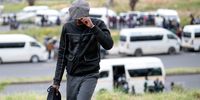
“My head was not right, so I never registered,” says Vunge (not his real name), whose mother died in Pollsmoor Prison within three months of being sentenced, having entered, he says, as a healthy person. His father, an Angolan, was transferred to Brandvlei Correctional Centre near Worcester.
“I last saw him six months ago, it’s difficult to get there,” he says.
Vunge stays on his own today in the family’s shack in Site B, Khayelitsha. A nearby aunt keeps an eye on him. To afford transport into Cape Town’s City Bowl, where his school is located, he buys biscuits in bulk and sells them at school.
Beyond this, he keeps his head down.
“On Heritage Day students wore traditional dress, but I just had my jacket and my jeans. I want to recognise my father’s culture, but I will wait until I am finished school. For now, it’s too complicated,” he says, adding that the “foreigner kids” at his school don’t hang out with the South Africans.
“Especially this year with March and March and everything. They keep to themselves. I like some of them, but we don’t hang out. My mother is from the Eastern Cape. Recently I went back for ulwaluko [traditional circumcision], so I am a bhuti now, and at school I only hang out with other bhutis. If I spent time with foreigners, people would ask me, ‘What am I doing?’”
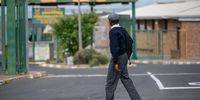
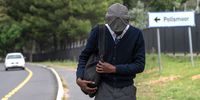
Vunge says he is bullied sometimes, but not because of his mixed parentage or the fact that his father is in prison.
“I am 20 now. If I take the school bus, the young ones say I must be stupid to still be here. My school also has a reputation for being a poor school, so when kids on the bus see the blazer, they tease us,” says Vunge, who is studying particularly hard for English, History and Tourism, with plans to become a tour guide.
When pushed, he concedes that it’s actually his backup plan. His real goal is to become a singer. On weekends, when he should be studying, he visits a friend who has a small studio, and they record songs, mostly Afropop. “I am inspired by these artists from other countries, mostly, like BurnaBoy, and Wizkid, but also some South African amapiano artists, like Optimist Music ZA,” says Vunge. DM
This story was produced by The Education Desk, with support from the Henry Nxumalo Foundation.
Comments
Scroll down to load comments...