




 Illustrative image | View over Cape Town CBD. (Photo: Mark Skinner) | Executive mayor of the City of Cape Town, Geordin Hill-Lewis. (Photo: ER Lombard / Gallo Images)
“On the short-term rental question, there is one thing that I do agree with,” said Geordin Hill-Lewis, Cape Town’s executive mayor, in a wide-ranging interview with Daily Maverick in October 2025. “The fact is, if you are buying five apartments and letting them out full time, whether through Airbnb or whoever, you are running a hotel. And there I fully agree with those who have said that there must be an equal playing field between those businesses and hotel businesses.”
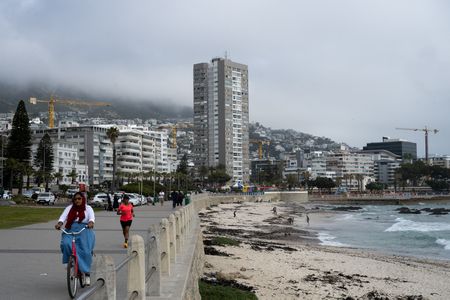
The broader context for our question, as intimated in the interview’s title — No place for old locals, Part 2 — was the unprecedented uptick in recent years of foreign property investors in Sea Point and the City Bowl, which, according to our reporting, was driving prices beyond the reach of ordinary Capetonians and removing long-term rental stock from the market.
/file/dailymaverick/wp-content/uploads/2025/09/Z63_7914-copy.jpg "kevin-seapointpromises")
At the time, although he did not point to statistics of his own, Hill-Lewis dismissed the data that foreigners accounted for “more than half” of new property purchases in these areas as “extremely alarmist” and “anecdotal”. In his estimation, international buyers were mainly competing in the “very high end” of the market — properties valued at R10-million or more — which meant that they could not be blamed for squeezing out middle-income Capetonians.
Subsequent reporting by Daily Maverick would prove Hill-Lewis at least partly correct.
In June 2026, at the suggestion of a reader, our senior journalist Rebecca Davis turned to Inside Airbnb, an independent project that scrapes and republishes the platform’s listings, including each host’s self-reported location. Davis’s analysis, which dug into the full Cape Town dataset, revealed that only 8.1% of Airbnb hosts in the city (out of those that disclosed their locations) said they were based outside South Africa.
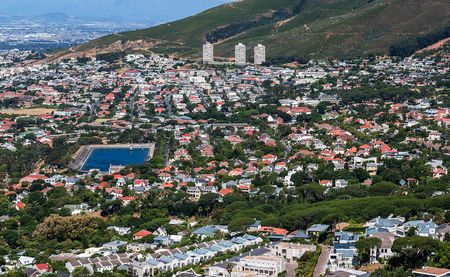
But the data also revealed that 62 foreign hosts were running three or more Airbnb listings, with “the top 10 holding 73 properties between them”. Also, while local property companies returned statistics that showed foreigners accounted for 40% of sales above R10-million, Davis’s research pointed to a median foreign purchase price of R2,7-million.
In other words, while Hill-Lewis was spot-on in his assessment that foreigners were most active in the city’s upmarket niche, his contention that they had nothing to do with the inner city housing squeeze was far from vindicated.
The proposed fix
Still, as the mayor told this reporter back in October 2025, he had every intention of raising the bar on short-term rental landlords.
“So we are doing an exercise right now,” he said, “it’s under way, and several hundred [properties] have already been transferred onto the commercial tariff — so it’s a much higher level of city charges for commercial businesses than for residential homes. Meaning, yes, we are going to make sure that there is an equal playing field from a City perspective.”
On 4 August 2026, Hill-Lewis made good on his promise. In a memorandum to residents and ratepayers, this was set as the opening date for public comments on the draft Short-Term Letting By-Law, with a closing date of 4 October 2026.
/file/attachments/2996/WhatsAppImage2026-08-04at154320_888674.jpeg)
“The proposed By-Law aims to improve compliance with the City’s existing Rates Policy,” the memorandum noted, “which requires that commercial property rates be paid for premises used for commercial short-term letting. Commercial rates do not apply to people part-time letting some of their residence to supplement income, or to long-term rentals, as these properties are considered the primary residence of the tenant.”
Put simply, in line with Hill-Lewis’s words to us, the City of Cape Town had framed its pushback against short-term rental landlords as a narrow, technical fix — a rates-categorisation mechanism to stop commercial operators from getting away with residential-level charges.
At first glance, by Daily Maverick’s reading, it was an authentic and welcome move. But the real test lay in a simple question.
Would the intervention bring relief for the thousands of middle-income Capetonians who — after months of pitching up at viewings, only to find another 40 or so hopefuls in the queue — could not secure affordable long-term accommodation in the inner city, close to their places of work?
The fine-print beneath the fix
In November 2025, reporter Steve Kretzmann of GroundUp put out an important piece of news analysis on the availability, and affordability, of inner city housing. What he found was that, out of the long-term rentals that were available, 90% were beyond the reach of ordinary Capetonians. Also, with 35m² “micro-apartments” on sale for almost R2-million on average, he justifiably noted that buying was no longer an option for the vast majority of locals.
“There are a number of reasons for the lack of available long-term accommodation,” Kretzmann concluded. “Among them are population growth outstripping new residential units, foreign buyers outbidding locals, and what has been termed ‘the Airbnb effect’, in which housing availability is reduced by landlords letting apartments for short-term stays, predominantly to tourists.”
The City of Cape Town, he added, was well aware of the problem — referring to the Local Spatial Development Framework (LSDF) for the central business district, approved by the municipal council on 30 October 2025, Kretzmann quoted the astonishing statistic that 70% of all residential units in the inner city were “either hotel managed or Airbnb”.
/file/dailymaverick/wp-content/uploads/2023/04/3305507395_a3b92ac047_o.jpg "BM Georgina retail CT properties main")
Expressed another way, at the time that Daily Maverick was speaking directly to Hill-Lewis about these issues, only 30% of apartments or houses in the inner city were rented or occupied by owners.
Since then, according to the very same LSDF, the situation for accommodation-hunting locals would only have become worse. The compilers of the document stated candidly that as more tourists sought short-term rentals, the availability of housing in the inner city would further decrease.
So, again, was the draft Short-Term Letting By-Law the long-awaited fix?
Bas Zuidberg, chairperson of the Cape Town Collective Ratepayers’ Association (CTCRA) — a formal body representing 45 ratepayer and civic organisations, with around 100,000 residential properties under its sway — was, at best, circumspect.
In a statement released on 6 August 2026, Zuidberg noted, on behalf of the CTCRA, that the draft would require “further development” if it was to have a meaningful impact on the availability of long-term rental housing.
“As currently drafted,” he observed, “the By-law primarily establishes a mechanism through which qualifying short-term letting properties may be rated or treated differently for municipal purposes. While this may generate additional revenue, CTCRA is concerned that the financial impact may not be sufficient to alter the commercial incentives that favour short-term letting over long-term residential tenancies.”
Short-term rental landlords, in Zuidberg’s estimation, were not being disincentivised enough. With strong tourism demand — and thus the ability to absorb the extra charges by raising nightly rates — property owners, according to the CTCRA, would “in many cases” still realise more profit from short-term letting.
Pointedly, while Zuidberg was in agreement with the principle (and the all-but-guaranteed outcome) that the draft by-law would “increase municipal revenue” and “create a more equitable regulatory environment”, he saw no real change in the status quo for squeezed-out locals.
“CTCRA therefore believes that further measures may be required if the City intends to increase the supply of long-term rental housing and protect the residential character of affected neighbourhoods,” the release stated.
“Other tourism-intensive cities across the world have introduced a range of regulatory approaches in response to similar concerns, including registration systems, limits on the number of letting days, distinctions between primary residences and investment properties, zoning controls, enforcement mechanisms and area-specific restrictions.”
The fix in other cities
Among other tourist destinations, Zuidberg was no doubt referring to Barcelona — and here, once again, our interview with Hill-Lewis back in October 2025 had stumbled upon the point of tension.
“To address [its own] housing crisis, Barcelona plans to phase out all short-term rentals by 2028,” we put it to the mayor. “Does the City of Cape Town see Barcelona, in any way, as an example worth following?”
“No,” Hill-Lewis responded bluntly.
“No, with no elaboration?”
“Well,” he said, “there’s just a fundamental difference in context. Barcelona has 20 million overseas visitors every year. They have got more visitors in their busy month, which is June, than we have in an entire year. Cape Town has 1.5 million visitors in an entire year.
“The other huge contextual difference between Barcelona and Cape Town, or Spain and South Africa, is that Spain has single-digit unemployment. South Africa has 36% unemployment. Even in Cape Town, where we have 21%, which is much lower than the rest of the country, it is still far too high — that number would be considered in Europe, or anywhere else, as crisis-level unemployment.”
/file/dailymaverick/wp-content/uploads/2024/11/GettyImages-2105321173.jpg "Housing in Spain's Second City Amid New Rental Controls")
As ever, Hill-Lewis was emphasising the Democratic Alliance’s number one priority of job creation — the tourism sector, he repeated, was “one of the best places in the economy” to make it happen.
In Cape Town, he reminded Daily Maverick, overseas arrivals had been growing 7% year-on-year for the previous decade. He asked us to imagine the national economy growing at 7% — unemployment, he insisted, would be halved. For this reason, Hill-Lewis informed us, overseas arrivals in Cape Town “dare not” be messed with.
And so 10 months later, in the context of these words, Daily Maverick was left wondering why the DA-led municipal council had decided to regulate short-term letting at all.
On 5 August, the City of Cape Town uploaded a list of frequently asked questions (FAQs) to its website, with the answer to this specific question near the top.
In the six paragraphs dedicated to the matter, the inner city housing shortage for middle-income Capetonians was not mentioned once. Instead, highlighted in bold, was the following (summarised) answer: “To ensure fairness in the commercial accommodation sector.”
The document then proceeded to outline the envisaged practicalities — the by-law would come into effect on 1 July 2027; a property would be classified as “commercial” if it was available for short-term letting for more than 50% of its total annual room nights; any property advertised on a booking platform, including houses, apartments, guesthouses, B&Bs and hotels, would be required to obtain a City-issued short-term letting registration number.
The final FAQ removed any doubt that the municipal council was taking its cue from international cities overrun by tourists.
“Several major cities, including Barcelona, Amsterdam, Paris and New York, have imposed caps, limits on nights, or near bans on short-term letting activity,” it was noted. “These measures have been designed to reduce pressure on the housing market, but early evidence indicates significant trade-offs.”
Strict prohibitions on short-term rentals, the document suggested, would only run the risk of creating illegal or informal sub-markets. Ultimately, for the City of Cape Town, it all came down to the primacy of foreign visitors — “a blanket cap or ban [on short-term rentals],” the FAQs concluded, “would conflict with the City’s strategic goal of growing tourism and its enabling sectors.”
The most cynical interpretation of the scenario was that middle-income locals were still on their own, at the mercy of a municipal council that didn’t — and would probably never — care about them.
But 10 years ago, way before the public officers of Barcelona had created a high-level role for a “commissioner for sustainable tourism,” the concerns of squeezed-out locals were dismissed there too. At some point, like Hill-Lewis has just done in Cape Town, the mayor of the Catalan capital must have opened the door just a crack. DM
Comments
Scroll down to load comments...