




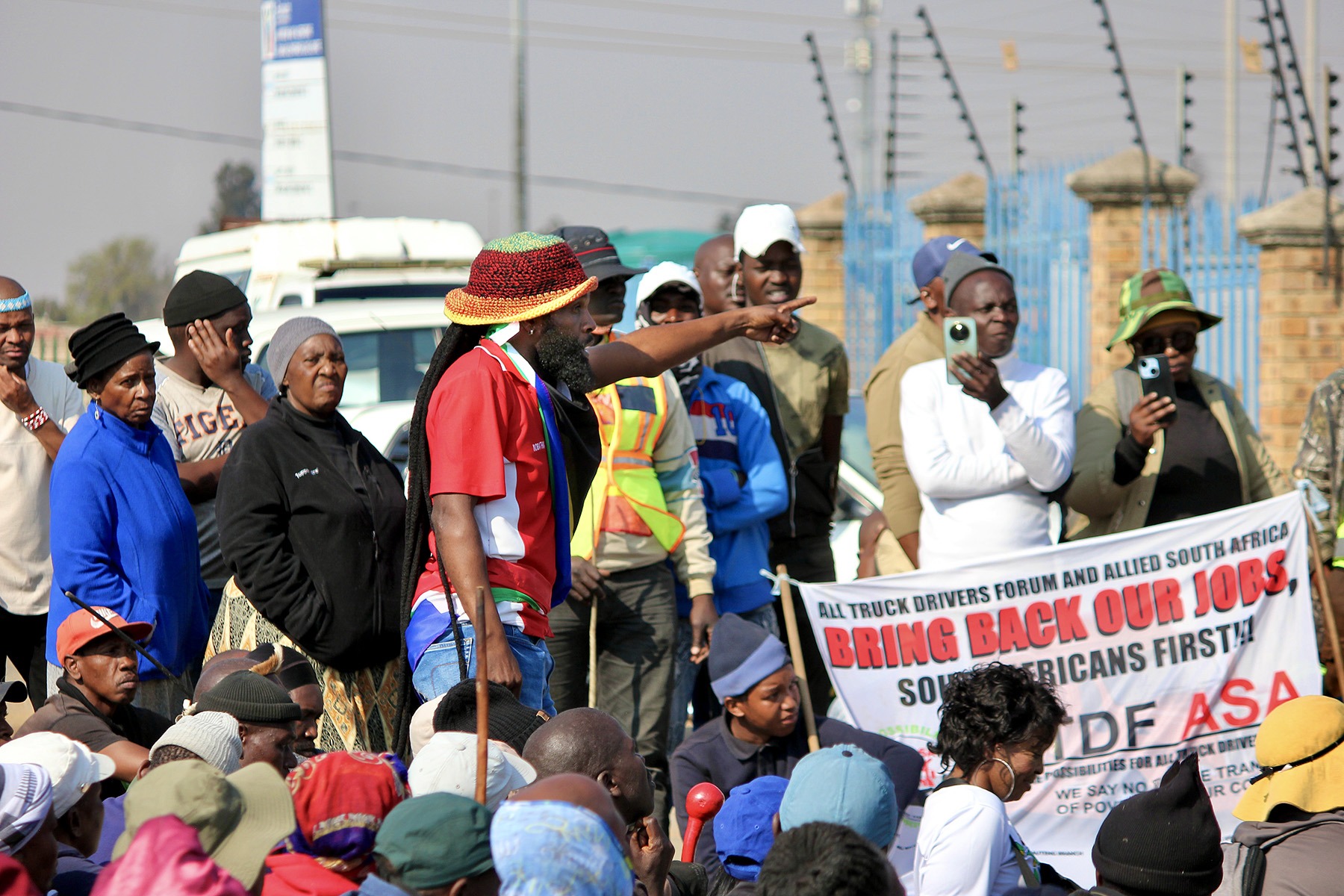
 Anti-foreigner march leaders confront municipal officials at CoE’s Tsakane Customer Care Centre during demonstrations on Thursday, 23 July, 2026. (Photo: Reitumetse Pilane)
The crowd erupted into cheers as a few anti-foreigner demonstrators forced open the gate to a spaza shop on Ndabezitha Street, Tsakane, Brakpan.
A City of Ekurhuleni occupancy auditor, part of the demonstration, had been friendly all morning. Now he asked if I wanted a cold drink or anything else. It took me a moment to realise he was offering me items from inside the shop.
I was convinced the shop was about to be looted as demonstrators carried crate after crate out of the shop and on to the pavement. Then a mattress and other personal items were placed on top of the growing pile.
/file/attachments/orphans/IMG_8910_297610.jpg "SAPS officials stand by as anti-foreigner marchers forcibly remove a foreign national from a private property during demonstrations on Thursday, 23 July, 2026. (Photo: Reitumetse Pilane)")
Police officers remained nearby throughout, leaning against their vehicles, smoking cigarettes, unmoved by what was unfolding metres away. This did not surprise me. I’d previously seen police watch as anti-foreigner marchers vandalised local property.
A bakkie pulled up moments later. The foreign national the demonstrators had been looking for jumped out of the load bin, and I suddenly realised that I had misunderstood what I was watching.
Demonstrators were not taking his possessions for themselves. They were forcibly removing the man and his belongings from the property. The auditor who offered me refreshments, I realised, was an opportunist hoping to steal a few items before the owner returned.
/file/attachments/orphans/IMG_8919_139072.jpg "A foreign national loads his belongings on to a bakkie as he is forced to leave the premises where he lives and works during anti-foreigner demonstrations in Tsakane on Thursday, 23 July 2026. (Photo: Reitumetse Pilane)")
The foreign national quickly and quietly loaded his belongings on to the bakkie. He tried hard not to look afraid as dozens of eyes remained fixed on his every move. Once everything had been packed, he climbed aboard and left.
This formed part of a series of Thursday marches that have become a weekly routine since the self-imposed 30 June deadline for foreign nationals to leave South Africa, set by anti-foreigner groups, came and went.
I don’t live in the areas where most marches take place, but I have built relationships with some who do, and it has forced me to confront realities far removed from my own.
The more time I spend in these communities, the more I am struck by how similar our aspirations are. The difference lies in who we believe is responsible for what remains out of reach.
How the marchers are organised
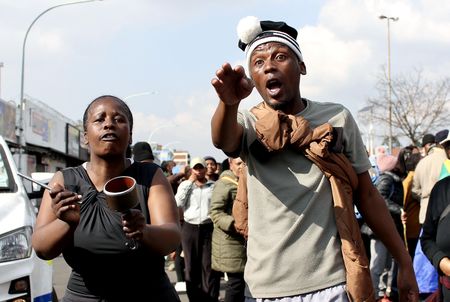
I found this group in Tsakane shortly after 10am on 23 July and approached with caution. The police escort was noticeably smaller than those I was used to seeing, with only four or five vehicles accompanying the group. I circled ahead on side streets to meet the crowd head-on rather than trailing it from behind. Before I could unpack my equipment, a woman walked several metres ahead of the crowd and came to my car window.
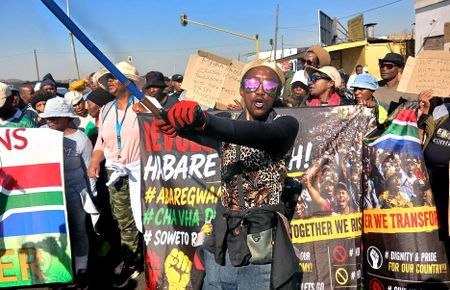
/file/attachments/orphans/IMG_8838_773625.jpg "Demonstrators from various organisations, including March and March, ATDF-ASA and Laco, participate in anti-foreigner demonstrations in Tsakane on Thursday, 23 July, 2026. (Photo: Reitumetse Pilane).")
“Please don’t take any pictures here,” she told me. “They will get upset and might smash your windscreen.”
Now on edge, I retreated to a safer position within the police convoy until I found the march leader, who invited me. He welcomed me warmly and introduced me to a few people nearby as a journalist with permission to be there. The atmosphere softened, and I was allowed to move freely for the rest of the march.
The group’s objective, he explained, was the same as always. They were there to inform foreign nationals that they had to leave the community and shut down their businesses. While focusing on businesses run by Pakistani, Bangladeshi, Ethiopian, and Somali nationals, demonstrators frequently described their targets using a single racial slur, collapsing several nationalities into one.
While it was the norm among the group, it made me cringe every time.
Most of the marches I have covered appear to be highly organised. Rather than making random stops, demonstrators typically have a clear sense of where their targets are while moving directly to the homes and businesses where they intend to confront foreign nationals.
Eavesdropping this time, I picked up how the targeting works. Many demonstrations are organised through social media platforms such as Facebook. Residents from different communities express frustration about foreign nationals living in or operating businesses in their areas, prompting organisers to arrange demonstrations where those concerns are most concentrated.
“They are boring here in Tsakane,” one woman said disappointed. “In Duduza we take greater action. We’ll even knock over trash cans in the streets and beat foreigners.”
It became clear that many marchers were not from Tsakane, but had travelled after organisers mobilised support through social media.
“They call us to come here and help them get these people out of their communities,” one woman complained, “but they won’t march with us.”
/file/attachments/orphans/IMG_8836_904207.jpg "Some spaza shops and other businesses in Tsakane remained closed during anti-foreigner demonstrations in Tsakane on Thursday, 23 July, 2026. (Photo: Reitumetse Pilane).")
‘No cameras in here’
Many businesses along the route were closed. Some residents cheered the group on and joined the march. Others stayed put, watching with visible disapproval. In one case, residents openly challenged marchers, leading to a heated exchange that required the police to intervene.
Tensions first escalated at the spaza shop on Ndabezitha Street, where a march leader told me a foreign national had locked himself inside a back room after seeing the demonstrators approach.
After speaking to the woman who lived on the property, one of the organisers entered the premises with one or two police officers. The rest of the crowd sat down in the road and waited.
Some demonstrators gestured for me to go inside, but another woman quickly stopped me.
“Woah, please go out. No cameras in here,” she said.
“But they told me to come inside,” I replied.
“No, please just go outside. People are going to start to get hurt. Please go,” she insisted.
/file/attachments/orphans/IMG_8812_729874.jpg "Police follow anti-foreigner marchers as they inspect private property during demonstrations in Tsakane on Thursday, 23 July 2026. (Photo: Reitumetse Pilane)")
Eventually, everyone emerged from the narrow alleyway that led to the back room, including the man who had locked himself inside. My eyes darted between the man, the cheerful crowd and the police officers as I braced myself for more chaos.
To my surprise and relief, the demonstration then moved to the City of Ekurhuleni’s Tsakane Customer Care Centre, where municipal officials, including MMC for Infrastructure and Economic Development Dora Mlambo, received a memorandum from the group, guarded by armed police officers.
/file/attachments/orphans/IMG_8905_684289.jpg "Ekurhuleni MMC for infrastructure and economic development Dora Mlambo is confronted by anti-foreigner demonstrators at the Tsakane Customer Care Centre on Thursday, 23 July, 2026. (Photo: Reitumetse Pilane)")
Police under fire
Leaders from organisations including March and March, ATDF-ASA and Laco repeated grievances I have heard throughout weeks of covering these demonstrations.
“Law enforcement in Tsakane is failing. We are being threatened in our own community,” one leader said.
Another accused state and law enforcement officials of accepting “protection fees” and “bribes” while turning a blind eye to criminal activities by foreign nationals.
“We are not here to ask, we are here to tell you that we will make sure they all leave, whether they like it or not,” one march leader said.
Then, the spaza shop on Ndabezitha Street became the centre of discussion. March leaders said the woman living there had asked the man renting her back room to leave months earlier, but that he had refused. They also claimed police had declined to intervene during the first stop, saying immigration authorities should handle the matter.
“When we report issues, can you get up and work for us because it is us who pay you?”
“During apartheid, I feared people in uniform. Today I am not scared, because you are useless. You tell us you come from the Premier’s Office... Our programme is continuing. Come and try to arrest us. You know you are outnumbered.”

When the meeting ended, the organisers invited municipal officials to accompany them back to the property. “You can stay,” one leader told the police. “We don’t need you.”
Standing there, I wondered how different the day might have looked if this level of organisation and determination had been directed solely at demanding accountability from the state without trying to assume its responsibilities.
By the time we returned, the resident told march leaders that she had received threats while everyone was at the customer care centre.
“They told me that if I refuse to let him stay here and continue working, I will die,” said the woman.
A march leader advised her not to sleep at home for the next few nights. DM
Comments
Scroll down to load comments...