




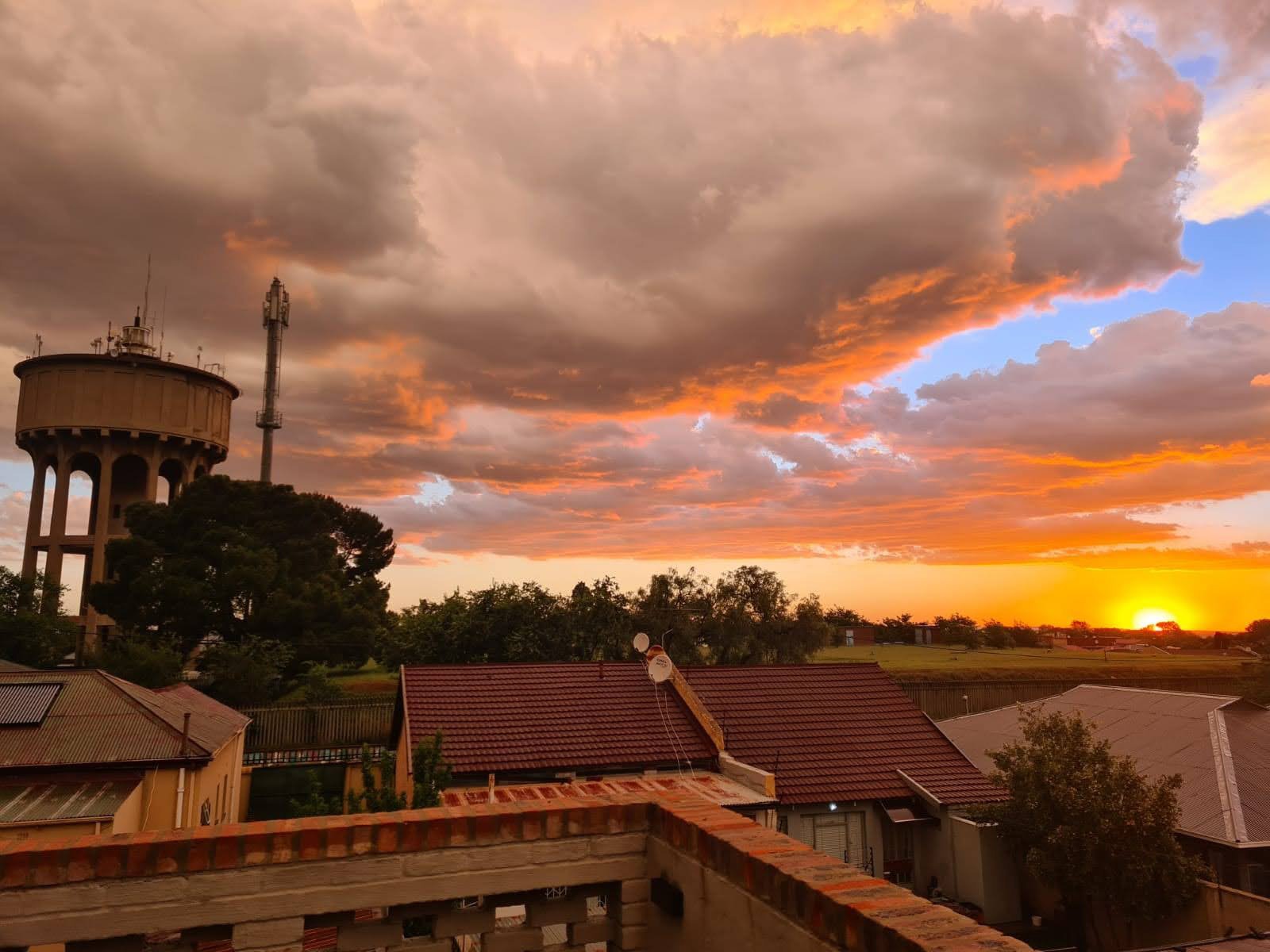
 A Brixton sky. (Photo: Mark Schaerer)
Brixton did not burn on Tuesday 30 June. Nothing violent was reported here that day.
The week before, a small march carrying sticks passed through the Johannesburg suburb while security companies quietly moved unhoused people off street corners ahead of its arrival. The day before, children carrying sticks rattled neighbours’ gates, shouting for foreigners to leave. There was talk of an illegal eviction the day after.
Yet on Tuesday itself, Brixton was eerily quiet.
On an ordinary Tuesday morning on my street, a Coloured professional walks to work in the direction of the Greek Orthodox Church. A Zimbabwean car guard greets me as he lines up residents’ bins for Pikitup. Two reclaimers from Fietas, and another from Lesotho, sort through recycling. A Congolese father drives his child to school. A retired Portuguese South African couple sweep the pavement outside their house.
Some mornings I wake early enough to hear the muezzin’s call drifting beneath hadedas, a distant train in Fordsburg, or an aircraft streaking past in the impossibly wide and bright Highveld sky.
A different Tuesday
This Tuesday was different. Brixton was holding its breath. The park, usually full of children, people waking up and removing grass from their hair, and others going to work, was empty.
A few hundred metres from my house is the Brixton Cemetery. Walk through it and you walk through Johannesburg’s history, but watch your step – volunteers clear litter and human waste more often than the City does. The Hindu crematorium Gandhi helped establish in 1918, Commonwealth war graves from both wars, Jewish, Chinese and Christian sections, and (some unmarked) graves apartheid classified separately by race.
On our property live a Zulu father from Pongola, his Zimbabwean-born South African partner, their Vosloorus-born children, my Afrikaans husband from Hartbeespoort, our Joburg-born children and me, an English-speaking Pretorian. Our black children know a little Afrikaans. Our white children know a little isiZulu.
Why is our humanity selective?
/file/attachments/orphans/PhotooftheMarchgoingthroughBrixtonon24June2026photoMarieHuchzermeyer_867791.jpeg "March going through Brixton on 24 June 2026. (Photo: Marie Huchzermeyer)")
Journalist Sam Mathe pointed a question to people like me. Why, he asked, do some people speak so passionately about the rights of migrants, while appearing much quieter when poor black South Africans lose their homes, their children, their dignity or their safety? Why is our humanity selective?
The children who died after eating poisoned snacks mattered. The families whose homes were bulldozed in Lusikisiki mattered. The parent who no longer feels safe letting a child walk through the park matters. So do the migrants who allege that they were extorted by police officers from our local station.
Compassion shouldn’t be finite. Whose failures disappear from view once we begin blaming each other?
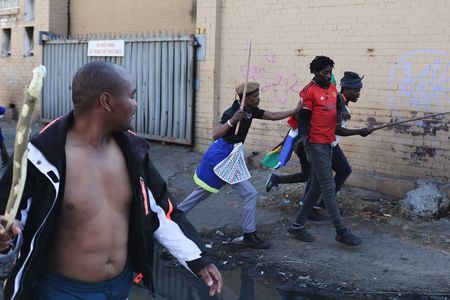
Pule Welch described how almost everything “dope” he experiences about Johannesburg – the food at Bersu Fekad restaurant and “Little Ethiopia”, a Sunday spent following the local Cameroonian football league – was built by “foreigners”. A country that makes itself hostile to that kind of difference is not protecting anything. It is choosing to become, in Pule’s words, “dry”.
Brixton, not a perfect suburb
Brixton is not a perfect suburb, or even an always-safe one. But people still encounter one another across languages, faiths, incomes and histories, and residents work hard to create opportunities to do so.
Operation Dudula marched through Brixton in 2022 and briefly tried to establish a branch here. They disrupted one of our community meetings. They tried to hijack a block of flats and a house. A neighbour warned me then that this wasn’t a fringe movement, but something that had already taken root in the hearts of ordinary people.
Brixton residents have every reason to be angry. They pay rates while infrastructure collapses. They watch electricity being stolen while paying every month. They queue for water during outages. Many have stopped reporting crime because nothing seems to happen. Some no longer bother voting because they no longer believe anyone is listening.
During one of this year’s water shortages, while queuing at the tap in Kingston Frost Park, a man announced that he didn’t need to wait his turn because he was Zulu, and everyone else was makwerekwere.
Our community WhatsApp group, emboldened by the week’s rhetoric, began treating illegal electricity connections and noise complaints as nationality problems rather than enforcement problems.
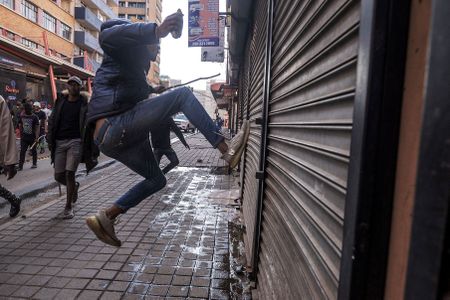
South Africa has every right, and every responsibility, to enforce its immigration laws.
It also has a responsibility to do so lawfully, consistently and without turning neighbours into immigration officers or enemies.
If criminal landlords, corrupt officials and absent policing created the crisis, removing migrant tenants will not solve it. It will simply change who lives in the building while the system that produced the crisis carries on untouched.
A Zimbabwean friend spoke to me on 1 July. Her Zulu husband had finally been offered a job after months of searching. It was everything they had hoped for. Yet she confessed she almost wished the offer had come another week because she dreaded hearing it used as proof that driving migrants out had “worked”.
Many South Africans have insisted they are not xenophobic. They say they are simply opposed to undocumented migration. But once ordinary residents begin deciding for themselves who belongs and who does not, we have already stepped outside the rule of law.
Who we become
Brixton has never been perfect. Its history is complicated. Its cemetery tells stories of our segregation. Its park holds memorials to war, the old sign from the Transvaal Organisation of Gay Sport, community organisers who string bunting up to signal community gatherings and children playing together on a Saturday morning.
I’ve asked myself a difficult question this week: if every migrant left Brixton tomorrow, would our electricity work, would the hijacked buildings be fixed, would the park be safer, would the rubbish disappear and would the City suddenly enforce its own by-laws? After years of trying to improve this neighbourhood, I don’t think the answer is yes.
That doesn’t mean migration creates no challenges. It means removing migrants wouldn’t fix the civic failures that make Brixton difficult to live in.
That’s why I believe we’re directing our anger at the wrong place.
Next Tuesday, my Portuguese South African neighbours will probably be sweeping the pavement again. The school holidays will be in full swing. Children will make their way to Kingston Frost Park. The car guard will line up the bins for Pikitup. The reclaimers will come. Life, in all its ordinary messiness, will carry on.
I wonder how they’re all feeling.
We’ve spent too much of this week talking about one another. Perhaps it’s time we started talking to one another again. DM
Sophia Welz is a cultural organiser, connector and community-builder with 20 years’ experience across public, private and community spaces. She designs community programmes for the Campaign for Free Expression and spent more than a decade leading the South African National Youth Orchestra, turning creative ideas into real-world social impact.
Comments
Scroll down to load comments...